THE ADVENTURE COLLECTIVE® · Independent discovery and booking for outdoor travel

Paddle coastal turquoise, lunch on a secluded beach, then walk under towering coastal forest in Abel Tasman’s middle section. This guided kayak and unguided walk times tide and terrain to show Tonga Island, Bark Bay and Awaroa at their best.
Paddle coastal turquoise, lunch on a secluded beach, then walk under towering coastal forest in Abel Tasman’s middle section. This guided kayak and unguided walk times tide and terrain to show Tonga Island, Bark Bay and Awaroa at their best.
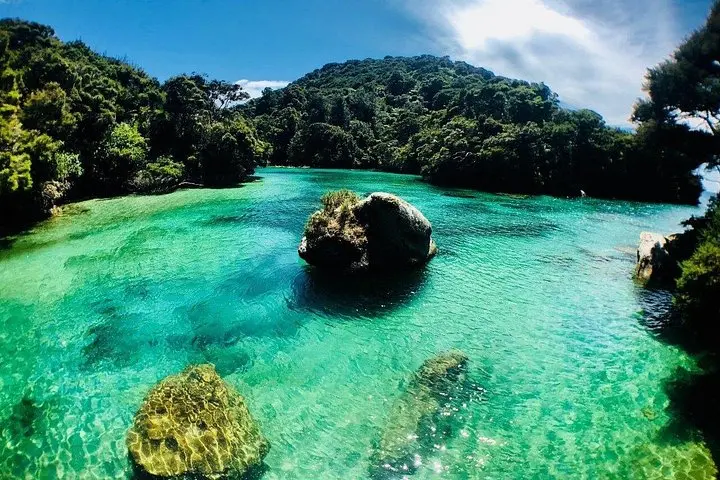
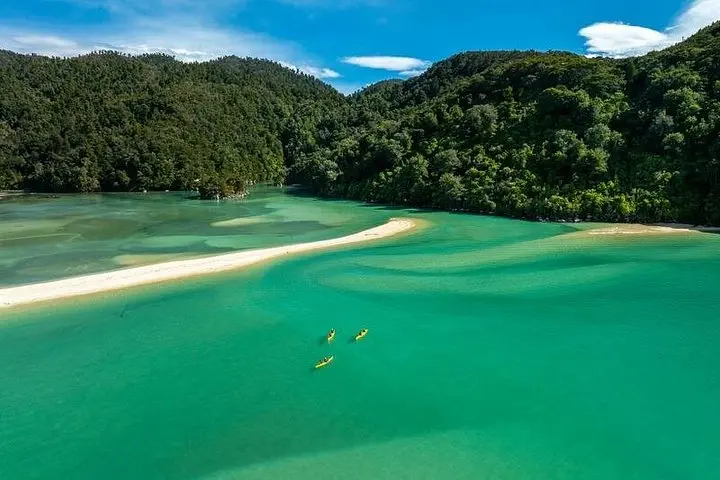
The sand squeaks under your boots as the kayak cuts a pale wake along turquoise water; gulls chatter and the forest beyond leans toward the shore as if to listen. This is the middle section of Abel Tasman National Park—where the sea feels like Tangaroa’s realm and the coastal forest answers in Tane Mahuta’s slow language.
Verified experiences and guided adventures in the surrounding area.
Operated by Abel Tasman Kayaks · Marahau, Tasman
The sand squeaks under your boots as the kayak cuts a pale wake along turquoise water; gulls chatter and the forest beyond leans toward the shore as if to listen. This is the middle section of Abel Tasman National Park—where the sea feels like Tangaroa’s realm and the coastal forest answers in Tane Mahuta’s slow language.
The coastline here is granite and ancient schist, scoured by Pleistocene seas and shaped into sheltered inlets, arches and tiny estuaries. Maori used these bays for kai and seasonal travel; place names around Tonga Island and Awaroa still mark those connections. Today the park is managed to protect a delicate marine reserve and a recovering native forest that hosts kaka and other endemic birds.
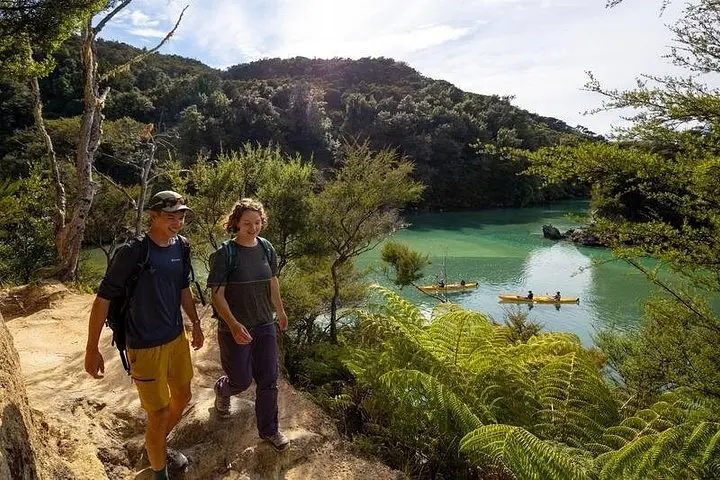
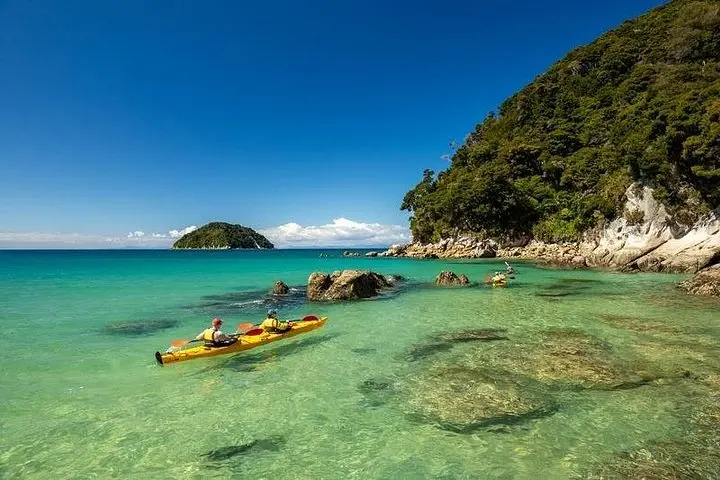
On this combo, a guide times launches with the tide so paddlers encounter calm channels, sea-carved arches and occasional fur seals at Tonga Island. Lunch is on a beach; the afternoon becomes a shoreline walk between estuaries, suspension bridge crossings and stands of rimu and kanuka. Expect packed-sand beaches, short rocky scrambles and boardwalk sections where the forest meets the coast.
Practical edge: tides dictate route and effort—follow guides’ briefings, wear footwear that handles sand and rock, and bring layers for sudden wind. Hydrate and protect from sun reflected off water. If you want wildlife snapshots, paddle quietly near sheltered coves at low tide.
This full-day pairing is approachable for fit beginners but rewards attention to conditions: read tidal tables, pack a light dry bag, and leave space in your camera for sudden, bright coastal moments.
The day is moderate: paddling sections are guided with breaks and basic instruction; the walk covers several kilometers on mostly maintained coastal track with some short, steeper sections.
Yes—Tonga Island often hosts New Zealand fur seals and the forest supports kaka and other native birds; sightings can’t be guaranteed but are common if you keep noise low.
No—operators provide instruction and choose sheltered routes; basic mobility and comfort in water are required.
Lunch is provided and caters to dietary requirements, but bring snacks you prefer and any personal medical items.
Abel Tasman Kayaks operates guided outdoor trips and adventures with an emphasis on safety, stewardship, and memorable experiences.
The sand squeaks under your boots as the kayak cuts a pale wake along turquoise water; gulls chatter and the forest beyond leans toward the shore as if to listen. This is the middle section of Abel Tasman National Park—where the sea feels like Tangaroa’s realm and the coastal forest answers in Tane Mahuta’s slow language.
The sand squeaks under your boots as the kayak cuts a pale wake along turquoise water; gulls chatter and the forest beyond leans toward the shore as if to listen. This is the middle section of Abel Tasman National Park—where the sea feels like Tangaroa’s realm and the coastal forest answers in Tane Mahuta’s slow language.
The coastline here is granite and ancient schist, scoured by Pleistocene seas and shaped into sheltered inlets, arches and tiny estuaries. Maori used these bays for kai and seasonal travel; place names around Tonga Island and Awaroa still mark those connections. Today the park is managed to protect a delicate marine reserve and a recovering native forest that hosts kaka and other endemic birds.
On this combo, a guide times launches with the tide so paddlers encounter calm channels, sea-carved arches and occasional fur seals at Tonga Island. Lunch is on a beach; the afternoon becomes a shoreline walk between estuaries, suspension bridge crossings and stands of rimu and kanuka. Expect packed-sand beaches, short rocky scrambles and boardwalk sections where the forest meets the coast.
Practical edge: tides dictate route and effort—follow guides’ briefings, wear footwear that handles sand and rock, and bring layers for sudden wind. Hydrate and protect from sun reflected off water. If you want wildlife snapshots, paddle quietly near sheltered coves at low tide.
This full-day pairing is approachable for fit beginners but rewards attention to conditions: read tidal tables, pack a light dry bag, and leave space in your camera for sudden, bright coastal moments.