THE ADVENTURE COLLECTIVE® · Independent discovery and booking for outdoor travel

Explore Caernarfon’s castle and medieval walls on a focused two‑hour guided walk. Learn Roman and Edwardian history, inspect original masonry, and finish with a town circuit that brings local culture and coastal geology into view.
Explore Caernarfon’s castle and medieval walls on a focused two‑hour guided walk. Learn Roman and Edwardian history, inspect original masonry, and finish with a town circuit that brings local culture and coastal geology into view.
A wind off the Menai Strait cools the stones as the guide waits beneath the castle’s massive polygonal towers. Visitors move from gate to rampart, footsteps echoing where Roman boots once marched and 13th‑century masons set their courses. The town’s Georgian streets unfold beyond the walls, merchants’ rows and slate roofs pointing toward Snowdonia’s dark ridgeline.
Verified experiences and guided adventures in the surrounding area.
Operated by Neil Johnstone Heritage and cultural services · Caernarfon, Gwynedd
A wind off the Menai Strait cools the stones as the guide waits beneath the castle’s massive polygonal towers. Visitors move from gate to rampart, footsteps echoing where Roman boots once marched and 13th‑century masons set their courses. The town’s Georgian streets unfold beyond the walls, merchants’ rows and slate roofs pointing toward Snowdonia’s dark ridgeline.
Caernarfon’s story is layered: a Roman fort first secured the inlet, then Edward I built the present castle as a visible assertion of power; today it sits as part of the Castles and Town Walls of King Edward in Gwynedd UNESCO ensemble. Geologically, the castle perches on Carboniferous and Ordovician bedrock—tough slate and volcanic intrusions—that gave local masons the raw material for thick curtain walls and angular towers. Culturally, the town keeps Welsh language and maritime trade at its heart; the Royal Welch Fusiliers and local festivals still mark civic life.
On this two‑hour walk, expect a focused castle commentary (roughly 40–60 minutes) plus a guided circuit of walls and town gates. Guides point out original masonry, defensive design, and the castle’s role in later civic identity. Practical notes: wear grippy shoes—stone stairs are uneven—bring a waterproof layer for sudden coastal showers, and allow extra time if you want to re-enter the castle after the guided portion (admission applies). Public transport is convenient; the walk is suitable for most fitness levels but includes short flights of steep steps. This tour is compact, historically rich, and ideal as either a standalone cultural outing or the start of a wider exploration of northwest Wales.
The guide leads a commentary section of the castle but full admission to explore the interior is typically not included—expect to pay on site if you wish to enter after the guided portion.
The tour description notes wheelchair accessibility for parts of the route, but some areas (steep steps and narrow passages) are not accessible; contact the operator ahead to plan a suitable route.
This offering is a private tour format per booking, so group size is determined by your reservation—confirm maximum participants when booking.
Yes—strollers are possible in many areas, but parents should be prepared for stairs and uneven ground; infant seats are available if needed.
Neil Johnstone Heritage and cultural services operates guided outdoor trips and adventures with an emphasis on safety, stewardship, and memorable experiences.
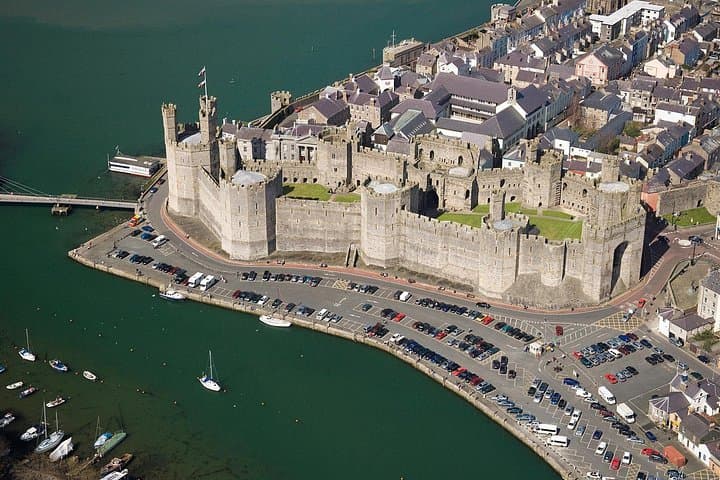

A wind off the Menai Strait cools the stones as the guide waits beneath the castle’s massive polygonal towers. Visitors move from gate to rampart, footsteps echoing where Roman boots once marched and 13th‑century masons set their courses. The town’s Georgian streets unfold beyond the walls, merchants’ rows and slate roofs pointing toward Snowdonia’s dark ridgeline.
A wind off the Menai Strait cools the stones as the guide waits beneath the castle’s massive polygonal towers. Visitors move from gate to rampart, footsteps echoing where Roman boots once marched and 13th‑century masons set their courses. The town’s Georgian streets unfold beyond the walls, merchants’ rows and slate roofs pointing toward Snowdonia’s dark ridgeline.
Caernarfon’s story is layered: a Roman fort first secured the inlet, then Edward I built the present castle as a visible assertion of power; today it sits as part of the Castles and Town Walls of King Edward in Gwynedd UNESCO ensemble. Geologically, the castle perches on Carboniferous and Ordovician bedrock—tough slate and volcanic intrusions—that gave local masons the raw material for thick curtain walls and angular towers. Culturally, the town keeps Welsh language and maritime trade at its heart; the Royal Welch Fusiliers and local festivals still mark civic life.
On this two‑hour walk, expect a focused castle commentary (roughly 40–60 minutes) plus a guided circuit of walls and town gates. Guides point out original masonry, defensive design, and the castle’s role in later civic identity. Practical notes: wear grippy shoes—stone stairs are uneven—bring a waterproof layer for sudden coastal showers, and allow extra time if you want to re-enter the castle after the guided portion (admission applies). Public transport is convenient; the walk is suitable for most fitness levels but includes short flights of steep steps. This tour is compact, historically rich, and ideal as either a standalone cultural outing or the start of a wider exploration of northwest Wales.