THE ADVENTURE COLLECTIVE® · Independent discovery and booking for outdoor travel

Climb into a 4x4 and cross the red-sand sea of Wadi Rum in two hours: sandstone towers, Nabatean inscriptions, and Bedouin tea await on a compact, photo-rich route ideal for travelers short on time.
Climb into a 4x4 and cross the red-sand sea of Wadi Rum in two hours: sandstone towers, Nabatean inscriptions, and Bedouin tea await on a compact, photo-rich route ideal for travelers short on time.
The Jeep kicks up red sand as a low sun slices across the rock faces — you feel the vehicle breathe with the terrain, climbing over rippled dunes and easing into broad, dry riverbeds. In two hours the Wadi Rum desert strips away the map’s tidy lines: sandstone towers loom suddenly from the flat, petroglyphs wink from canyon walls, and a Bedouin guide points out a spring you might otherwise miss. It’s compact, cinematic desert travel.
Verified experiences and guided adventures in the surrounding area.
Operated by Wadi Rum Camp and Tours · Wadi Rum Village, Aqaba Governorate
The Jeep kicks up red sand as a low sun slices across the rock faces — you feel the vehicle breathe with the terrain, climbing over rippled dunes and easing into broad, dry riverbeds. In two hours the Wadi Rum desert strips away the map’s tidy lines: sandstone towers loom suddenly from the flat, petroglyphs wink from canyon walls, and a Bedouin guide points out a spring you might otherwise miss. It’s compact, cinematic desert travel.
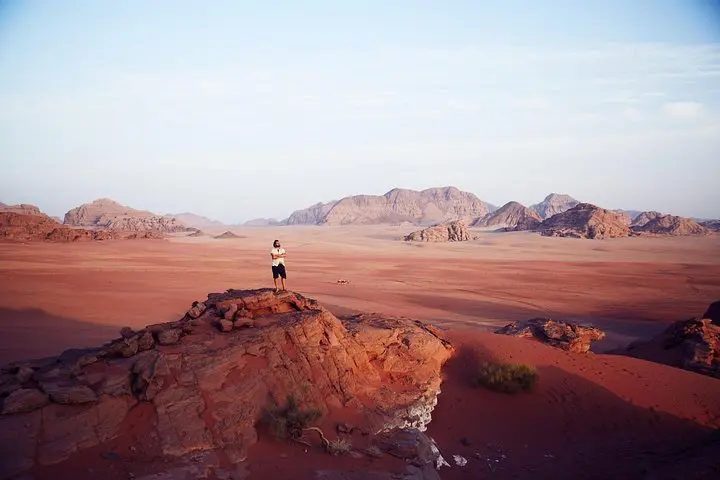
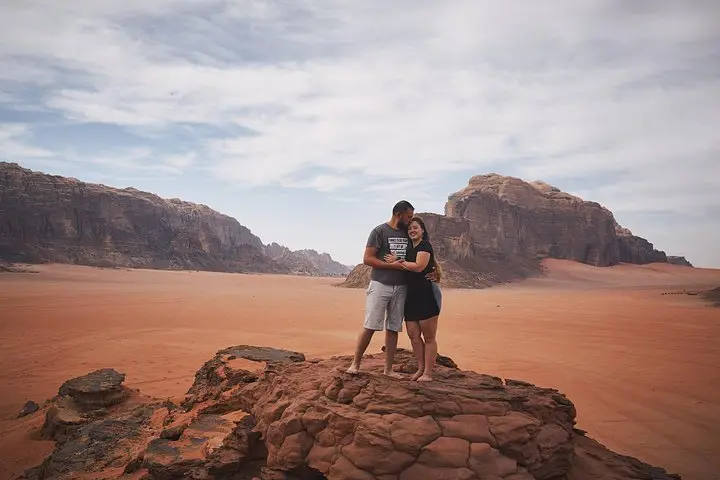
Wadi Rum sits on Jordan’s southern edge, carved over millennia by wind and water. The same cliffs that shelter ancient Nabatean inscriptions were routes for Lawrence of Arabia during the Arab Revolt; the landscape’s stark, otherworldly quality later made it a stand-in for Mars in modern film. Geologically, you’ll see layers of Cambrian sandstone and granite folded into honeycombed escarpments — the color shifts from pale yellow at dawn to a deep rust by afternoon.
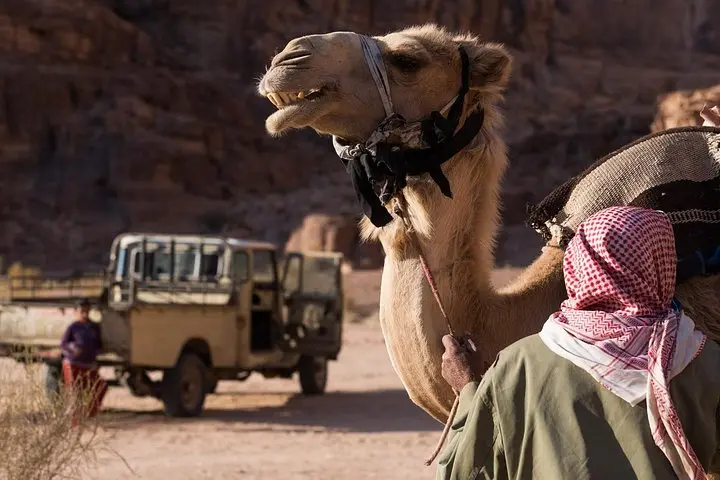
The cultural beat of the tour is Bedouin hospitality. Guides are native to the area, and even a short outing includes gestures of that culture: tea brewed over coals, stories about grazing routes, and the option to extend into a camel ride. Wadi Rum is both a protected area and a working landscape for local families, so encounters are authentic rather than staged.
Practical guidance: the two-hour “Highlights” route focuses on accessible, high-impact stops — Lawrence Spring, the Red Sand Dune, Khazali Canyon with its inscriptions, and a small natural arch. Most operators offer seating inside the jeep or on bench seats in the rear; the latter delivers wind and photos but extra dust. Expect short hikes and light scrambling at stops; the overall exertion is low, but the terrain is uneven.
Timing matters. Early morning tours catch cooler temperatures and softer light for photos; late afternoon brings long shadows and warmer hues. Bring sun protection and enough water even though bottled water is usually provided. Footwear with grip helps on short canyon scrambles; a light layer blocks wind that can surprise you between dune ridges.
Logistics are straightforward: meet at the Wadi Rum Rest House just outside the village, about 7 km from the official visitor center. The route is flexible — guides tailor the trip to conditions and guest interests. If you’ve only got a short window in Jordan, this is an efficient, high-reward way to sample Wadi Rum’s geology, history, and Bedouin culture without committing a full day.
Meet at the Wadi Rum Rest House located just before entering the village; transfers from nearby Aqaba require about 45–60 minutes by road.
Yes—many guests choose bench seating built into the rear for open-air views and photos, but expect more dust and wind.
Yes—this easy, two-hour tour is family-friendly, though parents should be prepared for bumpy rides and dust exposure.
No, camel rides aren’t included but can usually be added on-site for around 10–15 JD for 30–60 minutes.
Tours are hosted by English-speaking native Bedouin guides; other languages may be available by request but aren’t guaranteed.
For a full refund cancel at least 24 hours before the scheduled departure; cancellations within 24 hours are non-refundable.
Wadi Rum Camp and Tours operates guided outdoor trips and adventures with an emphasis on safety, stewardship, and memorable experiences.
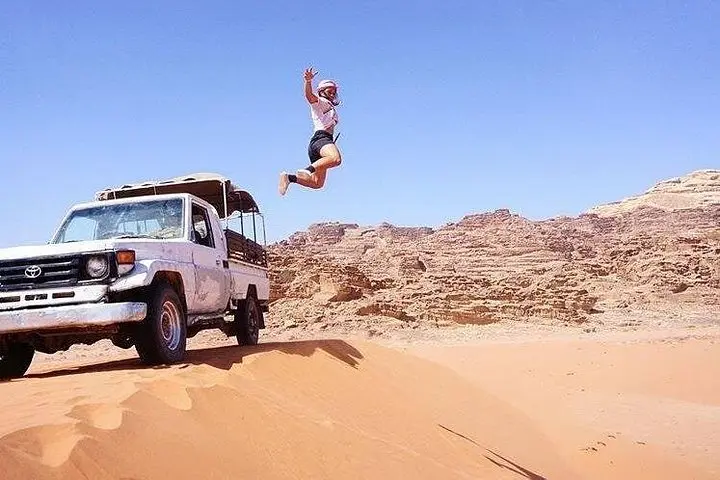
The Jeep kicks up red sand as a low sun slices across the rock faces — you feel the vehicle breathe with the terrain, climbing over rippled dunes and easing into broad, dry riverbeds. In two hours the Wadi Rum desert strips away the map’s tidy lines: sandstone towers loom suddenly from the flat, petroglyphs wink from canyon walls, and a Bedouin guide points out a spring you might otherwise miss. It’s compact, cinematic desert travel.
The Jeep kicks up red sand as a low sun slices across the rock faces — you feel the vehicle breathe with the terrain, climbing over rippled dunes and easing into broad, dry riverbeds. In two hours the Wadi Rum desert strips away the map’s tidy lines: sandstone towers loom suddenly from the flat, petroglyphs wink from canyon walls, and a Bedouin guide points out a spring you might otherwise miss. It’s compact, cinematic desert travel.
Wadi Rum sits on Jordan’s southern edge, carved over millennia by wind and water. The same cliffs that shelter ancient Nabatean inscriptions were routes for Lawrence of Arabia during the Arab Revolt; the landscape’s stark, otherworldly quality later made it a stand-in for Mars in modern film. Geologically, you’ll see layers of Cambrian sandstone and granite folded into honeycombed escarpments — the color shifts from pale yellow at dawn to a deep rust by afternoon.
The cultural beat of the tour is Bedouin hospitality. Guides are native to the area, and even a short outing includes gestures of that culture: tea brewed over coals, stories about grazing routes, and the option to extend into a camel ride. Wadi Rum is both a protected area and a working landscape for local families, so encounters are authentic rather than staged.
Practical guidance: the two-hour “Highlights” route focuses on accessible, high-impact stops — Lawrence Spring, the Red Sand Dune, Khazali Canyon with its inscriptions, and a small natural arch. Most operators offer seating inside the jeep or on bench seats in the rear; the latter delivers wind and photos but extra dust. Expect short hikes and light scrambling at stops; the overall exertion is low, but the terrain is uneven.
Timing matters. Early morning tours catch cooler temperatures and softer light for photos; late afternoon brings long shadows and warmer hues. Bring sun protection and enough water even though bottled water is usually provided. Footwear with grip helps on short canyon scrambles; a light layer blocks wind that can surprise you between dune ridges.
Logistics are straightforward: meet at the Wadi Rum Rest House just outside the village, about 7 km from the official visitor center. The route is flexible — guides tailor the trip to conditions and guest interests. If you’ve only got a short window in Jordan, this is an efficient, high-reward way to sample Wadi Rum’s geology, history, and Bedouin culture without committing a full day.