THE ADVENTURE COLLECTIVE® · Independent discovery and booking for outdoor travel

Sail the Nile between Aswan and Luxor in two nights: Philae, Kom Ombo, Edfu and Luxor’s royal tombs, guided by an Egyptologist and balanced with relaxed sundeck time. This short cruise concentrates Egypt’s highlights into an efficient, comfortable three-day itinerary.
Sail the Nile between Aswan and Luxor in two nights: Philae, Kom Ombo, Edfu and Luxor’s royal tombs, guided by an Egyptologist and balanced with relaxed sundeck time. This short cruise concentrates Egypt’s highlights into an efficient, comfortable three-day itinerary.
The Nile slides past the sundeck as the ship slips north: ochre desert giving way to green floodplain, fishermen casting long shadows, and temple pylons rising like thresholds in the heat. Boarding in Aswan, the rhythm of the river sets the day — gentle motion, slow conversations on deck, and the promise of antiquity at every stop.
Verified experiences and guided adventures in the surrounding area.
Operated by Saray El-Nile · Aswan, Aswan Governorate
The Nile slides past the sundeck as the ship slips north: ochre desert giving way to green floodplain, fishermen casting long shadows, and temple pylons rising like thresholds in the heat. Boarding in Aswan, the rhythm of the river sets the day — gentle motion, slow conversations on deck, and the promise of antiquity at every stop.
This compact three-day route visits Philae’s island sanctuary, the double-shrine of Kom Ombo, the well-preserved temple of Horus at Edfu, and Luxor’s West and East Banks: Valley of the Kings, Hatshepsut’s mortuary temple, the Colossi of Memnon, Karnak and Luxor Temples. Geologically the Nile corridor is a ribbon of alluvial plain carved between Nubian sandstone plateaus; historically it’s the artery of ancient Egyptian civilization, where pharaohs built monuments to control both land and afterlife.
Culturally expect expert interpretation from an Egyptologist, guided walks or short carriage transfers at temple sites, and meals served aboard a 5-star vessel. The cruise covers roughly 200–250 km of river travel and balances onboard downtime with concentrated shore visits.
Practical guidance: carry a small daypack for temple visits, sunscreen and a brimmed hat for exposed ruins, and comfortable walking shoes for uneven stone and sandy tracks. Hydrate frequently in Egypt’s climate and plan temple stops for early morning or late afternoon to avoid peak heat. Bring a photocopy of your passport and expect guided entry procedures at major sites. For travelers who want a brisk immersion in Nile history, this short cruise delivers dense cultural mileage with the ease of a floating hotel.
Pickup and drop-off in Aswan and Luxor are provided; embarkation typically at the quay with assistance for transfers between vehicle and boat.
Admissions to listed sites are included as per the itinerary; always confirm if optional tombs or special chambers require extra tickets on site.
The trip is advertised as suitable for all fitness levels; infants may be required to sit on a lap and parents should supervise on open decks and during transfers.
Meals are full-board with varied menus; the cruise can usually accommodate dietary requests if notified in advance.
Saray El-Nile operates guided outdoor trips and adventures with an emphasis on safety, stewardship, and memorable experiences.


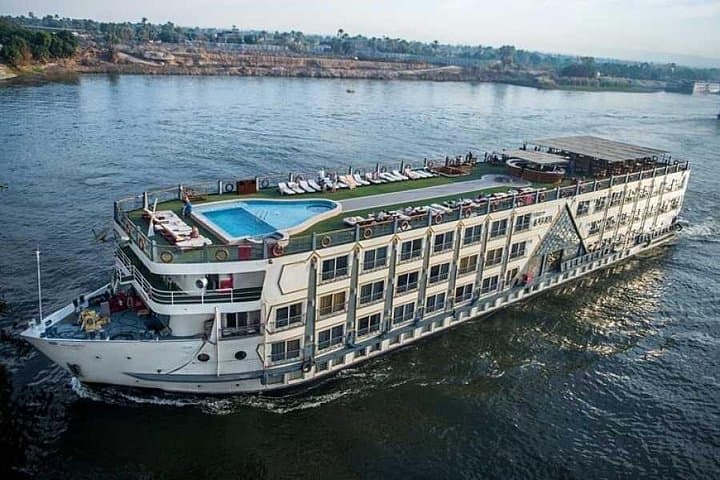

The Nile slides past the sundeck as the ship slips north: ochre desert giving way to green floodplain, fishermen casting long shadows, and temple pylons rising like thresholds in the heat. Boarding in Aswan, the rhythm of the river sets the day — gentle motion, slow conversations on deck, and the promise of antiquity at every stop.
The Nile slides past the sundeck as the ship slips north: ochre desert giving way to green floodplain, fishermen casting long shadows, and temple pylons rising like thresholds in the heat. Boarding in Aswan, the rhythm of the river sets the day — gentle motion, slow conversations on deck, and the promise of antiquity at every stop.
This compact three-day route visits Philae’s island sanctuary, the double-shrine of Kom Ombo, the well-preserved temple of Horus at Edfu, and Luxor’s West and East Banks: Valley of the Kings, Hatshepsut’s mortuary temple, the Colossi of Memnon, Karnak and Luxor Temples. Geologically the Nile corridor is a ribbon of alluvial plain carved between Nubian sandstone plateaus; historically it’s the artery of ancient Egyptian civilization, where pharaohs built monuments to control both land and afterlife.
Culturally expect expert interpretation from an Egyptologist, guided walks or short carriage transfers at temple sites, and meals served aboard a 5-star vessel. The cruise covers roughly 200–250 km of river travel and balances onboard downtime with concentrated shore visits.
Practical guidance: carry a small daypack for temple visits, sunscreen and a brimmed hat for exposed ruins, and comfortable walking shoes for uneven stone and sandy tracks. Hydrate frequently in Egypt’s climate and plan temple stops for early morning or late afternoon to avoid peak heat. Bring a photocopy of your passport and expect guided entry procedures at major sites. For travelers who want a brisk immersion in Nile history, this short cruise delivers dense cultural mileage with the ease of a floating hotel.