THE ADVENTURE COLLECTIVE® · Independent discovery and booking for outdoor travel

Spend three days exploring Petra with time to move beyond the marquee shots of the Treasury. This private 2-night tour from Amman pairs a guided highlights walk with a second day for climbing to the Monastery or wandering lesser-known cuts of the ancient city.
Spend three days exploring Petra with time to move beyond the marquee shots of the Treasury. This private 2-night tour from Amman pairs a guided highlights walk with a second day for climbing to the Monastery or wandering lesser-known cuts of the ancient city.
You enter Petra through the Siq—the narrow, high-sided fissure that funnels light and sound until the canyon exhales the Treasury into view. The rock seems to hold its breath; carved façades catch the sun and turn the sandstone a living red. On a two-night private tour from Amman, travelers trade the city’s pulse for the slow archaeology of stone and shadow.
Verified experiences and guided adventures in the surrounding area.
Operated by Zaid Tours and Travel · Wadi Musa, Ma'an Governorate
You enter Petra through the Siq—the narrow, high-sided fissure that funnels light and sound until the canyon exhales the Treasury into view. The rock seems to hold its breath; carved façades catch the sun and turn the sandstone a living red. On a two-night private tour from Amman, travelers trade the city’s pulse for the slow archaeology of stone and shadow.
Petra was the Nabatean capital more than two millennia ago, built to control caravan trade routes across Arabia. The geology is stark: wind-sculpted and water-channeled sandstone whose layers record ancient seas and desert storms. Cultural traces are everywhere—tomb façades, a Roman-style theatre, and Byzantine church mosaics—evidence of Petra’s long role as a crossroads of cultures.
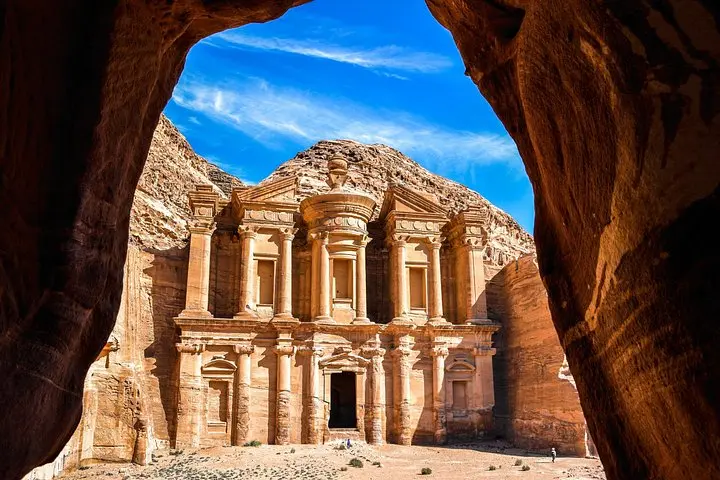
This private itinerary pairs a guided, two-hour highlights walk (Treasury, Royal Tombs, theater) with a second day for independent exploration—climbing to the Monastery (Ad-Deir) or the High Place of Sacrifice if stamina allows. Local guides illuminate Nabatean engineering: cisterns, channels, and rock-cut facades that are both art and infrastructure.
Practicalities matter: expect uneven stone, dusty trails, and significant walking distances between sights. Bring sun protection, a refillable water bottle, and shoes with good grip. Consider early starts to avoid midday heat and arrange a Jordan Pass or prepare to pay entry on arrival. Accommodations are in Wadi Musa (Petra town) with private transport from Amman included. Respect the site—stay on marked paths, avoid climbing carved surfaces, and hire local guides to deepen the visit while supporting the community.
Entrance is not included by default; many visitors use the Jordan Pass (which bundles visa and entrance) or pay at the site—confirm with your operator before travel.
Parts of Petra are accessible by short buggy or donkey rides by request, but the core Siq and many viewpoints require walking over uneven ground—contact the operator to arrange assistance or alternative routes.
The included guided tour covers roughly 2–4 miles over 2 hours with stops at the Treasury, Royal Tombs, and theatre; additional independent exploration adds more distance and elevation if visiting the Monastery.
The trail to the Monastery is well-trodden but steep and involves many steps; bring water, start early, and allow 60–90 minutes each way depending on fitness.
Zaid Tours and Travel operates guided outdoor trips and adventures with an emphasis on safety, stewardship, and memorable experiences.
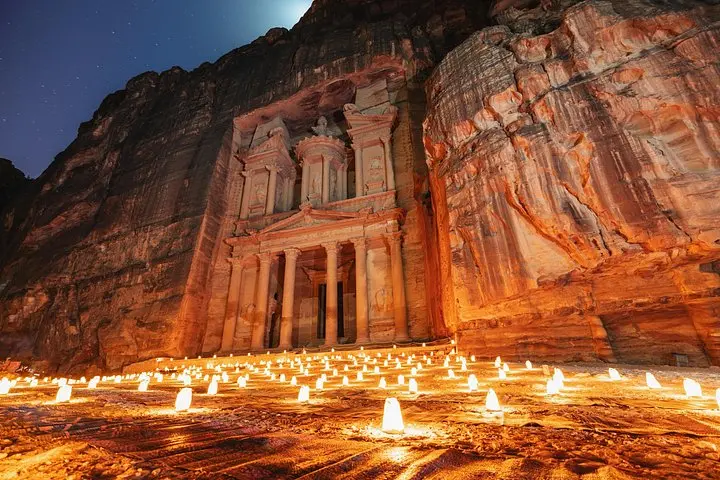
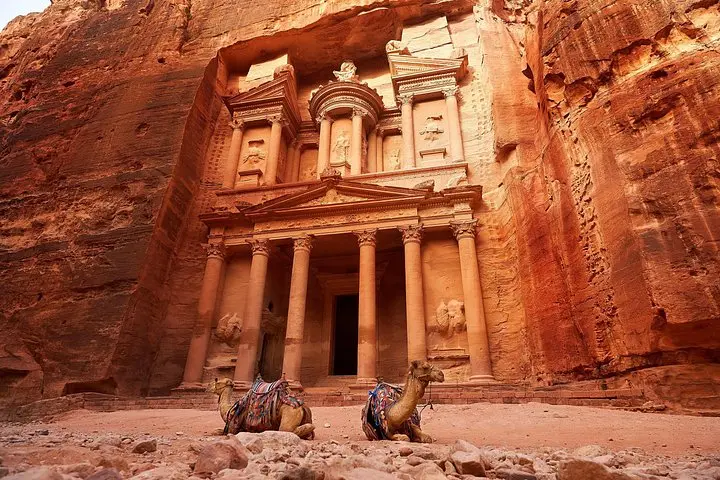
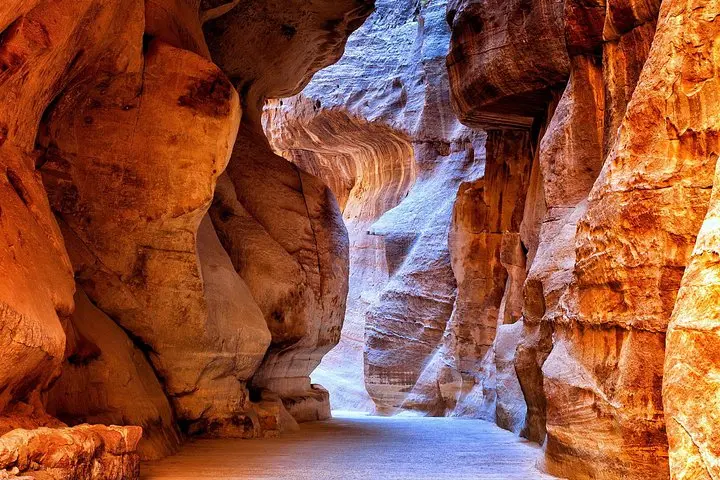
You enter Petra through the Siq—the narrow, high-sided fissure that funnels light and sound until the canyon exhales the Treasury into view. The rock seems to hold its breath; carved façades catch the sun and turn the sandstone a living red. On a two-night private tour from Amman, travelers trade the city’s pulse for the slow archaeology of stone and shadow.
You enter Petra through the Siq—the narrow, high-sided fissure that funnels light and sound until the canyon exhales the Treasury into view. The rock seems to hold its breath; carved façades catch the sun and turn the sandstone a living red. On a two-night private tour from Amman, travelers trade the city’s pulse for the slow archaeology of stone and shadow.
Petra was the Nabatean capital more than two millennia ago, built to control caravan trade routes across Arabia. The geology is stark: wind-sculpted and water-channeled sandstone whose layers record ancient seas and desert storms. Cultural traces are everywhere—tomb façades, a Roman-style theatre, and Byzantine church mosaics—evidence of Petra’s long role as a crossroads of cultures.
This private itinerary pairs a guided, two-hour highlights walk (Treasury, Royal Tombs, theater) with a second day for independent exploration—climbing to the Monastery (Ad-Deir) or the High Place of Sacrifice if stamina allows. Local guides illuminate Nabatean engineering: cisterns, channels, and rock-cut facades that are both art and infrastructure.
Practicalities matter: expect uneven stone, dusty trails, and significant walking distances between sights. Bring sun protection, a refillable water bottle, and shoes with good grip. Consider early starts to avoid midday heat and arrange a Jordan Pass or prepare to pay entry on arrival. Accommodations are in Wadi Musa (Petra town) with private transport from Amman included. Respect the site—stay on marked paths, avoid climbing carved surfaces, and hire local guides to deepen the visit while supporting the community.