THE ADVENTURE COLLECTIVE® · Independent discovery and booking for outdoor travel

A focused 14‑day circuit connecting Algeria’s UNESCO highlights — from Algiers’ Kasbah and Roman ruins to the rock art and red dunes of Djanet. Expect a mix of city tours, desert bivouacs, domestic flights and guided cultural insights.
A focused 14‑day circuit connecting Algeria’s UNESCO highlights — from Algiers’ Kasbah and Roman ruins to the rock art and red dunes of Djanet. Expect a mix of city tours, desert bivouacs, domestic flights and guided cultural insights.
You step off the plane in Algiers and the Mediterranean wind hits like an invitation — salt, citrus markets and city stone all at once. By day two you are climbing narrow lanes in the Kasbah, eyes tracing Ottoman facades and the sudden drop toward the Bay; by midweek you are sleeping under a black Saharan sky beside orange dunes that shift like living walls.
Verified experiences and guided adventures in the surrounding area.
Operated by Algeria Tours16 · Algiers, Algiers Province
You step off the plane in Algiers and the Mediterranean wind hits like an invitation — salt, citrus markets and city stone all at once. By day two you are climbing narrow lanes in the Kasbah, eyes tracing Ottoman facades and the sudden drop toward the Bay; by midweek you are sleeping under a black Saharan sky beside orange dunes that shift like living walls.
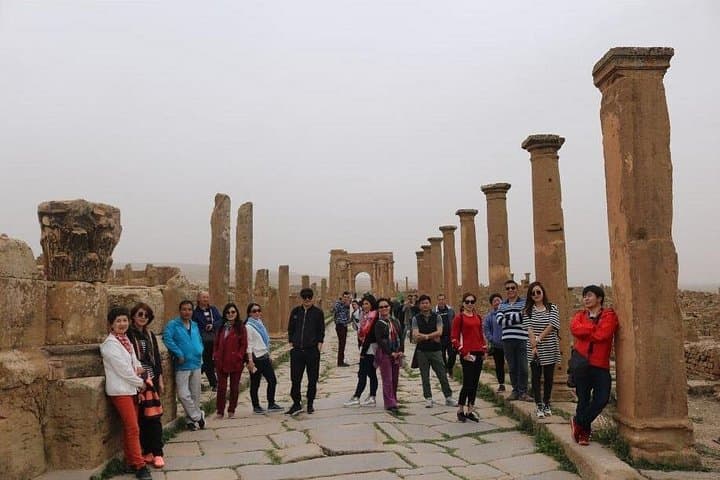
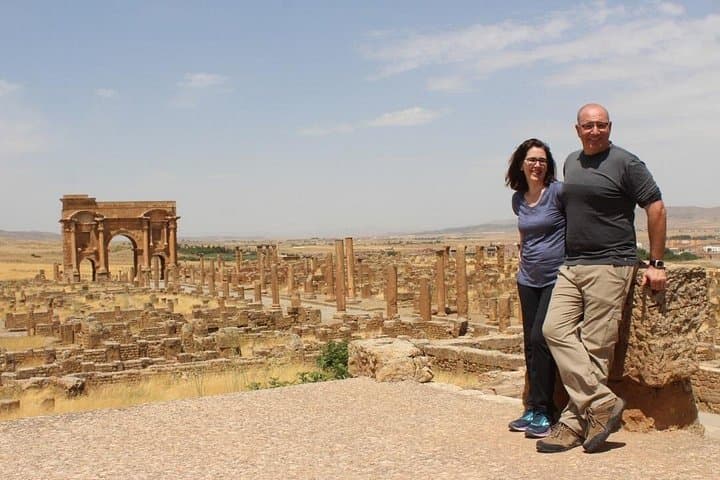
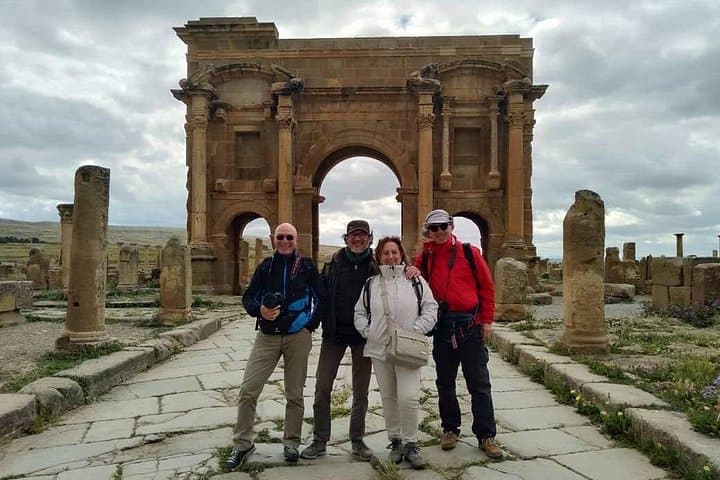
This 14‑day itinerary stitches Algeria’s UNESCO sites into a coherent route: Algiers’ Kasbah and colonial-era vistas, Tipasa’s Roman ruins on the Mediterranean, the royal mausoleum of Mauretania, the Roman grids of Timgad and Djémila, the fortified Qal'a of Beni Hammad, and the earthen towns of the M’Zab Valley — capped by the desert art and red dunes around Djanet and Tin Merzouga. Geology moves from limestone coastal terraces to the Aurès highlands and finally to the sandstone and silicate sands of the central Sahara; culturally, Berber, Arab and Roman layers remain visible in markets, mosques and ruins.
Practically: expect daily domestic flights and long drives, several nights in simple guesthouses and multiple bivouac camps in tents. Permits and many entrance fees are included, as are airport transfers and local guiding. Bring sun protection, warm nights layers, sturdy shoes and a reliable water system. Pace yourself on desert transits, plan rest days after long drives and confirm visa requirements early — organizers provide invitation letters. For travelers seeking deep cultural context alongside off‑road desert scenery, this route delivers a concentrated, practical immersion in Algeria’s world heritage.
Yes — the itinerary includes domestic flights between major hubs such as Algiers, Djanet and Ghardaia as listed in the package inclusions.
Accommodations alternate between 3‑star city hotels and simple guesthouses, plus multiple nights in tent bivouacs under the stars.
Local permits for desert travel are handled by the operator; travellers typically receive an invitation letter for visa support as noted in inclusions.
No — the tour involves uneven terrain, stairs in historic sites and camping; it’s listed as suitable for general fitness but not for serious mobility issues.
Algeria Tours16 operates guided outdoor trips and adventures with an emphasis on safety, stewardship, and memorable experiences.

You step off the plane in Algiers and the Mediterranean wind hits like an invitation — salt, citrus markets and city stone all at once. By day two you are climbing narrow lanes in the Kasbah, eyes tracing Ottoman facades and the sudden drop toward the Bay; by midweek you are sleeping under a black Saharan sky beside orange dunes that shift like living walls.
You step off the plane in Algiers and the Mediterranean wind hits like an invitation — salt, citrus markets and city stone all at once. By day two you are climbing narrow lanes in the Kasbah, eyes tracing Ottoman facades and the sudden drop toward the Bay; by midweek you are sleeping under a black Saharan sky beside orange dunes that shift like living walls.
This 14‑day itinerary stitches Algeria’s UNESCO sites into a coherent route: Algiers’ Kasbah and colonial-era vistas, Tipasa’s Roman ruins on the Mediterranean, the royal mausoleum of Mauretania, the Roman grids of Timgad and Djémila, the fortified Qal'a of Beni Hammad, and the earthen towns of the M’Zab Valley — capped by the desert art and red dunes around Djanet and Tin Merzouga. Geology moves from limestone coastal terraces to the Aurès highlands and finally to the sandstone and silicate sands of the central Sahara; culturally, Berber, Arab and Roman layers remain visible in markets, mosques and ruins.
Practically: expect daily domestic flights and long drives, several nights in simple guesthouses and multiple bivouac camps in tents. Permits and many entrance fees are included, as are airport transfers and local guiding. Bring sun protection, warm nights layers, sturdy shoes and a reliable water system. Pace yourself on desert transits, plan rest days after long drives and confirm visa requirements early — organizers provide invitation letters. For travelers seeking deep cultural context alongside off‑road desert scenery, this route delivers a concentrated, practical immersion in Algeria’s world heritage.