THE ADVENTURE COLLECTIVE® · Independent discovery and booking for outdoor travel

Hand-cut lavender, a short forest walk and lavender lemonade on Bainbridge Island—Bluetree Farm’s timed experience combines hands-on harvesting with local history and simple farm skills. Perfect for families and first-time flower harvesters.
Hand-cut lavender, a short forest walk and lavender lemonade on Bainbridge Island—Bluetree Farm’s timed experience combines hands-on harvesting with local history and simple farm skills. Perfect for families and first-time flower harvesters.
A morning at Bluetree Farm begins with a breath of lavender—sharp, sweet, and immediate—carried off the fields and across a porch where visitors sip lemonade. Guests meet a farm host who outlines the day: a brief talk on the land and lavender varieties, tools handed out, then free time to snip bundles and roam a short native-forest trail. The farm sits on rolling glacial soils that shaped much of Bainbridge Island; the fields open to low ridgelines and Douglas-fir stands that frame views back toward Puget Sound.
Verified experiences and guided adventures in the surrounding area.
Operated by Bluetree Farm and Forest · Bainbridge Island, Washington
A morning at Bluetree Farm begins with a breath of lavender—sharp, sweet, and immediate—carried off the fields and across a porch where visitors sip lemonade. Guests meet a farm host who outlines the day: a brief talk on the land and lavender varieties, tools handed out, then free time to snip bundles and roam a short native-forest trail. The farm sits on rolling glacial soils that shaped much of Bainbridge Island; the fields open to low ridgelines and Douglas-fir stands that frame views back toward Puget Sound.
Lavender farming here draws on a region history of small-scale agriculture and nursery production on the island. Bluetree combines cut-flower cultivation with forest preservation—visitors learn practical tips on harvesting and basic processing before trying it themselves. The experience is sensory and pragmatic: the scent, the coarse stems under your fingers, and simple instruction on drying bundles.
Expect about 90 minutes on site. Bloom season runs mid-June through late July, when flowers are most abundant. The farm stand sells small-batch products made from the harvest and local producers’ goods; the porch offers a place to cool down with sample lavender lemonade.
Practical notes: wear closed-toe shoes for field walking, bring a reusable water bottle, and prepare for sun exposure on exposed rows. Strollers can access viewing areas, but field rows and the forest trail include uneven ground. The activity is low-impact—respect marked areas, take only what you cut, and support the farm by purchasing goods at the stand.
Bloom typically peaks mid-June through late July; the farm schedules U-pick during that window when flowers are most abundant.
Yes—infants and small children can ride in a stroller and viewing areas are accessible, but field rows and the forest trail include uneven ground not fully stroller-friendly.
Yes—hosts provide the tools needed to cut your own lavender bundle and show proper harvesting technique.
Service animals are allowed; non-service pets should be left at home in line with farm policies to protect livestock and crops.
Bluetree Farm and Forest operates guided outdoor trips and adventures with an emphasis on safety, stewardship, and memorable experiences.
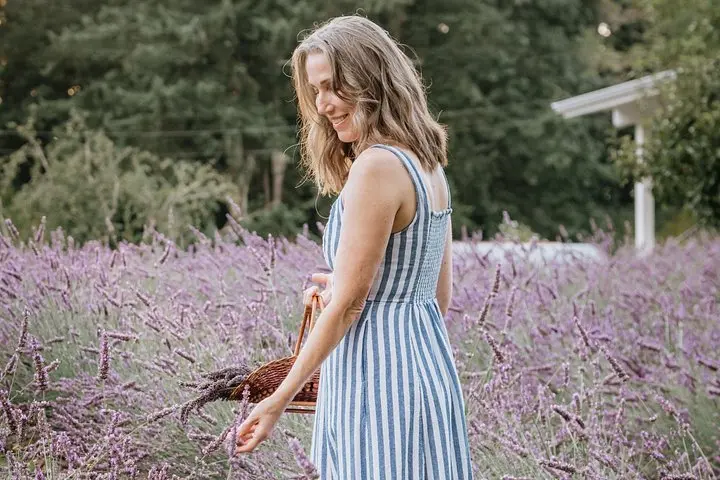
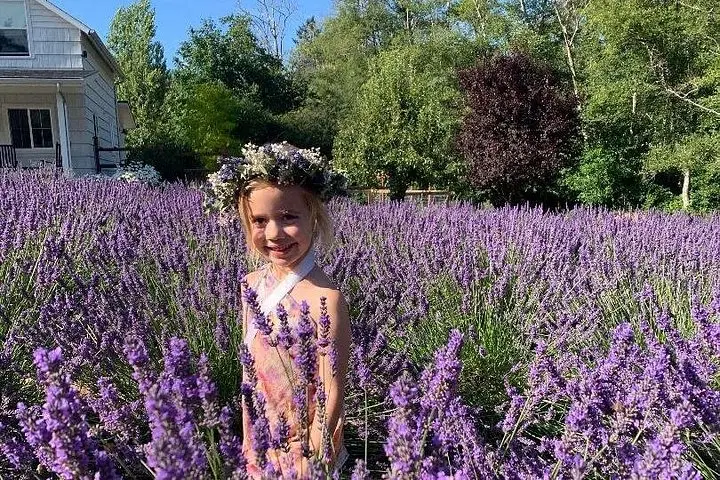
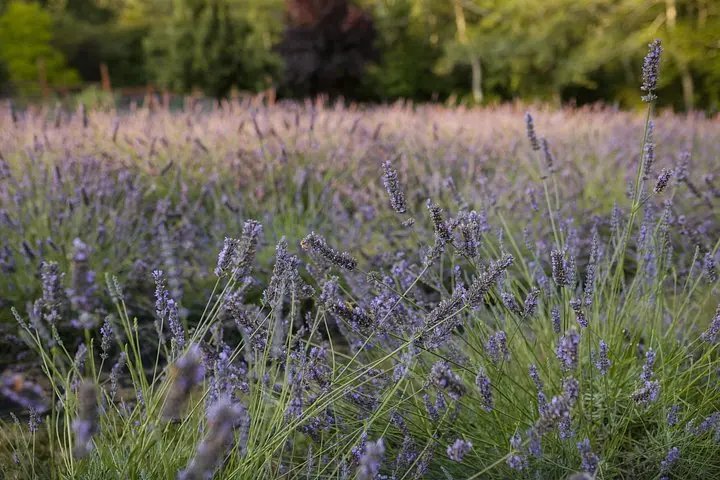
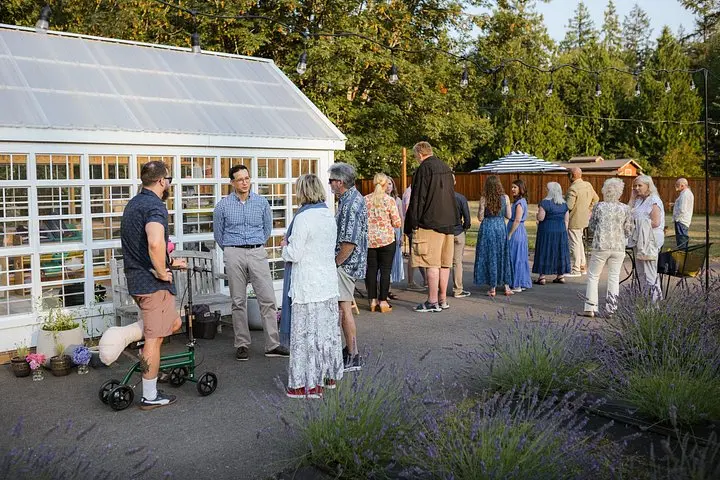
A morning at Bluetree Farm begins with a breath of lavender—sharp, sweet, and immediate—carried off the fields and across a porch where visitors sip lemonade. Guests meet a farm host who outlines the day: a brief talk on the land and lavender varieties, tools handed out, then free time to snip bundles and roam a short native-forest trail. The farm sits on rolling glacial soils that shaped much of Bainbridge Island; the fields open to low ridgelines and Douglas-fir stands that frame views back toward Puget Sound.
A morning at Bluetree Farm begins with a breath of lavender—sharp, sweet, and immediate—carried off the fields and across a porch where visitors sip lemonade. Guests meet a farm host who outlines the day: a brief talk on the land and lavender varieties, tools handed out, then free time to snip bundles and roam a short native-forest trail. The farm sits on rolling glacial soils that shaped much of Bainbridge Island; the fields open to low ridgelines and Douglas-fir stands that frame views back toward Puget Sound.
Lavender farming here draws on a region history of small-scale agriculture and nursery production on the island. Bluetree combines cut-flower cultivation with forest preservation—visitors learn practical tips on harvesting and basic processing before trying it themselves. The experience is sensory and pragmatic: the scent, the coarse stems under your fingers, and simple instruction on drying bundles.
Expect about 90 minutes on site. Bloom season runs mid-June through late July, when flowers are most abundant. The farm stand sells small-batch products made from the harvest and local producers’ goods; the porch offers a place to cool down with sample lavender lemonade.
Practical notes: wear closed-toe shoes for field walking, bring a reusable water bottle, and prepare for sun exposure on exposed rows. Strollers can access viewing areas, but field rows and the forest trail include uneven ground. The activity is low-impact—respect marked areas, take only what you cut, and support the farm by purchasing goods at the stand.