THE ADVENTURE COLLECTIVE® · Independent discovery and booking for outdoor travel

Cycle through Ubud’s rice terraces, village lanes and temples on a guided full-day tour that blends mild climbs with cultural stops. Early starts, local guides and hands-on agricultural encounters make this an immersive countryside experience.
Cycle through Ubud’s rice terraces, village lanes and temples on a guided full-day tour that blends mild climbs with cultural stops. Early starts, local guides and hands-on agricultural encounters make this an immersive countryside experience.
You start before dawn on a narrow lane, the air still cool and the rice fields dark-green under low clouds; your guide checks your helmet and the village begins to wake — roosters, smoke from cooking fires, a farmer already knee-deep in a terrace. The road rolls gently, rivers daring you to follow them downstream and small temples appearing at crossroads like local waypoints.
Verified experiences and guided adventures in the surrounding area.
Operated by Love Bali Bike Cycling Tours · Ubud, Bali
You start before dawn on a narrow lane, the air still cool and the rice fields dark-green under low clouds; your guide checks your helmet and the village begins to wake — roosters, smoke from cooking fires, a farmer already knee-deep in a terrace. The road rolls gently, rivers daring you to follow them downstream and small temples appearing at crossroads like local waypoints.
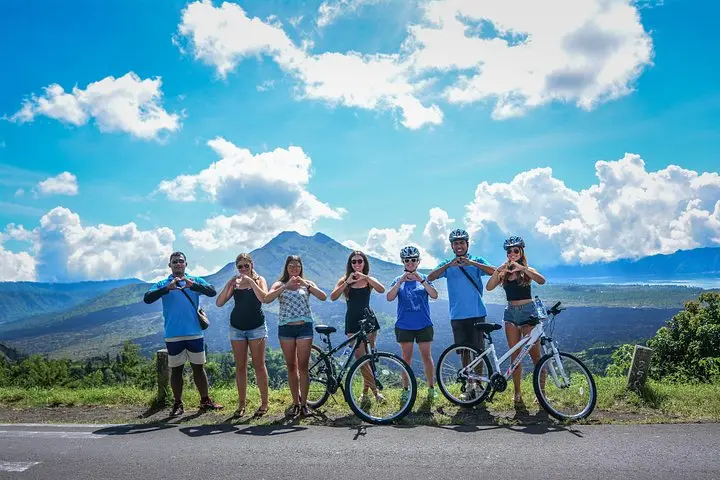
The route threads through Tegallalang’s world-famous rice terraces and centuries-old subak irrigation channels — a cooperative water-management system that shaped Bali’s agricultural landscape and remains a living cultural practice. The geology is volcanic: black-and-red soils and terraces carved into gentle slopes around Mount Batur’s distant cone. Along the way you’ll pass artisans’ workshops, coffee plots, and family compounds where offerings are left at shrines.
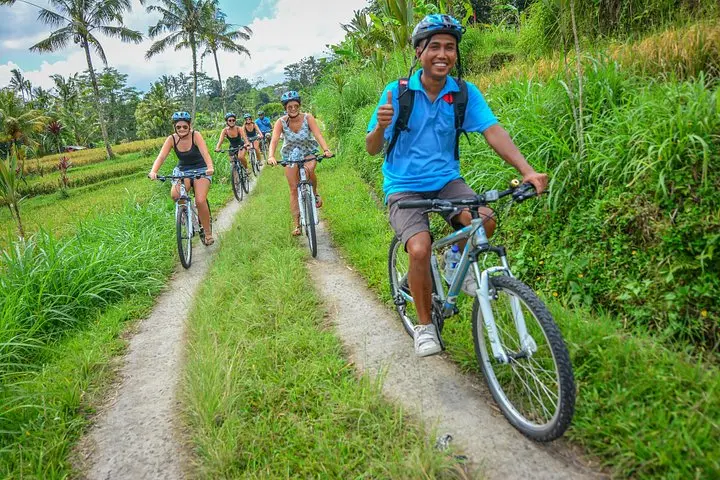
Expect roughly 25–35 km of riding on paved and compact dirt roads, with several short climbs and a cumulative elevation gain in the low hundreds of meters; terrain is mostly rolling rather than steep. Guides often stop to explain planting cycles, local ceremonies and, seasonally, harvesting or kite-flying.
Practical notes: start early to avoid midday heat, carry 1–2 liters of water, and use sun protection. Helmets and a mid-day lunch are typically included; bring sturdy closed-toe shoes and a small daypack. The pace is conversational—this is as much cultural touring as it is exercise—so plan an entire morning to afternoon (about 8 hours with transfers).
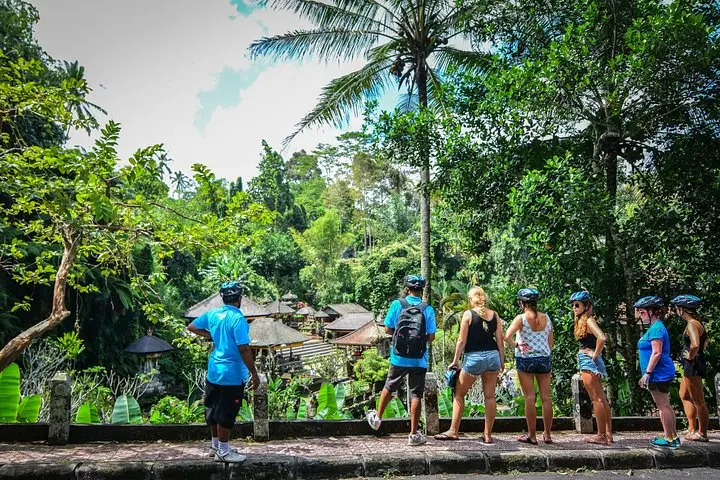
Leave no trace in the fields, ask before photographing private compounds, and be ready to dismount for narrow or steep village stretches — the reward is steady views and close-up access to rural Balinese life.
Most tours include hotel pick-up and drop-off from Ubud; confirm your pickup point during booking.
Families with older children who can pedal for several hours are fine; infant seats may be available on request.
Climbs are generally short, rolling hills rather than sustained ascents; basic cycling fitness is sufficient.
Tours may be canceled or rescheduled in heavy rain—operators often have a 24-hour cancellation window for full refunds.
Love Bali Bike Cycling Tours operates guided outdoor trips and adventures with an emphasis on safety, stewardship, and memorable experiences.
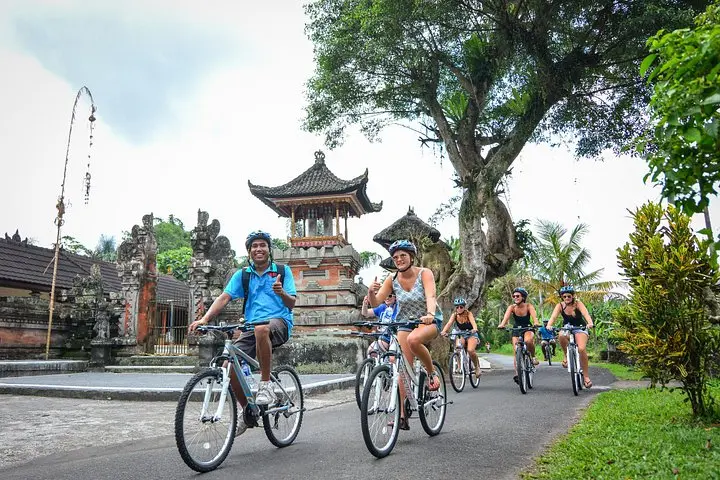
You start before dawn on a narrow lane, the air still cool and the rice fields dark-green under low clouds; your guide checks your helmet and the village begins to wake — roosters, smoke from cooking fires, a farmer already knee-deep in a terrace. The road rolls gently, rivers daring you to follow them downstream and small temples appearing at crossroads like local waypoints.
You start before dawn on a narrow lane, the air still cool and the rice fields dark-green under low clouds; your guide checks your helmet and the village begins to wake — roosters, smoke from cooking fires, a farmer already knee-deep in a terrace. The road rolls gently, rivers daring you to follow them downstream and small temples appearing at crossroads like local waypoints.
The route threads through Tegallalang’s world-famous rice terraces and centuries-old subak irrigation channels — a cooperative water-management system that shaped Bali’s agricultural landscape and remains a living cultural practice. The geology is volcanic: black-and-red soils and terraces carved into gentle slopes around Mount Batur’s distant cone. Along the way you’ll pass artisans’ workshops, coffee plots, and family compounds where offerings are left at shrines.
Expect roughly 25–35 km of riding on paved and compact dirt roads, with several short climbs and a cumulative elevation gain in the low hundreds of meters; terrain is mostly rolling rather than steep. Guides often stop to explain planting cycles, local ceremonies and, seasonally, harvesting or kite-flying.
Practical notes: start early to avoid midday heat, carry 1–2 liters of water, and use sun protection. Helmets and a mid-day lunch are typically included; bring sturdy closed-toe shoes and a small daypack. The pace is conversational—this is as much cultural touring as it is exercise—so plan an entire morning to afternoon (about 8 hours with transfers).
Leave no trace in the fields, ask before photographing private compounds, and be ready to dismount for narrow or steep village stretches — the reward is steady views and close-up access to rural Balinese life.