THE ADVENTURE COLLECTIVE® · Independent discovery and booking for outdoor travel

Spend a full day exploring Bali’s cultural and natural highlights: the insta-famous Bali Swing and Tegalalang rice terraces, a jungle waterfall swim, and the sacred Tirta Empul spring temple. This guided loop blends easy walking with cultural insight and photo stops.
Spend a full day exploring Bali’s cultural and natural highlights: the insta-famous Bali Swing and Tegalalang rice terraces, a jungle waterfall swim, and the sacred Tirta Empul spring temple. This guided loop blends easy walking with cultural insight and photo stops.
You step out of an air‑conditioned car into a humid morning that smells of wet earth and frying spices. A narrow lane opens to a rice terrace that leans into the valley, and a swing arcs above it, offering a brief, heart‑rated view of green slopes and distant ridgelines. The tour flows from that playful high point to a jungle pool, then to the chant and ritual rhythm of Tirta Empul’s bathing springs.
Verified experiences and guided adventures in the surrounding area.
Operated by Bali Local Host · Ubud, Bali
You step out of an air‑conditioned car into a humid morning that smells of wet earth and frying spices. A narrow lane opens to a rice terrace that leans into the valley, and a swing arcs above it, offering a brief, heart‑rated view of green slopes and distant ridgelines. The tour flows from that playful high point to a jungle pool, then to the chant and ritual rhythm of Tirta Empul’s bathing springs.
Tirta Empul dates to the 10th century and is set in volcanic soils born of Bali’s active tectonics; springs that feed its purification pools run where old lava fractured the substrate. Tegalalang’s bench‑style paddies are the result of subak irrigation — a community water management system recognized by UNESCO — and the surrounding jungle conceals small streams and steep limestone outcrops that give the waterfalls their plunge. You’ll see Balinese ritual practice alongside day‑to‑day farming life: offerings, rice planting, and craftsmen selling hand‑woven sarongs.
Practically, expect a full day (8–9 hours) with short walks, occasional slippery stone, and repeated stops for photos. Bring a modest sarong or rental for temple entry, a change of clothes for a waterfall swim, and plenty of water to avoid the humidity’s slow fatigue. Plan arrivals early to skip the hottest hours and allow time at each stop; the swing and rice terraces are busiest midday. The day is low‑impact technically but rich in sensory variety — water dares you to cool off, and the temple asks for quiet attention.
Yes; visitors may observe and participate if they follow local rules, wear a sarong, and respect the ceremonies — guides can explain proper protocol.
Yes, swimming is commonly allowed but check local conditions and depth; beware of slippery rocks and currents after heavy rain.
This tour lists entrance tickets (Happy Swing, Tegalalang, Tirta Empul, Ulu Petanu) as included — confirm at booking for any recent changes.
Yes; private air‑conditioned pickup and drop‑off are included, typically with an English‑speaking driver/guide.
Bali Local Host operates guided outdoor trips and adventures with an emphasis on safety, stewardship, and memorable experiences.
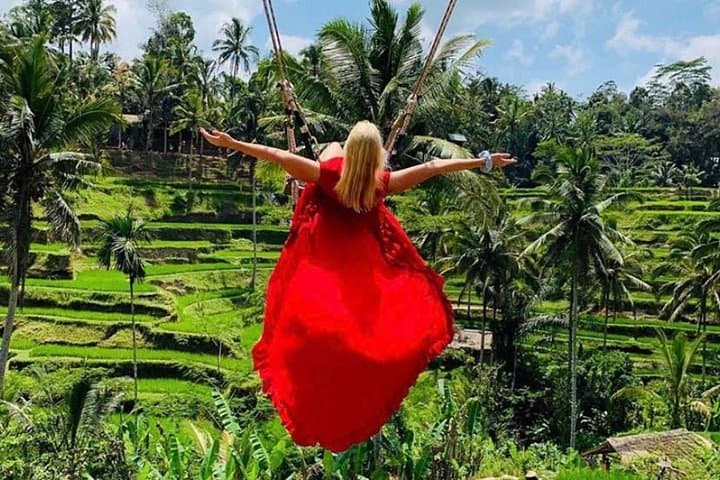


You step out of an air‑conditioned car into a humid morning that smells of wet earth and frying spices. A narrow lane opens to a rice terrace that leans into the valley, and a swing arcs above it, offering a brief, heart‑rated view of green slopes and distant ridgelines. The tour flows from that playful high point to a jungle pool, then to the chant and ritual rhythm of Tirta Empul’s bathing springs.
You step out of an air‑conditioned car into a humid morning that smells of wet earth and frying spices. A narrow lane opens to a rice terrace that leans into the valley, and a swing arcs above it, offering a brief, heart‑rated view of green slopes and distant ridgelines. The tour flows from that playful high point to a jungle pool, then to the chant and ritual rhythm of Tirta Empul’s bathing springs.
Tirta Empul dates to the 10th century and is set in volcanic soils born of Bali’s active tectonics; springs that feed its purification pools run where old lava fractured the substrate. Tegalalang’s bench‑style paddies are the result of subak irrigation — a community water management system recognized by UNESCO — and the surrounding jungle conceals small streams and steep limestone outcrops that give the waterfalls their plunge. You’ll see Balinese ritual practice alongside day‑to‑day farming life: offerings, rice planting, and craftsmen selling hand‑woven sarongs.
Practically, expect a full day (8–9 hours) with short walks, occasional slippery stone, and repeated stops for photos. Bring a modest sarong or rental for temple entry, a change of clothes for a waterfall swim, and plenty of water to avoid the humidity’s slow fatigue. Plan arrivals early to skip the hottest hours and allow time at each stop; the swing and rice terraces are busiest midday. The day is low‑impact technically but rich in sensory variety — water dares you to cool off, and the temple asks for quiet attention.