THE ADVENTURE COLLECTIVE® · Independent discovery and booking for outdoor travel

Experience Ubud’s best in a single day: dare the Bali Swing, wander the UNESCO‑linked rice terraces at Tegalalang and stroll Ubud Palace and its bustling market. Practical tips and local insights help you plan a smooth, culturally respectful visit.
Experience Ubud’s best in a single day: dare the Bali Swing, wander the UNESCO‑linked rice terraces at Tegalalang and stroll Ubud Palace and its bustling market. Practical tips and local insights help you plan a smooth, culturally respectful visit.
You step out of the air‑conditioned van into humid jungle air, and the valley opens — palms like columns, the Agung River threading below, and a series of swings arcing over the green. The Bali Swing puts you literally on the edge: a moment of weightlessness and a framed view that explains its viral fame.
Verified experiences and guided adventures in the surrounding area.
Operated by Tour East Indonesia · Ubud, Bali
You step out of the air‑conditioned van into humid jungle air, and the valley opens — palms like columns, the Agung River threading below, and a series of swings arcing over the green. The Bali Swing puts you literally on the edge: a moment of weightlessness and a framed view that explains its viral fame.
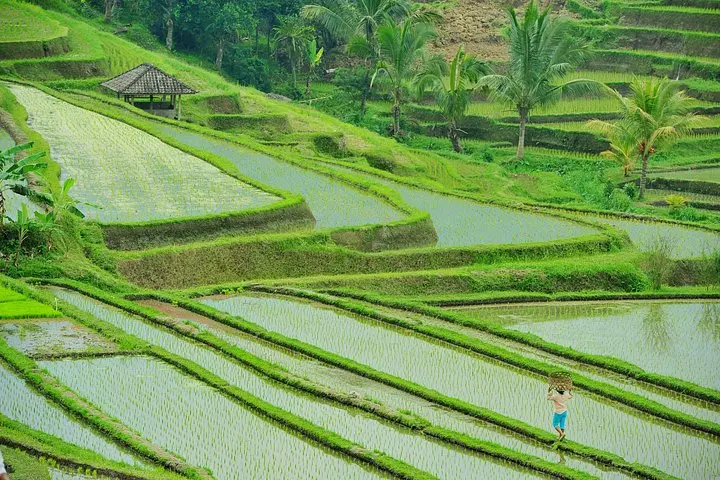
The tour threads through Bali’s cultural heart. Ubud grew as a royal and artistic center in the 19th–20th centuries; Puri Saren (Ubud Palace) still anchors ceremonial life with carved gateways and open pavilions. Nearby, Tegalalang’s rice terraces cascade down steep slopes shaped by the traditional subak irrigation system — an agricultural practice recognized by UNESCO for its community-managed water temples and cooperative farming.
Geology here is volcanic: rich, porous soils from past eruptions allow the stepped terraces and dense jungle growth. Culturally the route is intimate — local warungs, temple shrines, and artisans trading hand‑woven textiles and carved wood recall the island’s craft lineage.
Practically: expect 8–10 hours including hotel transfer, a guided stop for lunch, short walks and photo stops. Wear grippy shoes for muddy terrace paths, bring sun protection and a lightweight rain shell during the wet months. Budget modest local cash for market haggling and small entrance fees; always follow guides when near swings or steep terraces. Start early to avoid mid‑day crowds and carry water — the humidity drains you faster than distance does. This itinerary is low‑impact but popular: respect farm plots, stay on paths, and your day will feel equal parts spectacle and grounded cultural insight.
Operators provide harnesses and staff to secure the swing; follow instructions, choose a lower swing if you’re nervous, and avoid swings if you have back or heart issues.
The tour includes specified entrance fees and lunch at a local restaurant as listed in the itinerary; expect to pay extra for personal photos or optional activities.
Yes — pickup and drop‑off from major hotels in Kuta, Seminyak, Sanur, Jimbaran, Tanjung Benoa and Nusa Dua are included as part of the tour.
Yes — the market sells textiles, carvings and jewelry; haggle politely and inspect items closely, and carry small cash for purchases.
Tour East Indonesia operates guided outdoor trips and adventures with an emphasis on safety, stewardship, and memorable experiences.
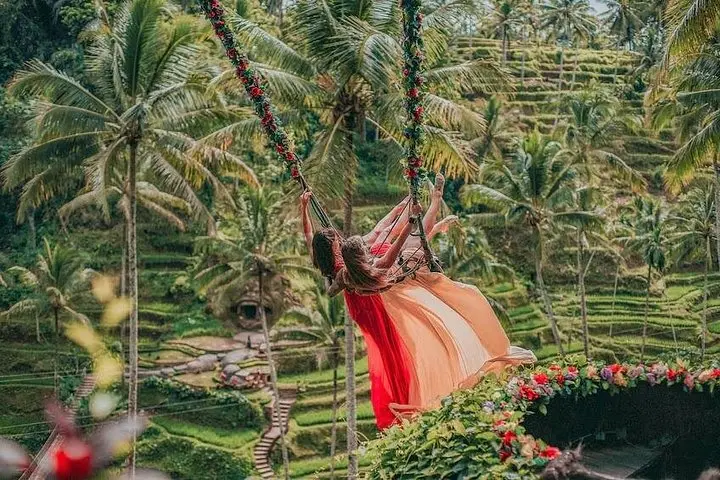
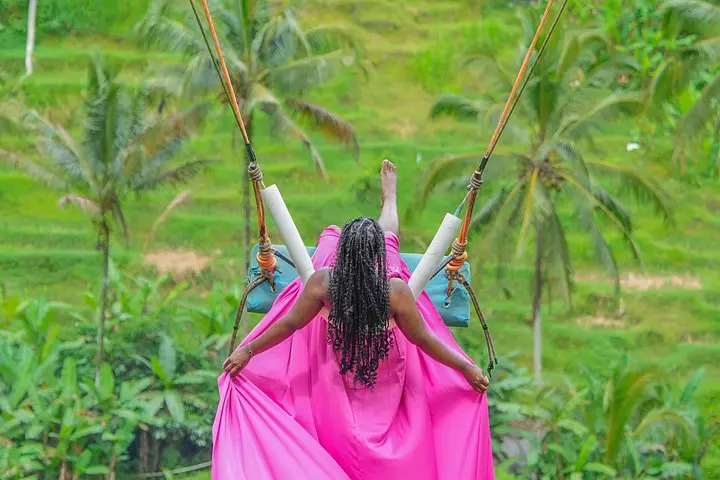
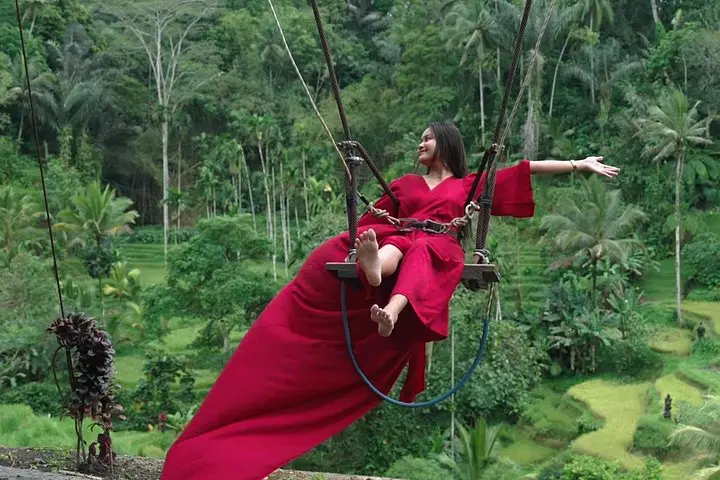
You step out of the air‑conditioned van into humid jungle air, and the valley opens — palms like columns, the Agung River threading below, and a series of swings arcing over the green. The Bali Swing puts you literally on the edge: a moment of weightlessness and a framed view that explains its viral fame.
You step out of the air‑conditioned van into humid jungle air, and the valley opens — palms like columns, the Agung River threading below, and a series of swings arcing over the green. The Bali Swing puts you literally on the edge: a moment of weightlessness and a framed view that explains its viral fame.
The tour threads through Bali’s cultural heart. Ubud grew as a royal and artistic center in the 19th–20th centuries; Puri Saren (Ubud Palace) still anchors ceremonial life with carved gateways and open pavilions. Nearby, Tegalalang’s rice terraces cascade down steep slopes shaped by the traditional subak irrigation system — an agricultural practice recognized by UNESCO for its community-managed water temples and cooperative farming.
Geology here is volcanic: rich, porous soils from past eruptions allow the stepped terraces and dense jungle growth. Culturally the route is intimate — local warungs, temple shrines, and artisans trading hand‑woven textiles and carved wood recall the island’s craft lineage.
Practically: expect 8–10 hours including hotel transfer, a guided stop for lunch, short walks and photo stops. Wear grippy shoes for muddy terrace paths, bring sun protection and a lightweight rain shell during the wet months. Budget modest local cash for market haggling and small entrance fees; always follow guides when near swings or steep terraces. Start early to avoid mid‑day crowds and carry water — the humidity drains you faster than distance does. This itinerary is low‑impact but popular: respect farm plots, stay on paths, and your day will feel equal parts spectacle and grounded cultural insight.