THE ADVENTURE COLLECTIVE® · Independent discovery and booking for outdoor travel

Spend a full day exploring Ubud’s highlights: curious macaques in the Sacred Monkey Forest, the layered green of Tegalalang rice terraces, ritual cleansing at Tirta Empul, and a local waterfall. Practical tips and what to expect on this accessible day tour.
Spend a full day exploring Ubud’s highlights: curious macaques in the Sacred Monkey Forest, the layered green of Tegalalang rice terraces, ritual cleansing at Tirta Empul, and a local waterfall. Practical tips and what to expect on this accessible day tour.
You arrive before dawn on a narrow Ubud lane; humid air pulls at your shirt as the driver steers toward a canopy of banyan and the distant chatter of macaques. The day moves like a slow tide — through forest paths where long-tailed macaques inspect backpacks, across sculpted rice terraces that step down the valley like green stairs, and into a courtyard where water courses through carved stone for centuries of ritual.
Verified experiences and guided adventures in the surrounding area.
Operated by Bali Mandala Tours · Ubud, Bali
You arrive before dawn on a narrow Ubud lane; humid air pulls at your shirt as the driver steers toward a canopy of banyan and the distant chatter of macaques. The day moves like a slow tide — through forest paths where long-tailed macaques inspect backpacks, across sculpted rice terraces that step down the valley like green stairs, and into a courtyard where water courses through carved stone for centuries of ritual.
Bali’s central highlands are volcanic in origin, the soil heavy with alluvial silt that makes the terraces possible and feeds the island’s artisans. Ubud has long been a cultural hub: painters and carvers shaped modern Balinese art here in the early 20th century, while Tirta Empul temple preserves water-based purification rites that date back over a thousand years.
The route is practical — short walks and photo stops punctuated by time in an air-conditioned vehicle — and the geology is plain in the slopes and springs you cross. Locals run small galleries and warungs where artisans carve wood and hammer silver; many stops allow respectful interaction rather than deep exploration.
Practical guidance: wear quick-dry clothing and sturdy sandals or light hiking shoes for uneven temple steps and wet rocks at the waterfall; carry mosquito repellent and a refillable water bottle. Bring small cash for temple offerings, gallery purchases, and entrance fees. Time your visit to avoid the late-afternoon crowds in the Monkey Forest and to catch softer light on the terraces. The tour is accessible for most fitness levels but includes some uneven terrain — move deliberately where stone gets slick and let the rhythms of the landscape set your pace.
The private tour runs about 8–10 hours and includes transport in an air-conditioned vehicle and an English-speaking driver; admissions are typically paid on-site unless specified.
Children can visit but should be supervised closely; macaques are wild and may grab food or loose items, so keep a safe distance and avoid feeding them.
Some temples require covered knees and shoulders; many sites provide or rent sarongs, but bringing your own ensures comfort and quicker entry.
No sustained hiking is required — expect short, uneven walks, stairs at temple sites, and wet, slippery surfaces near the waterfall.
Bali Mandala Tours operates guided outdoor trips and adventures with an emphasis on safety, stewardship, and memorable experiences.


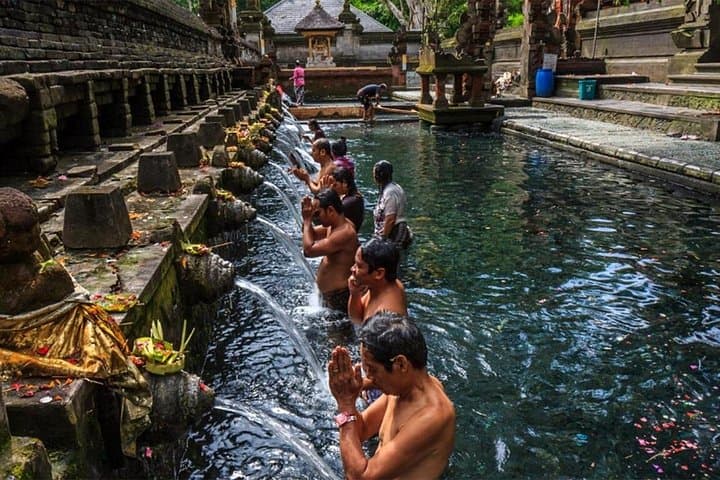
You arrive before dawn on a narrow Ubud lane; humid air pulls at your shirt as the driver steers toward a canopy of banyan and the distant chatter of macaques. The day moves like a slow tide — through forest paths where long-tailed macaques inspect backpacks, across sculpted rice terraces that step down the valley like green stairs, and into a courtyard where water courses through carved stone for centuries of ritual.
You arrive before dawn on a narrow Ubud lane; humid air pulls at your shirt as the driver steers toward a canopy of banyan and the distant chatter of macaques. The day moves like a slow tide — through forest paths where long-tailed macaques inspect backpacks, across sculpted rice terraces that step down the valley like green stairs, and into a courtyard where water courses through carved stone for centuries of ritual.
Bali’s central highlands are volcanic in origin, the soil heavy with alluvial silt that makes the terraces possible and feeds the island’s artisans. Ubud has long been a cultural hub: painters and carvers shaped modern Balinese art here in the early 20th century, while Tirta Empul temple preserves water-based purification rites that date back over a thousand years.
The route is practical — short walks and photo stops punctuated by time in an air-conditioned vehicle — and the geology is plain in the slopes and springs you cross. Locals run small galleries and warungs where artisans carve wood and hammer silver; many stops allow respectful interaction rather than deep exploration.
Practical guidance: wear quick-dry clothing and sturdy sandals or light hiking shoes for uneven temple steps and wet rocks at the waterfall; carry mosquito repellent and a refillable water bottle. Bring small cash for temple offerings, gallery purchases, and entrance fees. Time your visit to avoid the late-afternoon crowds in the Monkey Forest and to catch softer light on the terraces. The tour is accessible for most fitness levels but includes some uneven terrain — move deliberately where stone gets slick and let the rhythms of the landscape set your pace.