THE ADVENTURE COLLECTIVE® · Independent discovery and booking for outdoor travel

Spend a day moving from monkey-filled jungle paths to terraced rice panoramas and a sacred purification temple. This guided Ubud circuit combines wildlife moments, cultural ritual, and a cooling waterfall swim—ideal for travelers who want a compact introduction to central Bali.
Spend a day moving from monkey-filled jungle paths to terraced rice panoramas and a sacred purification temple. This guided Ubud circuit combines wildlife moments, cultural ritual, and a cooling waterfall swim—ideal for travelers who want a compact introduction to central Bali.
A narrow lane opens into humid jungle and the chatter of long-tailed macaques — that’s the first scene this six‑hour loop through Ubud lays out. Visitors move from shaded temple courtyards where mossed stone reliefs drip with time, to carved rice terraces that stair-step the hills, and finally to a clear plunge pool under a fern‑fringed cliff.
Verified experiences and guided adventures in the surrounding area.
Operated by Ubud Driver · Ubud, Bali
A narrow lane opens into humid jungle and the chatter of long-tailed macaques — that’s the first scene this six‑hour loop through Ubud lays out. Visitors move from shaded temple courtyards where mossed stone reliefs drip with time, to carved rice terraces that stair-step the hills, and finally to a clear plunge pool under a fern‑fringed cliff.
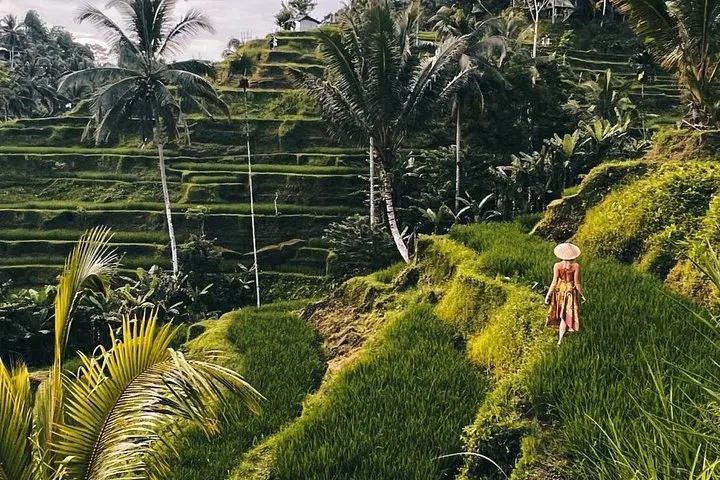
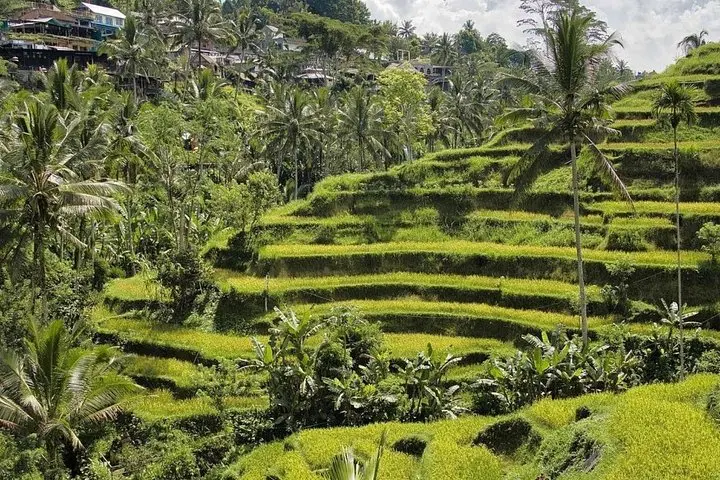
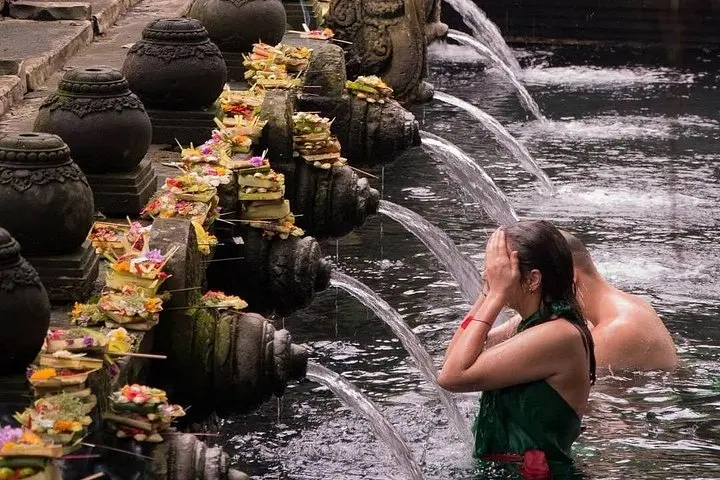
Tirta Empul dates to the 10th century and remains an active place of Balinese purification, its spring-fed pools shaped by volcanic geology that has sculpted Bali’s valleys. The Tegalalang terraces display the subak irrigation system — cooperative water management that’s as much social practice as landscape design. Tibumana’s cascade is fed by the island’s aquifer and framed by secondary rainforest, where birds and reptiles outnumber people.
Expect a patchwork of experiences: cultural ritual at a working temple, close encounters with wild monkeys in a sanctuary, panoramic photo spots above the rice paddies, and a short jungle walk down to a swim-friendly waterfall. The route is mostly short walks and paved roads with some uneven trails; minimal hiking fitness is required.
Practical edge: start early to beat traffic and mid-afternoon showers, keep small bills for entrance and offerings, lock loose items before entering the monkey areas, and wear shoes that handle slick stone. Bring swimwear, sun protection, and a light rain layer. Respect temple etiquette, follow guide instructions around wildlife, and leave no trace—these places hold both spiritual and ecological value.
Yes — this tour includes entrance fees for Sacred Monkey Forest, Tegalalang Rice Terrace, Tirta Empul, and Tibumana Waterfall as listed in the inclusions.
Yes; the pool at Tibumana is generally safe for swimming, but depth can vary — follow your guide’s advice and watch for slippery rocks.
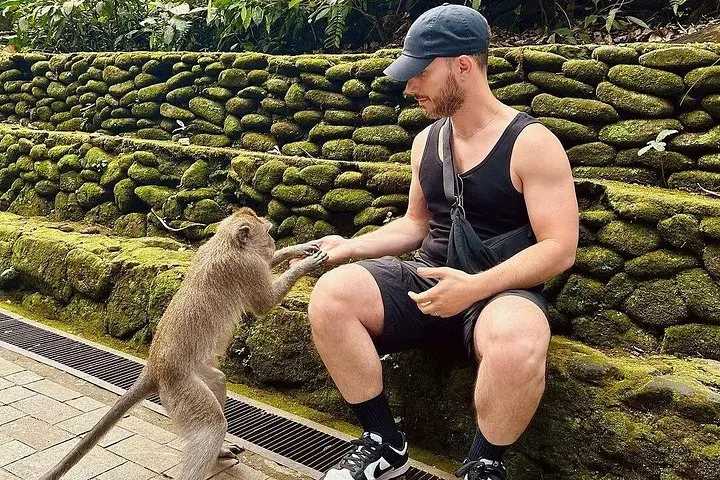
Monkeys are wild and unpredictable; you can observe and photograph them at close range, but avoid feeding, sudden movements, and keep personal items secured.
The swing is typically a separate attraction with its own fee—your guide can take you to a swing site but the swing cost is optional and paid on-site.
Ubud Driver operates guided outdoor trips and adventures with an emphasis on safety, stewardship, and memorable experiences.
A narrow lane opens into humid jungle and the chatter of long-tailed macaques — that’s the first scene this six‑hour loop through Ubud lays out. Visitors move from shaded temple courtyards where mossed stone reliefs drip with time, to carved rice terraces that stair-step the hills, and finally to a clear plunge pool under a fern‑fringed cliff.
A narrow lane opens into humid jungle and the chatter of long-tailed macaques — that’s the first scene this six‑hour loop through Ubud lays out. Visitors move from shaded temple courtyards where mossed stone reliefs drip with time, to carved rice terraces that stair-step the hills, and finally to a clear plunge pool under a fern‑fringed cliff.
Tirta Empul dates to the 10th century and remains an active place of Balinese purification, its spring-fed pools shaped by volcanic geology that has sculpted Bali’s valleys. The Tegalalang terraces display the subak irrigation system — cooperative water management that’s as much social practice as landscape design. Tibumana’s cascade is fed by the island’s aquifer and framed by secondary rainforest, where birds and reptiles outnumber people.
Expect a patchwork of experiences: cultural ritual at a working temple, close encounters with wild monkeys in a sanctuary, panoramic photo spots above the rice paddies, and a short jungle walk down to a swim-friendly waterfall. The route is mostly short walks and paved roads with some uneven trails; minimal hiking fitness is required.
Practical edge: start early to beat traffic and mid-afternoon showers, keep small bills for entrance and offerings, lock loose items before entering the monkey areas, and wear shoes that handle slick stone. Bring swimwear, sun protection, and a light rain layer. Respect temple etiquette, follow guide instructions around wildlife, and leave no trace—these places hold both spiritual and ecological value.