THE ADVENTURE COLLECTIVE® · Independent discovery and booking for outdoor travel

Spend a full day exploring Ubud’s signature sites: the sculpted Tegalalang rice terraces, sacred pools of Tirta Empul, the swimming-friendly Tegenungan waterfall, and the spirited Monkey Forest. This private tour pairs cultural context with practical logistics for a single, well-paced day out of Ubud.
Spend a full day exploring Ubud’s signature sites: the sculpted Tegalalang rice terraces, sacred pools of Tirta Empul, the swimming-friendly Tegenungan waterfall, and the spirited Monkey Forest. This private tour pairs cultural context with practical logistics for a single, well-paced day out of Ubud.
Morning light spills across a stepped hillside as the guide steers a private van away from Ubud’s narrow lanes. The day unfolds like a sequence of landscape scenes: terraces cut into the slope, a temple’s holy water rushing under stone spouts, a curtain of waterfall spray, and a forest where long-tailed macaques move with casual authority.
Verified experiences and guided adventures in the surrounding area.
Operated by Local Bali Guide · Ubud, Bali
Morning light spills across a stepped hillside as the guide steers a private van away from Ubud’s narrow lanes. The day unfolds like a sequence of landscape scenes: terraces cut into the slope, a temple’s holy water rushing under stone spouts, a curtain of waterfall spray, and a forest where long-tailed macaques move with casual authority.
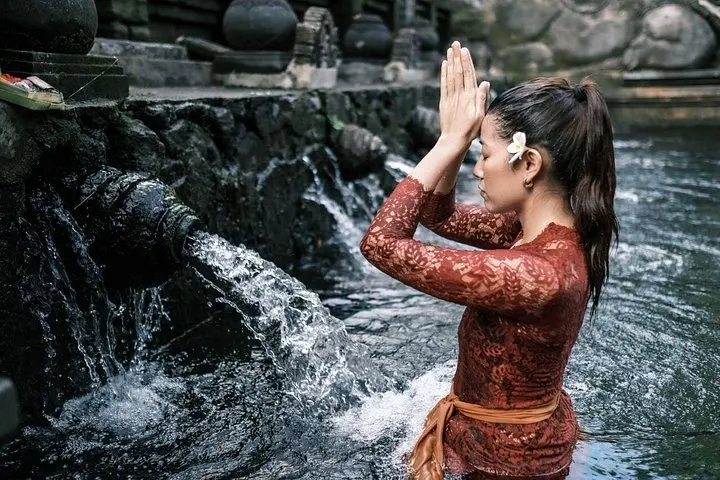
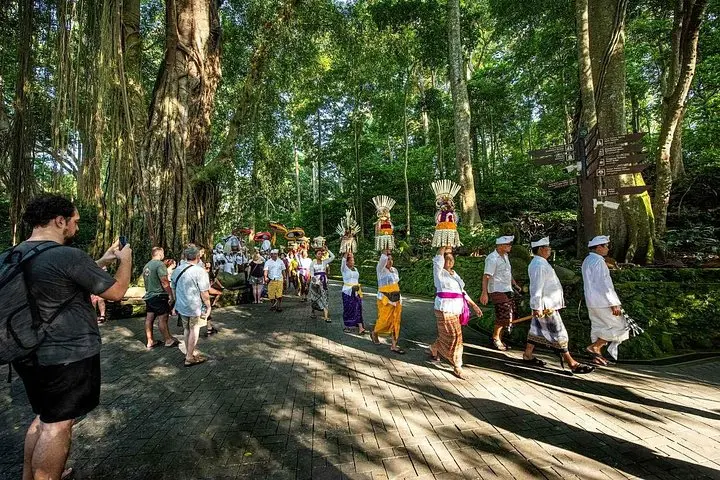
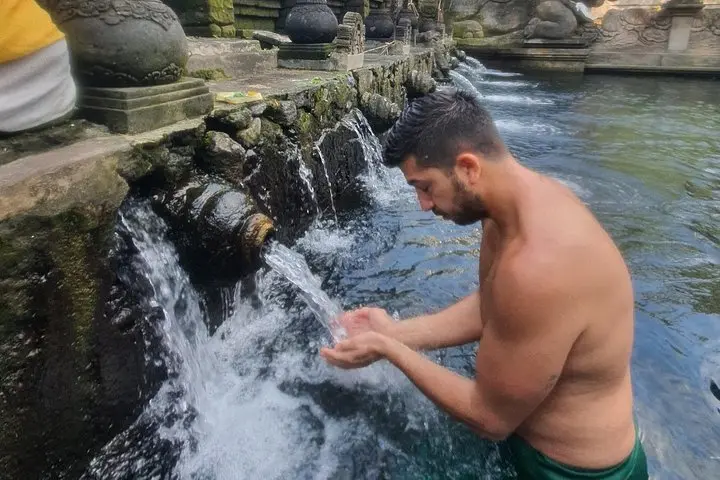
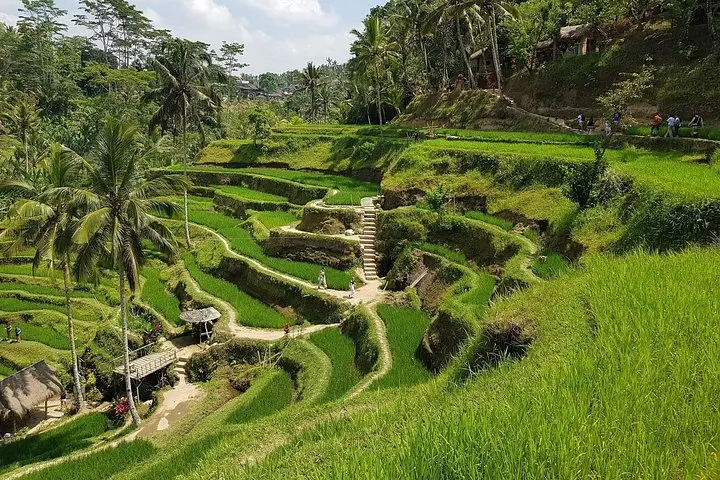
Tegalalang’s rice terraces are shaped by subak, the cooperative irrigation system that has managed Bali’s water for centuries; the contours are agricultural engineering as much as landscape. Tirta Empul, founded in 962 AD under the Warmadewa dynasty, still draws Balinese for the Melukat purification ritual—visitors witness rows of worshippers moving through ritual spouts. At Tegenungan, a short stair descent leads to a plunge pool where the falls demand attention and, for many, a quick swim. The Sacred Monkey Forest Sanctuary occupies roughly 12.5 hectares and shelters temple ruins and more than a thousand macaques that test pockets and patience in equal measure.
Practical notes: the full itinerary runs 6–10 hours with private transport and bottled water included; a sarong is provided for temple visits but bring modest layers for comfort. Wear grippy shoes for uneven paths and stairways, and secure loose items around monkeys. Expect intermittent crowds at prime viewpoints—start early to avoid midday heat and photo lines. Bring small bills for market bargaining, be respectful of worship practices (women may be restricted during menstruation at temple areas), and plan the day during the dry season for the clearest views.
Options often include entrance tickets; confirm at booking which combination of entrances are covered—some operators offer choices with or without tickets.
Visitors may observe or participate if they follow temple protocols: wear modest clothing, use provided sarongs, and be respectful of worshippers; women may face restrictions during menstruation.
Swimming is common but conditions vary—check current water levels, watch for strong currents, and use caution on slippery rocks.
Monkeys roam freely; keep a respectful distance, avoid feeding them, and store loose items—guides will advise safe viewing distances.
Local Bali Guide operates guided outdoor trips and adventures with an emphasis on safety, stewardship, and memorable experiences.
Morning light spills across a stepped hillside as the guide steers a private van away from Ubud’s narrow lanes. The day unfolds like a sequence of landscape scenes: terraces cut into the slope, a temple’s holy water rushing under stone spouts, a curtain of waterfall spray, and a forest where long-tailed macaques move with casual authority.
Morning light spills across a stepped hillside as the guide steers a private van away from Ubud’s narrow lanes. The day unfolds like a sequence of landscape scenes: terraces cut into the slope, a temple’s holy water rushing under stone spouts, a curtain of waterfall spray, and a forest where long-tailed macaques move with casual authority.
Tegalalang’s rice terraces are shaped by subak, the cooperative irrigation system that has managed Bali’s water for centuries; the contours are agricultural engineering as much as landscape. Tirta Empul, founded in 962 AD under the Warmadewa dynasty, still draws Balinese for the Melukat purification ritual—visitors witness rows of worshippers moving through ritual spouts. At Tegenungan, a short stair descent leads to a plunge pool where the falls demand attention and, for many, a quick swim. The Sacred Monkey Forest Sanctuary occupies roughly 12.5 hectares and shelters temple ruins and more than a thousand macaques that test pockets and patience in equal measure.
Practical notes: the full itinerary runs 6–10 hours with private transport and bottled water included; a sarong is provided for temple visits but bring modest layers for comfort. Wear grippy shoes for uneven paths and stairways, and secure loose items around monkeys. Expect intermittent crowds at prime viewpoints—start early to avoid midday heat and photo lines. Bring small bills for market bargaining, be respectful of worship practices (women may be restricted during menstruation at temple areas), and plan the day during the dry season for the clearest views.