THE ADVENTURE COLLECTIVE® · Independent discovery and booking for outdoor travel

A private, full-day circuit from Ubud that pairs cultural depth with natural spectacle: walk the Tegalalang rice terraces, join the purification at Tirta Empul, swing above the jungle, and cool off at Tibumana and Kanto Lampo waterfalls. Practical logistics, local context and photography-friendly timing make it an ideal single-day sampler of central Bali.
A private, full-day circuit from Ubud that pairs cultural depth with natural spectacle: walk the Tegalalang rice terraces, join the purification at Tirta Empul, swing above the jungle, and cool off at Tibumana and Kanto Lampo waterfalls. Practical logistics, local context and photography-friendly timing make it an ideal single-day sampler of central Bali.
The morning air in Ubud is humid and decisive: the rice terraces seem to inhale the sunrise and exhale mist that hangs low over the valley. On this private full-day loop, a driver eases the van up narrow lanes and the landscape opens in stages — tiered paddies, a rope-swinging platform perched above the jungle, an ancient water temple whose pools murmur with ritual, and cool, stepping-stone waterfalls that dare you to wade in. It’s ten hours framed by green: a compact itinerary that moves deliberately between cultural touchpoints and natural edges.
Verified experiences and guided adventures in the surrounding area.
Operated by Driver Ubud · Ubud, Bali
The morning air in Ubud is humid and decisive: the rice terraces seem to inhale the sunrise and exhale mist that hangs low over the valley. On this private full-day loop, a driver eases the van up narrow lanes and the landscape opens in stages — tiered paddies, a rope-swinging platform perched above the jungle, an ancient water temple whose pools murmur with ritual, and cool, stepping-stone waterfalls that dare you to wade in. It’s ten hours framed by green: a compact itinerary that moves deliberately between cultural touchpoints and natural edges.
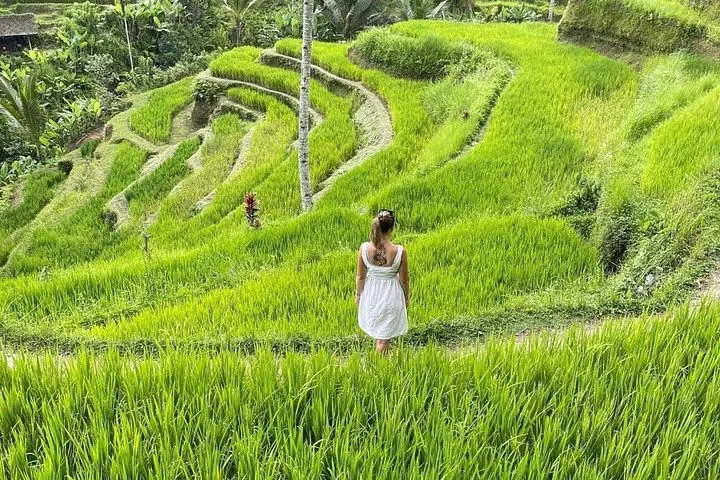
Tegalalang’s carved terraces showcase Bali’s subak system, an irrigation network that has organized community farming for centuries. The ricefields climb and level in terraces that manage water like clockwork; walking the narrow paths is a lesson in geology and human engineering — you’ll cover roughly 1–2 km on uneven, often muddy stone paths and gain maybe 30–50 m in elevation as you skirt the slopes.
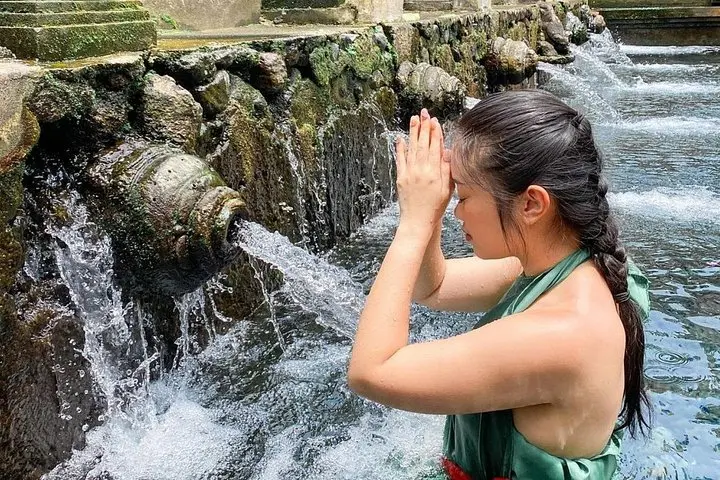
Tirta Empul, founded around the 10th century and dedicated to Vishnu, brings the day into a different register. The temple’s spring-fed pools are active places of devotion; guide-led purification is optional but recommended for insight into Balinese Hindu practices. Respectful dress and a sarong are required for entry, and the temple’s carved stonework tells local stories of kings, volcanoes and water’s spiritual power.
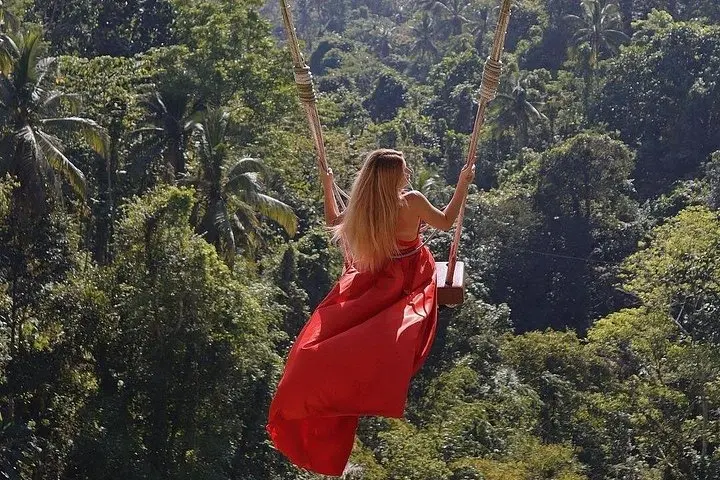
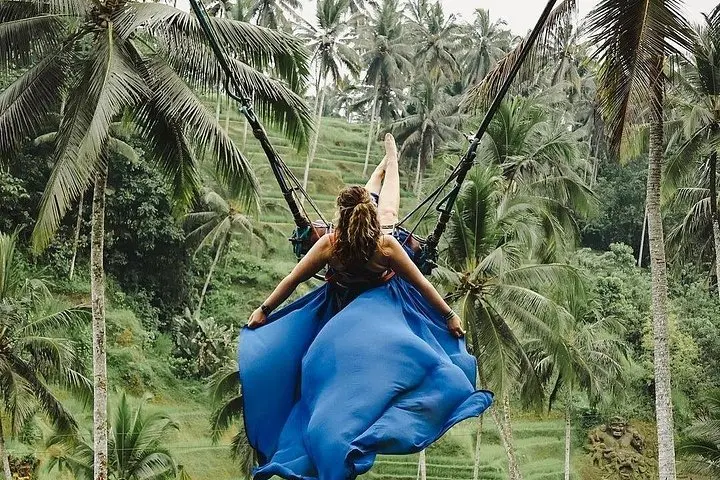
After a local lunch, the rhythm changes to sharp, cool sounds: Tibumana is a single-drop fall with a shallow pool and a short jungle walk of a few hundred meters (expect steps and slick rock), while Kanto Lampo tumbles across banded basalt and invites photographers to frame its cascades against fern-furred cliffs. The Ubud Jungle Swing, sited between palms and a river valley, offers that suspended moment of vertigo and a skyline of palms — bring a stomach for motion and a clean outfit for photos.
Practical edge: this private tour runs about 10 hours door-to-door, with pickup roughly 60 minutes prior to the start time; plan for intermittent walking, lots of steps and slippery surfaces by the falls. Wear sturdy shoes, pack swimwear and a quick-dry towel, bring a lightweight rain layer in the wet months, and carry cash for small entrance fees and local sellers. Hydrate often — bottled water is provided, but refill when you can.
Timing makes the trip: start early to avoid mid-day crowds at Tirta Empul and Tegalalang, and reserve your swing slots if photography is a priority. Above all, move with respect — these sites are active cultural places and a living landscape that rewards quiet attention as much as a good photograph.
Most local entrance tickets listed (Tegalalang, Tirta Empul, Kanto Lampo, Tibumana, Bali Swing) are included per the tour inclusions, but check the booking confirmation for specifics.
Yes — tell your guide in advance if you want to participate; they’ll explain etiquette and provide sarong guidance if needed.
Yes for school-age children who can handle stairs and short jungle walks; keep a close eye at waterfall edges and on slippery steps.
Carry some Indonesian rupiah for optional extras like paid photo services, snacks, tips, or small vendor purchases — ATMs are available in Ubud but may be busy.
Expect short walks: Tegalalang 1–2 km on terraces, Tibumana ~300–500 m with steps, Kanto Lampo a short 100–300 m approach; overall the day is low-distance but involves stairs and uneven terrain.
Yes — private pickup from most Bali accommodations is offered; the operator asks for your exact pickup point at booking and usually arrives ~60 minutes before start time.
Driver Ubud operates guided outdoor trips and adventures with an emphasis on safety, stewardship, and memorable experiences.
The morning air in Ubud is humid and decisive: the rice terraces seem to inhale the sunrise and exhale mist that hangs low over the valley. On this private full-day loop, a driver eases the van up narrow lanes and the landscape opens in stages — tiered paddies, a rope-swinging platform perched above the jungle, an ancient water temple whose pools murmur with ritual, and cool, stepping-stone waterfalls that dare you to wade in. It’s ten hours framed by green: a compact itinerary that moves deliberately between cultural touchpoints and natural edges.
The morning air in Ubud is humid and decisive: the rice terraces seem to inhale the sunrise and exhale mist that hangs low over the valley. On this private full-day loop, a driver eases the van up narrow lanes and the landscape opens in stages — tiered paddies, a rope-swinging platform perched above the jungle, an ancient water temple whose pools murmur with ritual, and cool, stepping-stone waterfalls that dare you to wade in. It’s ten hours framed by green: a compact itinerary that moves deliberately between cultural touchpoints and natural edges.
Tegalalang’s carved terraces showcase Bali’s subak system, an irrigation network that has organized community farming for centuries. The ricefields climb and level in terraces that manage water like clockwork; walking the narrow paths is a lesson in geology and human engineering — you’ll cover roughly 1–2 km on uneven, often muddy stone paths and gain maybe 30–50 m in elevation as you skirt the slopes.
Tirta Empul, founded around the 10th century and dedicated to Vishnu, brings the day into a different register. The temple’s spring-fed pools are active places of devotion; guide-led purification is optional but recommended for insight into Balinese Hindu practices. Respectful dress and a sarong are required for entry, and the temple’s carved stonework tells local stories of kings, volcanoes and water’s spiritual power.
After a local lunch, the rhythm changes to sharp, cool sounds: Tibumana is a single-drop fall with a shallow pool and a short jungle walk of a few hundred meters (expect steps and slick rock), while Kanto Lampo tumbles across banded basalt and invites photographers to frame its cascades against fern-furred cliffs. The Ubud Jungle Swing, sited between palms and a river valley, offers that suspended moment of vertigo and a skyline of palms — bring a stomach for motion and a clean outfit for photos.
Practical edge: this private tour runs about 10 hours door-to-door, with pickup roughly 60 minutes prior to the start time; plan for intermittent walking, lots of steps and slippery surfaces by the falls. Wear sturdy shoes, pack swimwear and a quick-dry towel, bring a lightweight rain layer in the wet months, and carry cash for small entrance fees and local sellers. Hydrate often — bottled water is provided, but refill when you can.
Timing makes the trip: start early to avoid mid-day crowds at Tirta Empul and Tegalalang, and reserve your swing slots if photography is a priority. Above all, move with respect — these sites are active cultural places and a living landscape that rewards quiet attention as much as a good photograph.