THE ADVENTURE COLLECTIVE® · Independent discovery and booking for outdoor travel

Explore Ubud’s signature sights in a single private day—interact with macaques at the Sacred Monkey Forest, walk the Campuhan ridge, peer over Tegalalang’s rice terraces and feel the spray at Tegenungan waterfall. This guide explains what to expect and how to prepare.
Explore Ubud’s signature sights in a single private day—interact with macaques at the Sacred Monkey Forest, walk the Campuhan ridge, peer over Tegalalang’s rice terraces and feel the spray at Tegenungan waterfall. This guide explains what to expect and how to prepare.
Morning light filters through palm fronds as a private car slips away from Ubud’s compact center and into a landscape that shifts from town to terrace to jungle.
Verified experiences and guided adventures in the surrounding area.
Operated by Bali Local Host · Ubud, Bali
Morning light filters through palm fronds as a private car slips away from Ubud’s compact center and into a landscape that shifts from town to terrace to jungle.
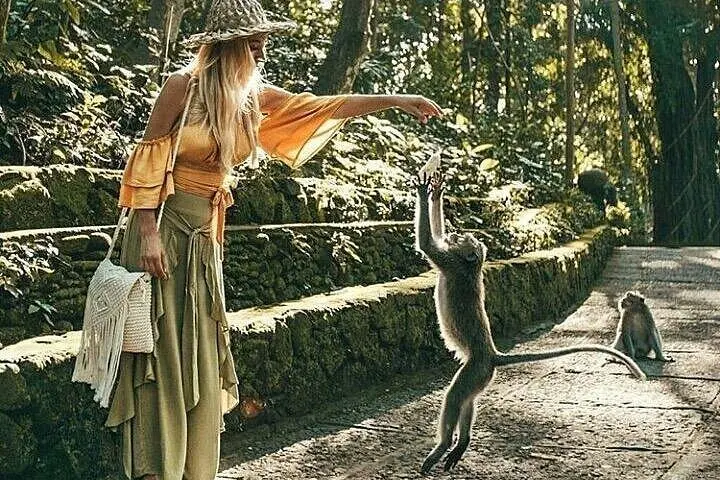
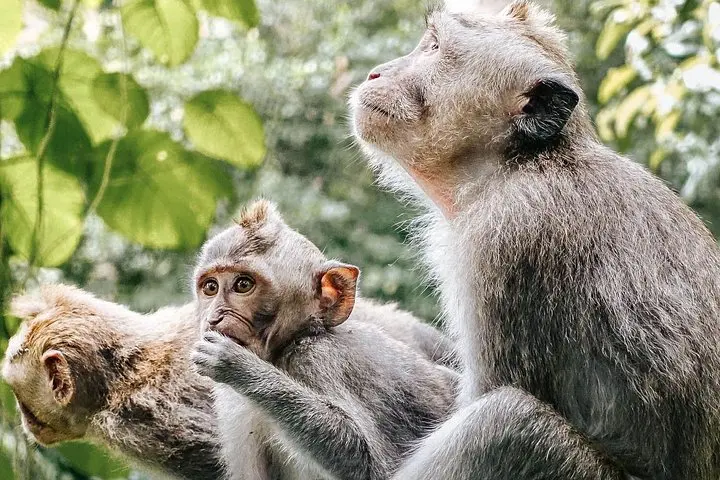
The day typically begins at the Sacred Monkey Forest Sanctuary, where over 1,200 long‑tailed macaques move through mossed temples and stone stairways, testing pockets and curiosity alike. From there the route follows the Campuhan Ridge Walk — a roughly 2 km ridge jaunt above the Wos River that gives a clear, open vantage to rice fields and low volcanoes on the horizon.
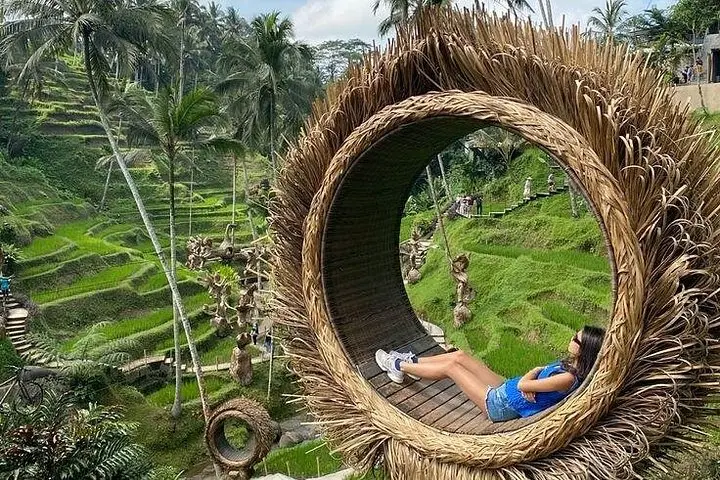
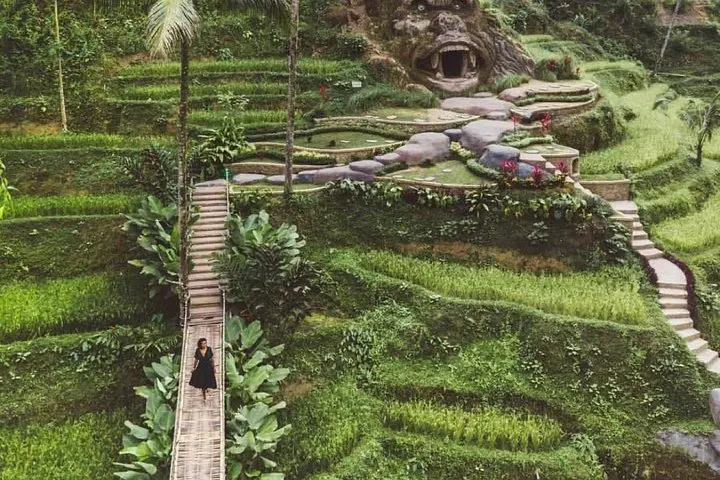
Tegalalang’s stepped rice terraces showcase Bali’s subak irrigation practice, part of the island’s long agrarian culture and the broader UNESCO‑recognized cultural landscape. Geologically the region is volcanic, with fertile ash soils that make the terraces possible; culturally the rice fields remain central to community rituals and temple offerings.
Tegenungan waterfall offers a contrasting, forested plunge pool reached by a short stair descent; expect humid air and slippery stairs. A stop at a local coffee plantation introduces Luwak coffee and traditional roasting methods, pairing tasting notes with an explanation of smallholder agriculture.
Practical notes: this private tour runs about 10 hours with vehicle transfers between sites, light walking on uneven paths, and several sets of steps. Bring a small daypack, closed‑toe shoes for terraces and falls, sun protection, and cash for minor entrance fees and offerings. Keep belongings secure and avoid feeding monkeys; guides usually manage logistics and can pace the day to match mobility and interests.
The macaques are wild and curious; they’re generally accustomed to people but can snatch food or loose items. Keep distance, don’t feed them, and follow guide instructions.
The tour is family‑friendly but involves stairs and uneven surfaces at several stops; wheelchair access is limited at some sites despite accessible transport—check specifics with the operator.
Some entry fees may be optional or extra (photos, donations); confirm with the operator which admissions are covered and carry small cash for local charges.
Early morning or late afternoon avoids heat and crowds—dry season (May–September) provides clearer skies, while the wet season offers lush scenery but sporadic rain.
Bali Local Host operates guided outdoor trips and adventures with an emphasis on safety, stewardship, and memorable experiences.
Morning light filters through palm fronds as a private car slips away from Ubud’s compact center and into a landscape that shifts from town to terrace to jungle.
Morning light filters through palm fronds as a private car slips away from Ubud’s compact center and into a landscape that shifts from town to terrace to jungle.
The day typically begins at the Sacred Monkey Forest Sanctuary, where over 1,200 long‑tailed macaques move through mossed temples and stone stairways, testing pockets and curiosity alike. From there the route follows the Campuhan Ridge Walk — a roughly 2 km ridge jaunt above the Wos River that gives a clear, open vantage to rice fields and low volcanoes on the horizon.
Tegalalang’s stepped rice terraces showcase Bali’s subak irrigation practice, part of the island’s long agrarian culture and the broader UNESCO‑recognized cultural landscape. Geologically the region is volcanic, with fertile ash soils that make the terraces possible; culturally the rice fields remain central to community rituals and temple offerings.
Tegenungan waterfall offers a contrasting, forested plunge pool reached by a short stair descent; expect humid air and slippery stairs. A stop at a local coffee plantation introduces Luwak coffee and traditional roasting methods, pairing tasting notes with an explanation of smallholder agriculture.
Practical notes: this private tour runs about 10 hours with vehicle transfers between sites, light walking on uneven paths, and several sets of steps. Bring a small daypack, closed‑toe shoes for terraces and falls, sun protection, and cash for minor entrance fees and offerings. Keep belongings secure and avoid feeding monkeys; guides usually manage logistics and can pace the day to match mobility and interests.