THE ADVENTURE COLLECTIVE® · Independent discovery and booking for outdoor travel

Ride quiet backroads from Ubud into the UNESCO-listed Pakerisan River Valley, where rice terraces, temple compounds, and subak channels frame a mostly downhill cultural cycling route. Includes bike, lunch, and a chance to cool off at a pool.
Ride quiet backroads from Ubud into the UNESCO-listed Pakerisan River Valley, where rice terraces, temple compounds, and subak channels frame a mostly downhill cultural cycling route. Includes bike, lunch, and a chance to cool off at a pool.
You push off beneath a thin, early sun and the road opens into a corridor of green: rice terraces tilt like stepped mirrors, villagers wheel baskets past family compounds, and the Pakerisan River threads the valley, daring you to follow its curve.
Verified experiences and guided adventures in the surrounding area.
Operated by BALI PURE TOUR · Ubud, Bali
You push off beneath a thin, early sun and the road opens into a corridor of green: rice terraces tilt like stepped mirrors, villagers wheel baskets past family compounds, and the Pakerisan River threads the valley, daring you to follow its curve.
This five-hour ride from the hills around Ubud traces the northeastern flank of the Pakerisan River Valley, a UNESCO-listed cultural landscape shaped over centuries by the subak irrigation system. The route passes sites with roots in 8th–12th century Balinese-Javanese kingdoms, where animist practice met incoming Hindu and Buddhist ideas. Along the way you’ll see temple compounds, carved stone markers, and the wooden architecture unique to central Bali; guides often point out lontar script on ceremonial objects and explain the Tri Hita Karana philosophy that frames local life.
Geologically, the valley sits on volcanic soils fed by nearby peaks; terraces cling to gentle slopes and channels ripple with engineered precision. Cultural touches—Topeng masks tucked in homes, the cadence of daily offerings—keep the ride as much about people as landscape.
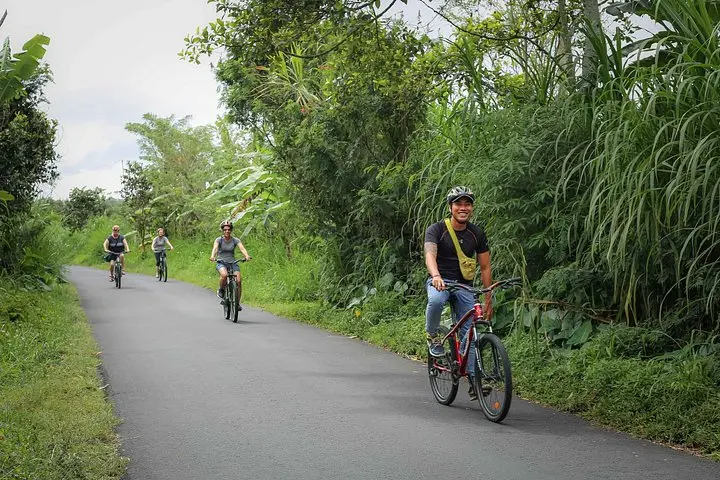
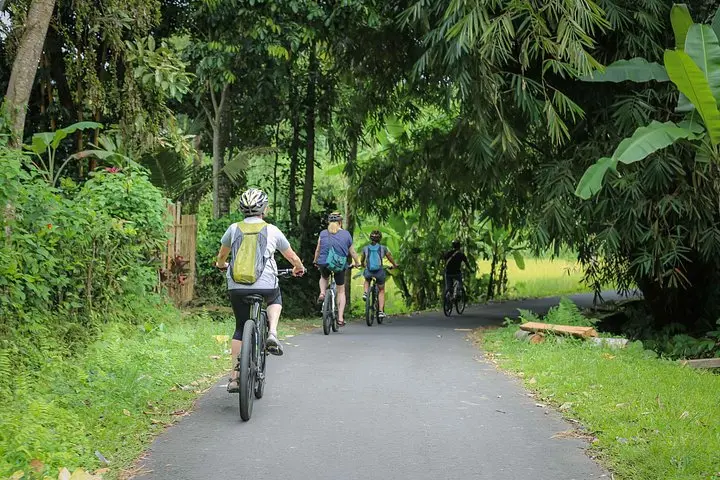
Practically: the trip is mostly downhill on quiet backroads and village lanes, suitable for riders with basic bike-handling skills. Expect intermittent gravel, occasional short climbs, and photo stops. The tour includes a provided bicycle, bottled water, coffee or tea, and lunch; temples require a sarong (often supplied). Finish with a swim option before the return transfer to Ubud. Morning departures avoid heat and afternoon storms during the wet season—plan clothing, sun protection, and a light daypack for essentials.
The tour lasts about 5 hours and is rated easy—mostly downhill with short, manageable climbs on village roads; basic bike-handling is required.
Bicycles are provided along with bottled water, coffee/tea, lunch, and often a sarong for temple visits; check with the operator about helmet availability.
The trip is generally suitable for most adults and older children; it’s not recommended for pregnant travelers or those with serious spinal or heart conditions.
The operator typically runs tours in light rain; heavy monsoon downpours may lead to rescheduling—confirm the cancellation policy when booking.
BALI PURE TOUR operates guided outdoor trips and adventures with an emphasis on safety, stewardship, and memorable experiences.
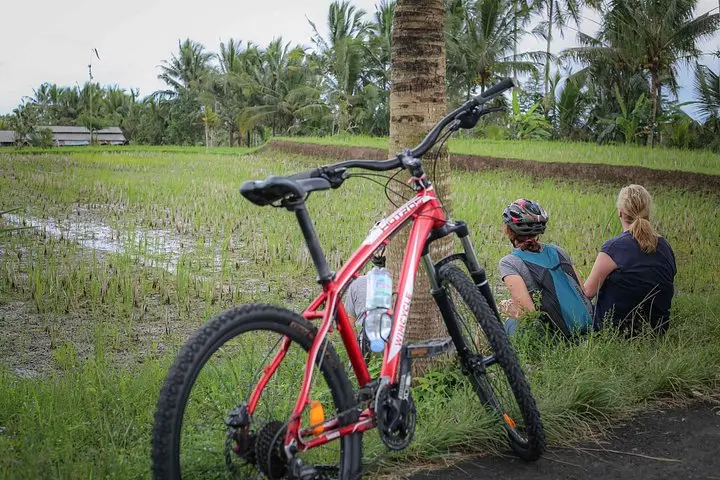
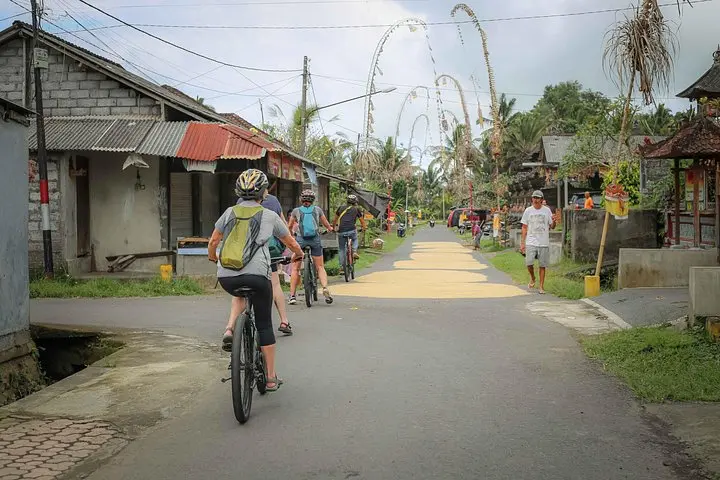
You push off beneath a thin, early sun and the road opens into a corridor of green: rice terraces tilt like stepped mirrors, villagers wheel baskets past family compounds, and the Pakerisan River threads the valley, daring you to follow its curve.
You push off beneath a thin, early sun and the road opens into a corridor of green: rice terraces tilt like stepped mirrors, villagers wheel baskets past family compounds, and the Pakerisan River threads the valley, daring you to follow its curve.
This five-hour ride from the hills around Ubud traces the northeastern flank of the Pakerisan River Valley, a UNESCO-listed cultural landscape shaped over centuries by the subak irrigation system. The route passes sites with roots in 8th–12th century Balinese-Javanese kingdoms, where animist practice met incoming Hindu and Buddhist ideas. Along the way you’ll see temple compounds, carved stone markers, and the wooden architecture unique to central Bali; guides often point out lontar script on ceremonial objects and explain the Tri Hita Karana philosophy that frames local life.
Geologically, the valley sits on volcanic soils fed by nearby peaks; terraces cling to gentle slopes and channels ripple with engineered precision. Cultural touches—Topeng masks tucked in homes, the cadence of daily offerings—keep the ride as much about people as landscape.
Practically: the trip is mostly downhill on quiet backroads and village lanes, suitable for riders with basic bike-handling skills. Expect intermittent gravel, occasional short climbs, and photo stops. The tour includes a provided bicycle, bottled water, coffee or tea, and lunch; temples require a sarong (often supplied). Finish with a swim option before the return transfer to Ubud. Morning departures avoid heat and afternoon storms during the wet season—plan clothing, sun protection, and a light daypack for essentials.