THE ADVENTURE COLLECTIVE® · Independent discovery and booking for outdoor travel

Spend a day weaving through Ubud’s living culture—from macaques in the Monkey Forest to the carved lines of Tegalalang rice terraces and the cleansing pools of Tirta Empul. This private tour blends nature, ritual, and local coffee with practical ease.
Spend a day weaving through Ubud’s living culture—from macaques in the Monkey Forest to the carved lines of Tegalalang rice terraces and the cleansing pools of Tirta Empul. This private tour blends nature, ritual, and local coffee with practical ease.
You arrive into Ubud with the air thick with wet earth and frangipani; the car eases onto a shaded lane and the guide points to a path where monkeys move like small storms through the canopy.
Verified experiences and guided adventures in the surrounding area.
Operated by Anoman badeng · Ubud, Bali
You arrive into Ubud with the air thick with wet earth and frangipani; the car eases onto a shaded lane and the guide points to a path where monkeys move like small storms through the canopy.
The day moves deliberately: first the Ubud Monkey Forest, where long-tailed macaques claim the trees and moss-grown temples speak to centuries of local ritual. Then Tegalalang's stepped rice terraces unfold—engineered contours carved into volcanic soils that drain rain into narrow canals, a living irrigation system called subak that dates back to Bali’s agrarian past.
Tirta Empul introduces the island’s devotional logic: a spring-fed purification pool and carved stone spouts where Balinese Hindus perform cleansing rites. The ritual connects geology and belief—groundwater rising from volcanic aquifers given religious life.
A plantation stop lets you warm up with kopi tubruk and learn about traditional coffee processing against a backdrop of rainforest. The final turn brings Ulu Petanu waterfall, a green-walled chute where the water insists on its presence and invites a closer look.
Plan for eight hours on mostly paved and short uneven trails; expect light walking, a handful of stairs, and humid conditions. Bring sturdy shoes, a lightweight rain jacket during the wet season, and small local cash for small donations and snacks. Respect temple rules—modest clothing and following your guide during purification is essential. Keep a secure pocket for cameras near the Monkey Forest and never feed the animals.
Taken together, the route balances wildlife, engineered landscape, and living culture—an accessible day that rewards attention to detail and simple preparedness.
Generally yes—monkeys are habituated but unpredictable; supervise children closely, secure belongings, and follow the guide’s guidance.
Visitors may participate if they follow temple protocols and wear modest clothing; your guide can explain the steps and respectful behavior.
Private air-conditioned car and pickup from common areas like Kuta, Seminyak, Canggu, Jimbaran, Nusa Dua, Sanur and Ubud are included per tour information.
The tour involves steps, uneven paths, and temple stairs; it’s not recommended for those with serious back or mobility issues.
Anoman badeng operates guided outdoor trips and adventures with an emphasis on safety, stewardship, and memorable experiences.

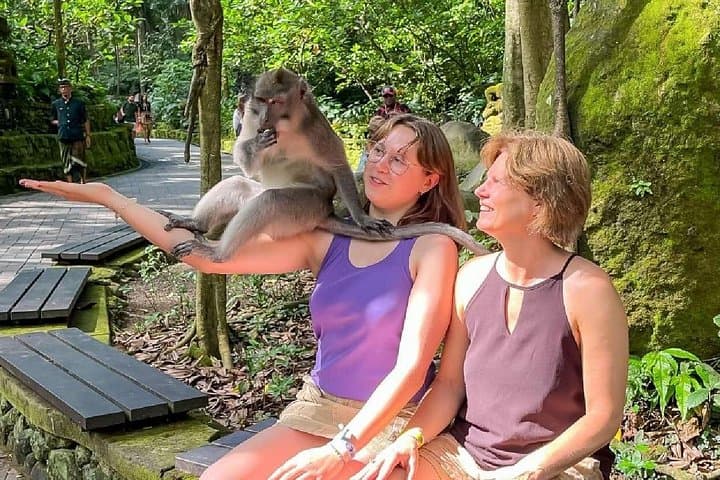


You arrive into Ubud with the air thick with wet earth and frangipani; the car eases onto a shaded lane and the guide points to a path where monkeys move like small storms through the canopy.
You arrive into Ubud with the air thick with wet earth and frangipani; the car eases onto a shaded lane and the guide points to a path where monkeys move like small storms through the canopy.
The day moves deliberately: first the Ubud Monkey Forest, where long-tailed macaques claim the trees and moss-grown temples speak to centuries of local ritual. Then Tegalalang's stepped rice terraces unfold—engineered contours carved into volcanic soils that drain rain into narrow canals, a living irrigation system called subak that dates back to Bali’s agrarian past.
Tirta Empul introduces the island’s devotional logic: a spring-fed purification pool and carved stone spouts where Balinese Hindus perform cleansing rites. The ritual connects geology and belief—groundwater rising from volcanic aquifers given religious life.
A plantation stop lets you warm up with kopi tubruk and learn about traditional coffee processing against a backdrop of rainforest. The final turn brings Ulu Petanu waterfall, a green-walled chute where the water insists on its presence and invites a closer look.
Plan for eight hours on mostly paved and short uneven trails; expect light walking, a handful of stairs, and humid conditions. Bring sturdy shoes, a lightweight rain jacket during the wet season, and small local cash for small donations and snacks. Respect temple rules—modest clothing and following your guide during purification is essential. Keep a secure pocket for cameras near the Monkey Forest and never feed the animals.
Taken together, the route balances wildlife, engineered landscape, and living culture—an accessible day that rewards attention to detail and simple preparedness.