THE ADVENTURE COLLECTIVE® · Independent discovery and booking for outdoor travel

A private 10-hour loop from Ubud that pairs temple purification at Tirta Empul with the raw rush of Kanto Lampo waterfall and the iconic steps of Tegalalang rice terraces. Expect artisan villages, short hikes, and a practical, locally guided day in central Bali.
A private 10-hour loop from Ubud that pairs temple purification at Tirta Empul with the raw rush of Kanto Lampo waterfall and the iconic steps of Tegalalang rice terraces. Expect artisan villages, short hikes, and a practical, locally guided day in central Bali.
You step out of a private car onto a narrow lane where the air smells of wet earth and clove smoke. A driver with a calm, practiced politeness folds a map into his lap and points up a valley ringed by rice terraces; somewhere uphill water is already working—cutting channels, feeding paddies, throwing light off a dozen tiny pools. This is central Bali on a single long day: village workshops, a living spring that still makes myths possible, a jungle waterfall that keeps its own tempo, and the stepped green of Tegalalang, where fields step down like pages of an old ledger.
Verified experiences and guided adventures in the surrounding area.
Operated by Sewa Mobil Bali · Ubud, Bali
You step out of a private car onto a narrow lane where the air smells of wet earth and clove smoke. A driver with a calm, practiced politeness folds a map into his lap and points up a valley ringed by rice terraces; somewhere uphill water is already working—cutting channels, feeding paddies, throwing light off a dozen tiny pools. This is central Bali on a single long day: village workshops, a living spring that still makes myths possible, a jungle waterfall that keeps its own tempo, and the stepped green of Tegalalang, where fields step down like pages of an old ledger.
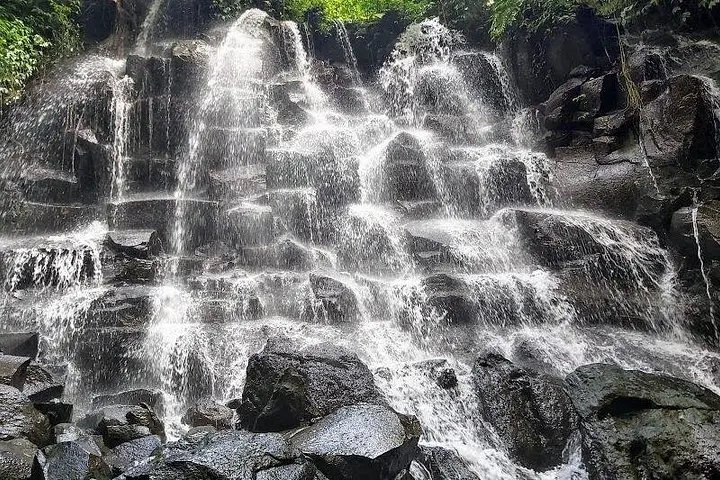
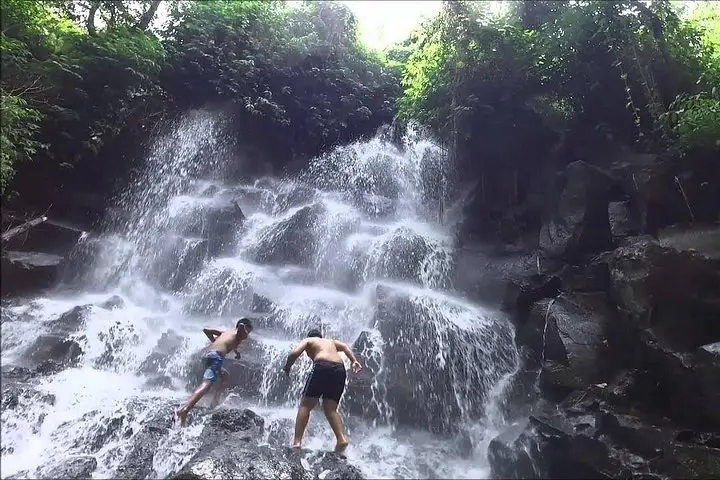
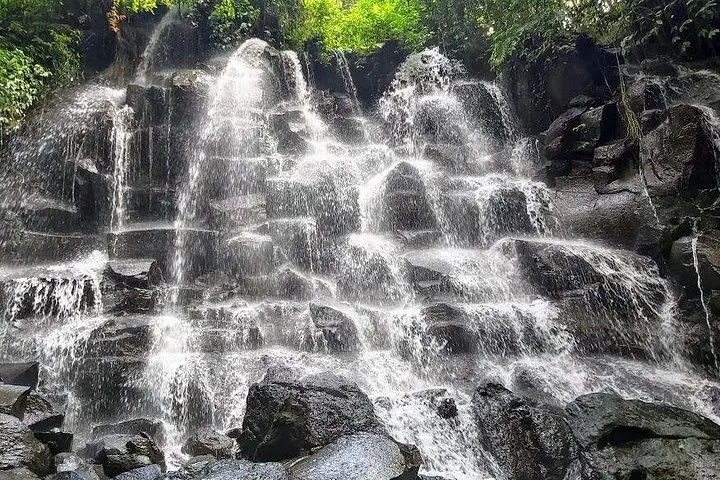
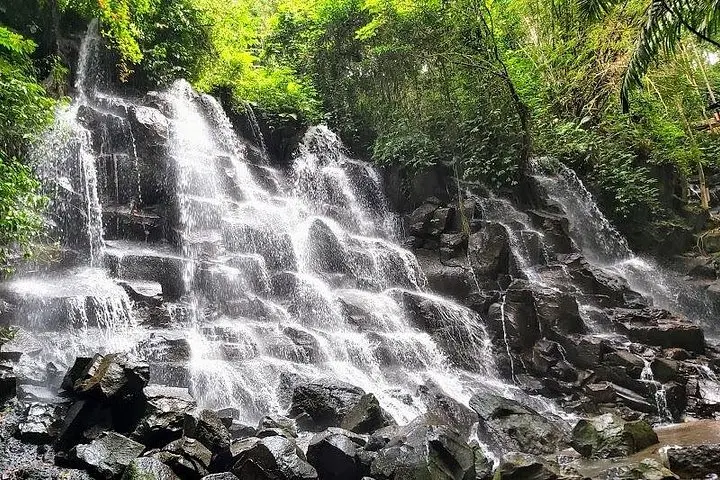
The day links culture and geology. Tirta Empul at Tampak Siring is both orthodox temple and hydrological hub: the spring that feeds its purification pools is bound up in the island's subak irrigation tradition, a cooperative rice-water system that dates back centuries and shapes the terraces of Ubud and beyond. Kanto Lampo waterfall, by contrast, is a younger feature—water finding a path where infrastructure used to run, plunging over basalt and limestone outcrops carved by monsoon rains.
Ubud and its satellite villages—Celuk for silver, Batubulan for batik, Mas for carving—are living studios. Craftspeople still hammer motifs into metal and wood, and a short conversation at a workshop is as revealing as any museum label: these crafts are tied to ceremony as much as to commerce.
Practical guidance: this private tour runs about 10 hours with roughly two hours of driving spread between stops. Expect uneven paths at Kanto Lampo and stone steps at Tirta Empul; wear grippy shoes and carry a small waterproof bag for cameras. Temple protocols are strict: shoulders and knees should be covered and a sash is required for temple entry (often obtainable on site). Bring cash—small entry fees, a coffee at a local warung, and driver gratuities are typically paid in IDR or USD.
Timing matters. Start early to avoid midafternoon crowds at Tegalalang and the strongest sun at the falls. Hydrate—Bali’s heat accumulates quietly—and plan for quick changes in weather: showers can move in suddenly, turning dirt tracks slippery.
What you’ll take home beyond photos is a sense of how water structures life here: it gives laws to planting, liturgies to temples, and a modest economy to villages. Respect those flows—stay on paths at terraces, follow local guidance near sacred pools, and support small workshops rather than anonymous stalls. The day is paced, local, and practical—the sort of itinerary that leaves the island’s rhythms audible even after the car pulls away.
No—entrance fees to attractions and any temple donations are generally not included; bring cash to cover local fees.
Visitors sometimes wade in shallow pools near the base, but follow local guidance and avoid strong currents or slippery rocks.
Sarongs and sashes are often available for rent at Tirta Empul, but bringing or wearing modest clothing speeds entry.
Expect roughly 2–3 hours total driving within the 10-hour day; some legs are short (30–60 minutes), others longer depending on hotel pickup location.
Yes—the itinerary is run as a private tour with an English-speaking driver and private car included.
Yes—operators usually allow substitutions if you notify them at booking or speak to the driver in advance.
Sewa Mobil Bali operates guided outdoor trips and adventures with an emphasis on safety, stewardship, and memorable experiences.
You step out of a private car onto a narrow lane where the air smells of wet earth and clove smoke. A driver with a calm, practiced politeness folds a map into his lap and points up a valley ringed by rice terraces; somewhere uphill water is already working—cutting channels, feeding paddies, throwing light off a dozen tiny pools. This is central Bali on a single long day: village workshops, a living spring that still makes myths possible, a jungle waterfall that keeps its own tempo, and the stepped green of Tegalalang, where fields step down like pages of an old ledger.
You step out of a private car onto a narrow lane where the air smells of wet earth and clove smoke. A driver with a calm, practiced politeness folds a map into his lap and points up a valley ringed by rice terraces; somewhere uphill water is already working—cutting channels, feeding paddies, throwing light off a dozen tiny pools. This is central Bali on a single long day: village workshops, a living spring that still makes myths possible, a jungle waterfall that keeps its own tempo, and the stepped green of Tegalalang, where fields step down like pages of an old ledger.
The day links culture and geology. Tirta Empul at Tampak Siring is both orthodox temple and hydrological hub: the spring that feeds its purification pools is bound up in the island's subak irrigation tradition, a cooperative rice-water system that dates back centuries and shapes the terraces of Ubud and beyond. Kanto Lampo waterfall, by contrast, is a younger feature—water finding a path where infrastructure used to run, plunging over basalt and limestone outcrops carved by monsoon rains.
Ubud and its satellite villages—Celuk for silver, Batubulan for batik, Mas for carving—are living studios. Craftspeople still hammer motifs into metal and wood, and a short conversation at a workshop is as revealing as any museum label: these crafts are tied to ceremony as much as to commerce.
Practical guidance: this private tour runs about 10 hours with roughly two hours of driving spread between stops. Expect uneven paths at Kanto Lampo and stone steps at Tirta Empul; wear grippy shoes and carry a small waterproof bag for cameras. Temple protocols are strict: shoulders and knees should be covered and a sash is required for temple entry (often obtainable on site). Bring cash—small entry fees, a coffee at a local warung, and driver gratuities are typically paid in IDR or USD.
Timing matters. Start early to avoid midafternoon crowds at Tegalalang and the strongest sun at the falls. Hydrate—Bali’s heat accumulates quietly—and plan for quick changes in weather: showers can move in suddenly, turning dirt tracks slippery.
What you’ll take home beyond photos is a sense of how water structures life here: it gives laws to planting, liturgies to temples, and a modest economy to villages. Respect those flows—stay on paths at terraces, follow local guidance near sacred pools, and support small workshops rather than anonymous stalls. The day is paced, local, and practical—the sort of itinerary that leaves the island’s rhythms audible even after the car pulls away.