THE ADVENTURE COLLECTIVE® · Independent discovery and booking for outdoor travel

Leave the coast early for a day in Uda Walawe where open grasslands and a large reservoir make wildlife viewing reliably good. Expect elephant herds, crocs by the water and a day paced around jeep safaris with local, English-speaking guides.
Leave the coast early for a day in Uda Walawe where open grasslands and a large reservoir make wildlife viewing reliably good. Expect elephant herds, crocs by the water and a day paced around jeep safaris with local, English-speaking guides.
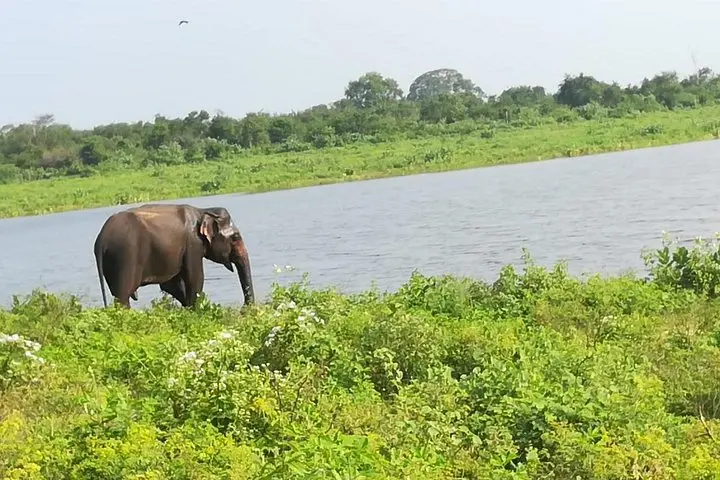
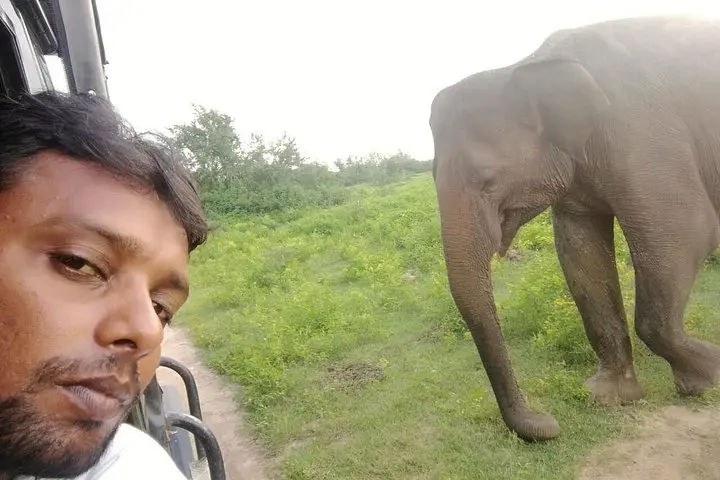
You start before sunrise on a coastal road, the air still warm from the sea, and then the landscape opens into the scrubby plains that define Uda Walawe. The jeep bumps along earthen tracks; grasslands and the reservoir edge roll past while birds punctuate the quiet. When an elephant herds into view, the vehicle stills and the animal becomes the story.
Verified experiences and guided adventures in the surrounding area.
Operated by Pinki Tours · Udawalawe, Southern Province
You start before sunrise on a coastal road, the air still warm from the sea, and then the landscape opens into the scrubby plains that define Uda Walawe. The jeep bumps along earthen tracks; grasslands and the reservoir edge roll past while birds punctuate the quiet. When an elephant herds into view, the vehicle stills and the animal becomes the story.
Uda Walawe National Park was established in 1972 after the creation of the Uda Walawe Reservoir; it exists to protect wildlife displaced by development and to conserve one of Sri Lanka’s most reliable elephant populations. Geologically the park sits on low, undulating plains with seasonal tanks and the reservoir shaping where animals congregate. Culturally, the park is part of rural southern Sri Lanka — villagers, rice paddies and temples dot the approaches, and local guides bring knowledge of behavior as well as language.
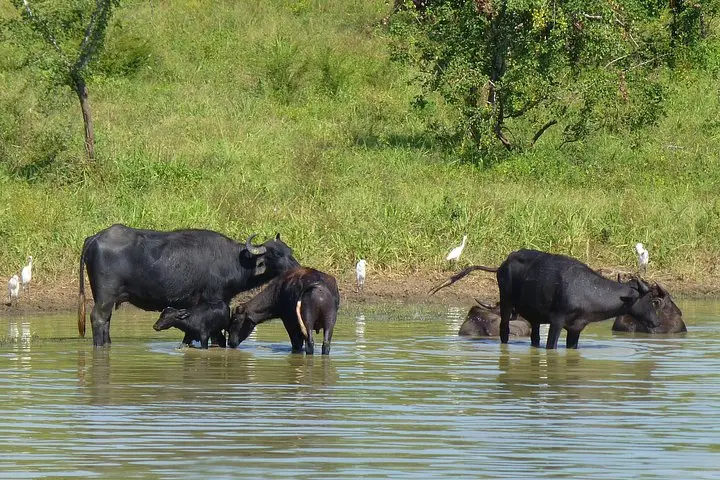
On a typical half-day safari you can expect multiple elephant encounters, herds of spotted deer, water buffalo, crocodiles at the reservoir edge and prolific birdlife. The terrain is dry scrub and short grass, which makes spotting easier than in dense rainforest; sightings are best in the cooler morning or late afternoon hours.
Practicalities: pickup from Mirissa, a roughly 2–3 hour road transfer each way, and a 3–5 hour jeep safari inside the park (all entrance and jeep fees often included). Bring sun protection, refillable water, binoculars and a camera with a zoom lens. Dress in muted colors, follow your guide’s distances from animals, and plan for dust on open tracks.
Expect roughly 2–3 hours each way by private car depending on traffic and stops; the operator usually handles all transfers.
This tour typically includes park entrance and the jeep safari cost—confirm at booking but the advertised tour states all fees are covered.
Early morning and late afternoon are best—animals visit water sources and light is better for photography.
Yes; the trip is low-impact with vehicle-based viewing, but consider road transfer length and bumpy jeep rides when assessing suitability.
Pinki Tours operates guided outdoor trips and adventures with an emphasis on safety, stewardship, and memorable experiences.
You start before sunrise on a coastal road, the air still warm from the sea, and then the landscape opens into the scrubby plains that define Uda Walawe. The jeep bumps along earthen tracks; grasslands and the reservoir edge roll past while birds punctuate the quiet. When an elephant herds into view, the vehicle stills and the animal becomes the story.
You start before sunrise on a coastal road, the air still warm from the sea, and then the landscape opens into the scrubby plains that define Uda Walawe. The jeep bumps along earthen tracks; grasslands and the reservoir edge roll past while birds punctuate the quiet. When an elephant herds into view, the vehicle stills and the animal becomes the story.
Uda Walawe National Park was established in 1972 after the creation of the Uda Walawe Reservoir; it exists to protect wildlife displaced by development and to conserve one of Sri Lanka’s most reliable elephant populations. Geologically the park sits on low, undulating plains with seasonal tanks and the reservoir shaping where animals congregate. Culturally, the park is part of rural southern Sri Lanka — villagers, rice paddies and temples dot the approaches, and local guides bring knowledge of behavior as well as language.
On a typical half-day safari you can expect multiple elephant encounters, herds of spotted deer, water buffalo, crocodiles at the reservoir edge and prolific birdlife. The terrain is dry scrub and short grass, which makes spotting easier than in dense rainforest; sightings are best in the cooler morning or late afternoon hours.
Practicalities: pickup from Mirissa, a roughly 2–3 hour road transfer each way, and a 3–5 hour jeep safari inside the park (all entrance and jeep fees often included). Bring sun protection, refillable water, binoculars and a camera with a zoom lens. Dress in muted colors, follow your guide’s distances from animals, and plan for dust on open tracks.