THE ADVENTURE COLLECTIVE® · Independent discovery and booking for outdoor travel

Explore Udaipur’s Lake Pichola waterfront by foot with a guide who leads you through City Palace interiors, Jagdish Temple, Bagore ki Haveli and heritage ghats. Expect narrow lanes, palace steps, local stories and a 3.5‑hour, moderate‑pace walk.
Explore Udaipur’s Lake Pichola waterfront by foot with a guide who leads you through City Palace interiors, Jagdish Temple, Bagore ki Haveli and heritage ghats. Expect narrow lanes, palace steps, local stories and a 3.5‑hour, moderate‑pace walk.
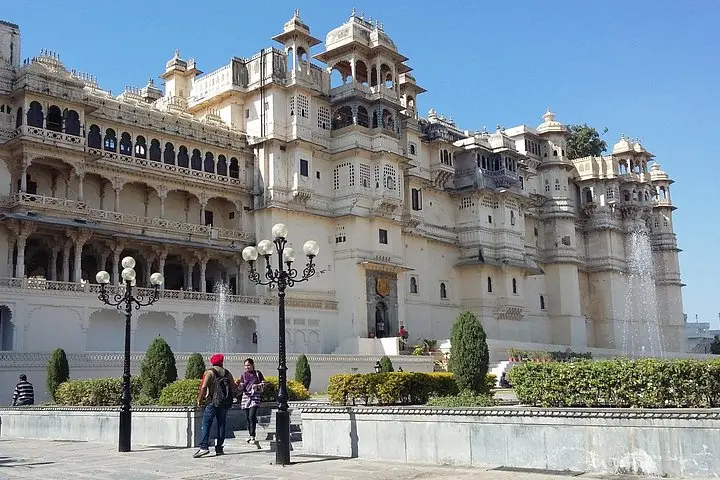
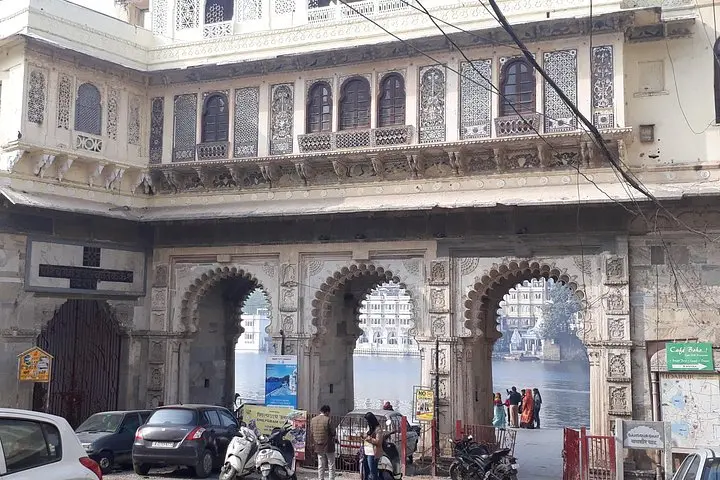
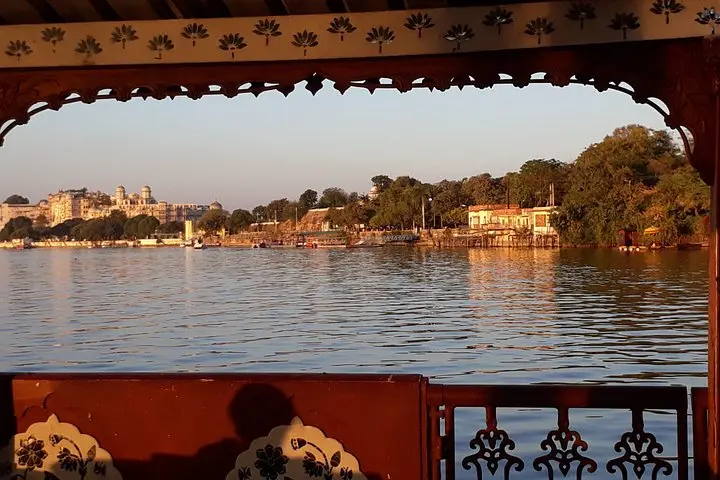
You start on a stone step above Lake Pichola, the air carrying incense and diesel from passing boats, and the city unfolds in layered terraces of sandstone and whitewash. The guide leads you through a tangle of lanes where women sweep thresholds and shopkeepers sharpen scissors — every corner frames a view of domes and the City Palace reflecting in the water.
Verified experiences and guided adventures in the surrounding area.
Operated by Udaipur Guide · Udaipur, Rajasthan
You start on a stone step above Lake Pichola, the air carrying incense and diesel from passing boats, and the city unfolds in layered terraces of sandstone and whitewash. The guide leads you through a tangle of lanes where women sweep thresholds and shopkeepers sharpen scissors — every corner frames a view of domes and the City Palace reflecting in the water.
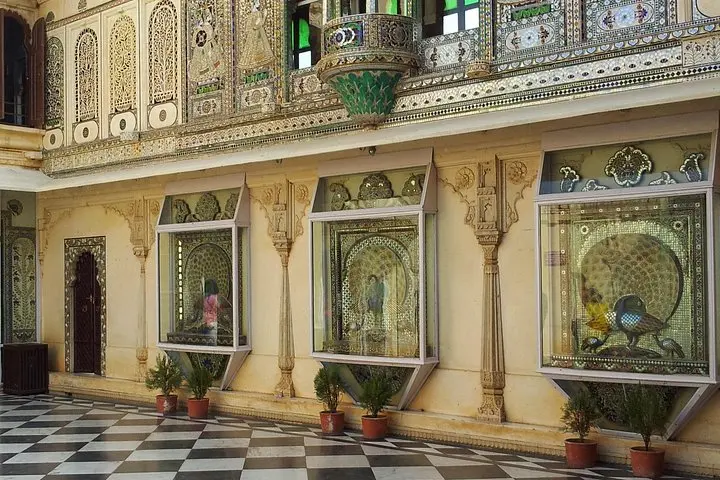
The route threads through centuries: the Mewar rulers who built the City Palace in stages from the 16th century, the marble carvers and fresco painters whose work decorates inner courtyards, and the living culture around Jagdish Temple, a late 17th‑century Vaishnavite complex that still rings with ritual. Geologically, the Aravalli outcrops shape the skyline, their schist and granite quarried for the city’s plinths and ghats. Bagore ki Haveli, with its carved balconies and rooftop panorama, shows how urban elites adapted hilltop slopes into dense, gardened compounds.
On this roughly 3.5‑hour guided walk expect uneven flagstones, short stair climbs to terraces, and crowded lanes where traffic narrows to a single rickshaw. The guide will pause for palace interiors (ticketed) and temple rituals, point out local crafts, and sketch practical timings to avoid midday heat.
Practical: wear sturdy walking shoes, carry a refillable water bottle, bring sun protection, and budget time for palace entry lines. The walk is a compact primer on Udaipur’s history and daily life — intimate, pedestrian, and anchored to the lake that still defines the city’s rhythm.
Meeting and end points are typically hotel lobbies or the Bagore ki Haveli entry gate in the old city; confirm your pickup location when booking.
City Palace interior access is usually not included in the walking price — expect to buy an entrance ticket; Jagdish Temple has no formal admission fee but follows temple customs.
The walk is family‑friendly but involves stairs and cobbled lanes; children and seniors should be comfortable with short climbs and moderate walking distances.
Tipping is discretionary; for a private 3.5‑hour guided experience, a customary tip is roughly 5–10% of the tour cost or a local equivalent appreciated by guides.
Udaipur Guide operates guided outdoor trips and adventures with an emphasis on safety, stewardship, and memorable experiences.
You start on a stone step above Lake Pichola, the air carrying incense and diesel from passing boats, and the city unfolds in layered terraces of sandstone and whitewash. The guide leads you through a tangle of lanes where women sweep thresholds and shopkeepers sharpen scissors — every corner frames a view of domes and the City Palace reflecting in the water.
You start on a stone step above Lake Pichola, the air carrying incense and diesel from passing boats, and the city unfolds in layered terraces of sandstone and whitewash. The guide leads you through a tangle of lanes where women sweep thresholds and shopkeepers sharpen scissors — every corner frames a view of domes and the City Palace reflecting in the water.
The route threads through centuries: the Mewar rulers who built the City Palace in stages from the 16th century, the marble carvers and fresco painters whose work decorates inner courtyards, and the living culture around Jagdish Temple, a late 17th‑century Vaishnavite complex that still rings with ritual. Geologically, the Aravalli outcrops shape the skyline, their schist and granite quarried for the city’s plinths and ghats. Bagore ki Haveli, with its carved balconies and rooftop panorama, shows how urban elites adapted hilltop slopes into dense, gardened compounds.
On this roughly 3.5‑hour guided walk expect uneven flagstones, short stair climbs to terraces, and crowded lanes where traffic narrows to a single rickshaw. The guide will pause for palace interiors (ticketed) and temple rituals, point out local crafts, and sketch practical timings to avoid midday heat.
Practical: wear sturdy walking shoes, carry a refillable water bottle, bring sun protection, and budget time for palace entry lines. The walk is a compact primer on Udaipur’s history and daily life — intimate, pedestrian, and anchored to the lake that still defines the city’s rhythm.