THE ADVENTURE COLLECTIVE® · Independent discovery and booking for outdoor travel

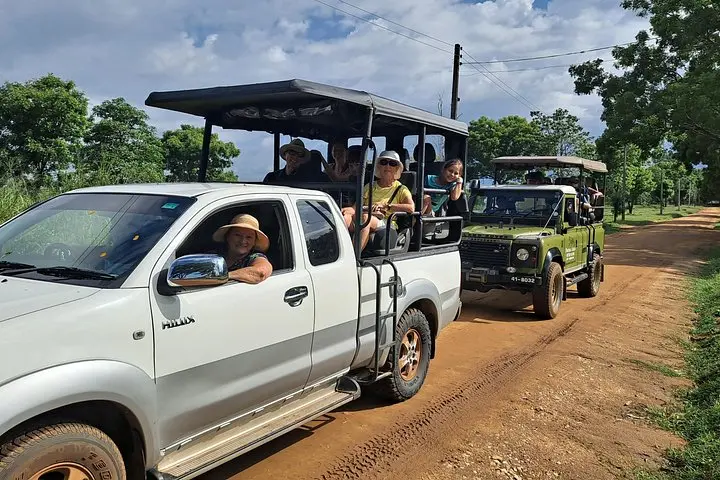
Board a modified 4x4 at Hambantota port and head into Udawalawe National Park for close-up views of Asian elephants, croc-lined banks and concentrated birdlife. This 5–6 hour safari mixes reliable sightings with practical guidance for first-time safari-goers.
Board a modified 4x4 at Hambantota port and head into Udawalawe National Park for close-up views of Asian elephants, croc-lined banks and concentrated birdlife. This 5–6 hour safari mixes reliable sightings with practical guidance for first-time safari-goers.
The jeep crunches over a dry track and the first elephants appear at the water’s edge — slow, purposeful shapes against the reservoir’s bright skin. Morning light picks out dust on their backs and the guide leans in, voice low, pointing to a distant family moving toward shade.
Verified experiences and guided adventures in the surrounding area.
Operated by SAMTOURS | Sri Lanka · Udawalawe, Southern Province
The jeep crunches over a dry track and the first elephants appear at the water’s edge — slow, purposeful shapes against the reservoir’s bright skin. Morning light picks out dust on their backs and the guide leans in, voice low, pointing to a distant family moving toward shade.
Udawalawe was created after the reservoir was built in the early 1970s to protect watershed and wildlife; today the park’s flat plains, scrub and riverine pockets form one of Sri Lanka’s most reliable places to see Asian elephants. The geology is straightforward — lowland laterite, seasonal tanks and the Udawalawe Reservoir — but the pattern of dry riverbeds and feeding grounds shapes animal movement, concentrating wildlife where water remains.
Local culture around Hambantota and nearby villages is agricultural; villages cultivate rice and chena plots, and the Elephant Transit Home nearby underscores community ties to conservation and rescue work.
Practical guide: tours run about 5–6 hours from Hambantota port in a modified 4x4 safari jeep with park fees included. Expect rough, bumpy tracks, early-morning cool and hot midday sun; most viewing is from the vehicle, though short boardwalks or lookouts may be used. Bring a 300mm+ lens or good binoculars, sun protection, insect repellent and a small daypack with water. Follow your guide’s distance rules around herds — elephants are protective and can move fast. Trip timing matters: early mornings and late afternoons concentrate activity at waterholes. With common sightings of herds, buffalo, deer and croc-warmed banks, Udawalawe gives a concentrated, pragmatic wildlife experience — immediate, tactile and guided by habit as much as chance.
Total trip time is about 5–6 hours (330 minutes) including transport to the park, a roughly 3-hour game drive and return transfer to the port.
Udawalawe has one of the highest probabilities of elephant sightings in Sri Lanka; sightings are common but never guaranteed — timing and herd movement vary.
The safari is family-friendly but involves bumpy jeep travel; not recommended for people with serious spinal or heart conditions, and infant seats are available on request.
No — for safety and regulation you must remain in the vehicle unless a guide directs a short, controlled stop at designated viewing points.
SAMTOURS | Sri Lanka operates guided outdoor trips and adventures with an emphasis on safety, stewardship, and memorable experiences.


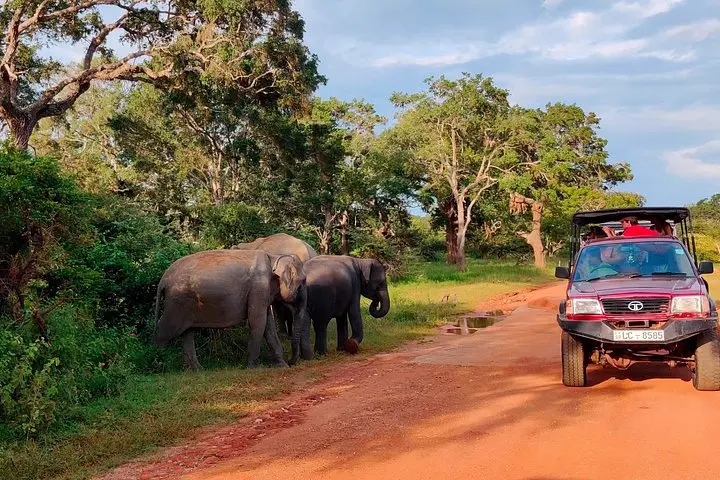
The jeep crunches over a dry track and the first elephants appear at the water’s edge — slow, purposeful shapes against the reservoir’s bright skin. Morning light picks out dust on their backs and the guide leans in, voice low, pointing to a distant family moving toward shade.
The jeep crunches over a dry track and the first elephants appear at the water’s edge — slow, purposeful shapes against the reservoir’s bright skin. Morning light picks out dust on their backs and the guide leans in, voice low, pointing to a distant family moving toward shade.
Udawalawe was created after the reservoir was built in the early 1970s to protect watershed and wildlife; today the park’s flat plains, scrub and riverine pockets form one of Sri Lanka’s most reliable places to see Asian elephants. The geology is straightforward — lowland laterite, seasonal tanks and the Udawalawe Reservoir — but the pattern of dry riverbeds and feeding grounds shapes animal movement, concentrating wildlife where water remains.
Local culture around Hambantota and nearby villages is agricultural; villages cultivate rice and chena plots, and the Elephant Transit Home nearby underscores community ties to conservation and rescue work.
Practical guide: tours run about 5–6 hours from Hambantota port in a modified 4x4 safari jeep with park fees included. Expect rough, bumpy tracks, early-morning cool and hot midday sun; most viewing is from the vehicle, though short boardwalks or lookouts may be used. Bring a 300mm+ lens or good binoculars, sun protection, insect repellent and a small daypack with water. Follow your guide’s distance rules around herds — elephants are protective and can move fast. Trip timing matters: early mornings and late afternoons concentrate activity at waterholes. With common sightings of herds, buffalo, deer and croc-warmed banks, Udawalawe gives a concentrated, pragmatic wildlife experience — immediate, tactile and guided by habit as much as chance.