THE ADVENTURE COLLECTIVE® · Independent discovery and booking for outdoor travel

Spend a three‑hour morning or afternoon in an open jeep tracking elephants, waterbirds and marsh edge wildlife around the Udawalawe Reservoir. This private half‑day safari offers focused viewing with hotel pickup, park entrance and snacks included.
Spend a three‑hour morning or afternoon in an open jeep tracking elephants, waterbirds and marsh edge wildlife around the Udawalawe Reservoir. This private half‑day safari offers focused viewing with hotel pickup, park entrance and snacks included.
You step from the jeep and the plain opens: short grasses, scattered thorn scrub and the long blue line of the Udawalawe Reservoir daring you toward the water. Morning light skims the backs of elephants wading at the shore; birds ride thermal eddies above reed beds. The first hour of this half‑day safari feels like a slow-motion conversation with the wild — quiet, observant, charged.
Verified experiences and guided adventures in the surrounding area.
Operated by Beyond Escapes · Udawalawe, Sabaragamuwa Province
You step from the jeep and the plain opens: short grasses, scattered thorn scrub and the long blue line of the Udawalawe Reservoir daring you toward the water. Morning light skims the backs of elephants wading at the shore; birds ride thermal eddies above reed beds. The first hour of this half‑day safari feels like a slow-motion conversation with the wild — quiet, observant, charged.
Udawalawe was established in the 1970s to give wildlife a refuge after the reservoir flooded older habitats. Geologically it sits on the boundary of Sri Lanka’s wet and dry zones, so terrain shifts quickly from grassland flats to rocky outcrops and seasonal marshes. Local villagers have long relied on the landscape for rice and cattle, and the park’s modern history is tied to human resettlement and conservation efforts.
Expect open jeep tracks, low brush and long sightlines rather than dense jungle; animals are often visible at a distance. Common sightings include Sri Lankan elephants that move in family groups, water buffalo, sambar deer, monitor lizards and a rich cast of waterbirds; leopards are possible but rare.
Practically, plan for early or late light for best sightings, bring binoculars and a camera with a tele zoom, and wear neutral, breathable clothing. The tour includes park entrance, a safari jeep and hotel pickup and drop‑off; it runs about three hours and is suitable for most fitness levels. Keep a respectful distance from wildlife — the landscape may seem calm, but animals set the pace here.
The tour is a half‑day experience of about three hours including park entrance and game driving; pickup and drop‑off times vary by hotel location.
Most guests see groups of Sri Lankan elephants, water buffalo, sambar deer, monitor lizards and many water and wader birds; leopards are rare but possible.
Children are allowed but must be accompanied by an adult; the operator notes it is not recommended for pregnant travelers and infants should sit on laps.
Typical inclusions are park entrance fees, a safari jeep, bottled water, snacks and hotel pickup and drop‑off as listed in the tour details.
Beyond Escapes operates guided outdoor trips and adventures with an emphasis on safety, stewardship, and memorable experiences.


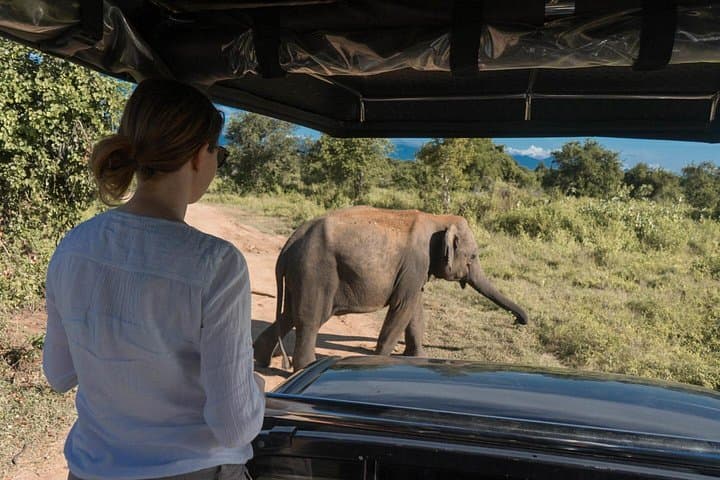
You step from the jeep and the plain opens: short grasses, scattered thorn scrub and the long blue line of the Udawalawe Reservoir daring you toward the water. Morning light skims the backs of elephants wading at the shore; birds ride thermal eddies above reed beds. The first hour of this half‑day safari feels like a slow-motion conversation with the wild — quiet, observant, charged.
You step from the jeep and the plain opens: short grasses, scattered thorn scrub and the long blue line of the Udawalawe Reservoir daring you toward the water. Morning light skims the backs of elephants wading at the shore; birds ride thermal eddies above reed beds. The first hour of this half‑day safari feels like a slow-motion conversation with the wild — quiet, observant, charged.
Udawalawe was established in the 1970s to give wildlife a refuge after the reservoir flooded older habitats. Geologically it sits on the boundary of Sri Lanka’s wet and dry zones, so terrain shifts quickly from grassland flats to rocky outcrops and seasonal marshes. Local villagers have long relied on the landscape for rice and cattle, and the park’s modern history is tied to human resettlement and conservation efforts.
Expect open jeep tracks, low brush and long sightlines rather than dense jungle; animals are often visible at a distance. Common sightings include Sri Lankan elephants that move in family groups, water buffalo, sambar deer, monitor lizards and a rich cast of waterbirds; leopards are possible but rare.
Practically, plan for early or late light for best sightings, bring binoculars and a camera with a tele zoom, and wear neutral, breathable clothing. The tour includes park entrance, a safari jeep and hotel pickup and drop‑off; it runs about three hours and is suitable for most fitness levels. Keep a respectful distance from wildlife — the landscape may seem calm, but animals set the pace here.