THE ADVENTURE COLLECTIVE® · Independent discovery and booking for outdoor travel

Spend three focused hours in Udawalawe National Park with a local naturalist, tracking Sri Lanka’s elephants and a rich birdlife across marsh and lowland scrub. Expect close sightings, practical context on behavior, and clear guidance for safe, rewarding wildlife viewing.
Spend three focused hours in Udawalawe National Park with a local naturalist, tracking Sri Lanka’s elephants and a rich birdlife across marsh and lowland scrub. Expect close sightings, practical context on behavior, and clear guidance for safe, rewarding wildlife viewing.
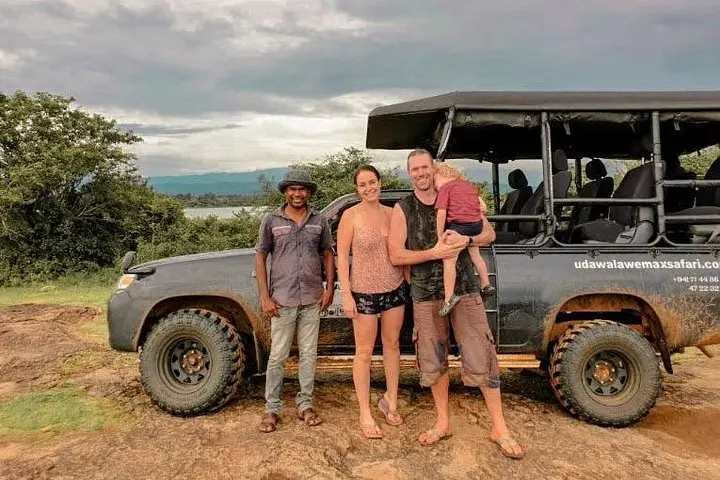
A low sun cuts across grassland and scrub as your 4x4 lifts dust from the rutted track—elephant silhouettes punctuate the horizon and a koel calls from a thorn tree. On a private safari through Udawalawe National Park you move with intent: the jeep is small, the guide’s eye is trained, and the landscape feels ready to react.
Verified experiences and guided adventures in the surrounding area.
Operated by Lakpura LLC · Udawalawe, Sabaragamuwa Province
A low sun cuts across grassland and scrub as your 4x4 lifts dust from the rutted track—elephant silhouettes punctuate the horizon and a koel calls from a thorn tree. On a private safari through Udawalawe National Park you move with intent: the jeep is small, the guide’s eye is trained, and the landscape feels ready to react.
Created in the 1970s to protect land around a reservoir, Udawalawe sits where dry lowland scrub, marsh and riverine forest meet. The geology is simple—lateritic soils and shallow drainage basins—yet that plain supports a concentrated ecology: Sri Lankan elephants, marsh birds, and a web of local rice-farm communities who have long shared this water-rich corridor.
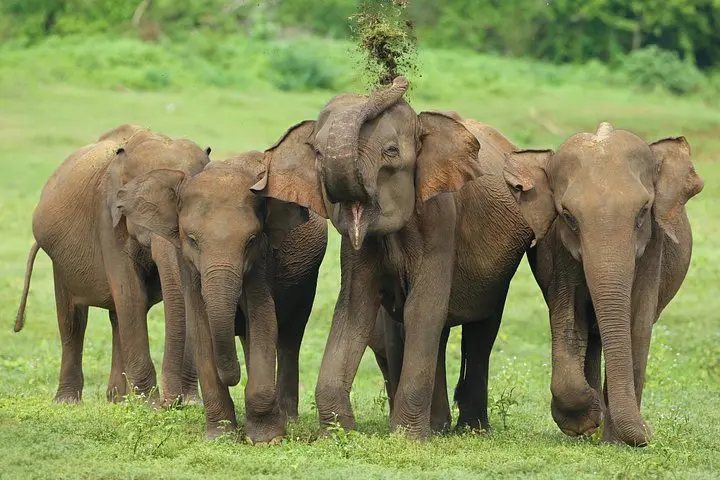
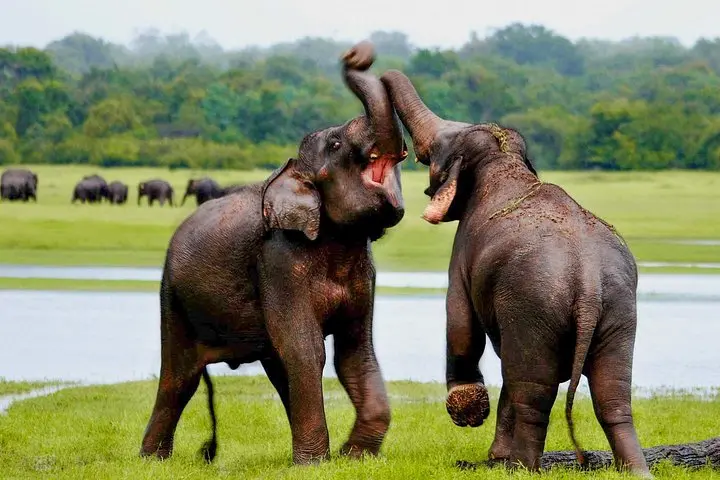
Your naturalist explains how Sri Lanka’s elephants differ from continental cousins and points out cues—ear shape, gait, herd behavior—that herald a close encounter. Birds flash: painted storks wade, kingfishers hover, and raptors quarter the sky. The park’s human history is practical and recent, shaped around water management and wildlife protection.
Practically: safaris are best early or late in the day when heat and light draw animals to water. Wear breathable layers, sturdy shoes for brief walks, and bring at least 1–2 liters of water and sun protection. Keep binoculars and a zoom-ready camera handy; silence and patience are as important as speed.
Respect the rules—do not disembark near large mammals—and follow your naturalist’s guidance. In three focused hours you’ll leave with clearer eyes for elephant behavior, sharper bird ID skills, and a tangible sense of how wetlands and people coexist here.
Udawalawe is well-known for reliable elephant sightings, but wildlife is never guaranteed—early/late drives improve chances.
No—do not leave the vehicle near large animals; your naturalist will advise if and when short, controlled walks are appropriate.
Options vary—confirm at booking whether your chosen package includes park entrance; some private jeep options include tickets.
Breathable, neutral-colored clothing, sturdy closed shoes, and layers for cooler mornings; avoid bright colors and strong fragrances.
Lakpura LLC operates guided outdoor trips and adventures with an emphasis on safety, stewardship, and memorable experiences.
A low sun cuts across grassland and scrub as your 4x4 lifts dust from the rutted track—elephant silhouettes punctuate the horizon and a koel calls from a thorn tree. On a private safari through Udawalawe National Park you move with intent: the jeep is small, the guide’s eye is trained, and the landscape feels ready to react.
A low sun cuts across grassland and scrub as your 4x4 lifts dust from the rutted track—elephant silhouettes punctuate the horizon and a koel calls from a thorn tree. On a private safari through Udawalawe National Park you move with intent: the jeep is small, the guide’s eye is trained, and the landscape feels ready to react.
Created in the 1970s to protect land around a reservoir, Udawalawe sits where dry lowland scrub, marsh and riverine forest meet. The geology is simple—lateritic soils and shallow drainage basins—yet that plain supports a concentrated ecology: Sri Lankan elephants, marsh birds, and a web of local rice-farm communities who have long shared this water-rich corridor.
Your naturalist explains how Sri Lanka’s elephants differ from continental cousins and points out cues—ear shape, gait, herd behavior—that herald a close encounter. Birds flash: painted storks wade, kingfishers hover, and raptors quarter the sky. The park’s human history is practical and recent, shaped around water management and wildlife protection.
Practically: safaris are best early or late in the day when heat and light draw animals to water. Wear breathable layers, sturdy shoes for brief walks, and bring at least 1–2 liters of water and sun protection. Keep binoculars and a zoom-ready camera handy; silence and patience are as important as speed.
Respect the rules—do not disembark near large mammals—and follow your naturalist’s guidance. In three focused hours you’ll leave with clearer eyes for elephant behavior, sharper bird ID skills, and a tangible sense of how wetlands and people coexist here.