THE ADVENTURE COLLECTIVE® · Independent discovery and booking for outdoor travel

Spend a full day tracking elephants across grasslands and visiting the Elephant Transit Home. This private tour bundles park entry, lunch and transfers for a focused wildlife experience in southern Sri Lanka.
Spend a full day tracking elephants across grasslands and visiting the Elephant Transit Home. This private tour bundles park entry, lunch and transfers for a focused wildlife experience in southern Sri Lanka.
A low-slung safari jeep rolls out across sun-baked grasslands, dust lifting in its wake as a line of elephants converges on the reservoir like guests arriving for a meeting. The water glints, birds wheel and the driver widens the track to give a family the space they want; in Udawalawe the landscape has an impatient, expectant quality—rivers and pools that seem to dare wildlife to approach.
Verified experiences and guided adventures in the surrounding area.
Operated by Happy Turtles International · Udawalawe, Sabaragamuwa Province
A low-slung safari jeep rolls out across sun-baked grasslands, dust lifting in its wake as a line of elephants converges on the reservoir like guests arriving for a meeting. The water glints, birds wheel and the driver widens the track to give a family the space they want; in Udawalawe the landscape has an impatient, expectant quality—rivers and pools that seem to dare wildlife to approach.
Created in 1972 to protect animals displaced by the Udawalawe reservoir, the park is dominated by open plains, scattered scrub, and the large man-made tank that functions as a magnet for elephants year-round. Geologically the area is low-lying alluvial plain and rolling outcrop, with dry-zone forests that change color through the year. Nearby villages and the Elephant Transit Home add a cultural layer: ETH rehabilitates orphaned calves and schedules public feedings while keeping hands-off protocols to preserve wild behavior.
On a private day tour you’ll typically leave early, spend three hours inside the park scanning for herds, buffalo and birds, then stop at the Transit Home to watch scheduled feedings. Expect dusty tracks, long light for photography, and sudden, silent moments when a bull appears at the water’s edge. Practical points: wear neutral colors, bring binoculars, pack water and sun protection, and keep noise low—elephants register small changes and will move on if stressed. Tours commonly include pickup, lunch, and entry fees, making a full but straightforward day out that keeps the focus on observing wildlife respectfully.
Most itineraries include roughly three hours of game-driving inside the park, timed to maximize sightings at waterholes and plains.
No—contact is not permitted; visits allow observation during scheduled feedings and educational talks while staff maintain strict hands-off policies.
Yes—this private tour is described as physically easy; children and seniors can usually participate but expect long vehicle time and some dust.
Common sightings include water buffalo, spotted deer, several bird species, and occasionally leopard or sloth bear sightings, though large cats are less predictable.
Happy Turtles International operates guided outdoor trips and adventures with an emphasis on safety, stewardship, and memorable experiences.
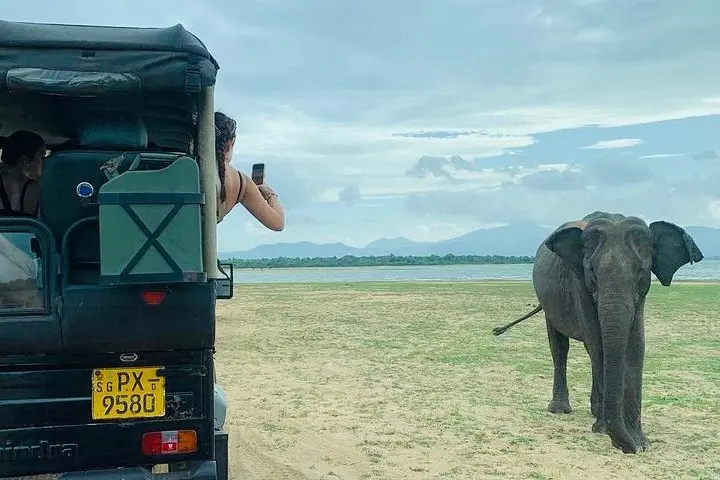
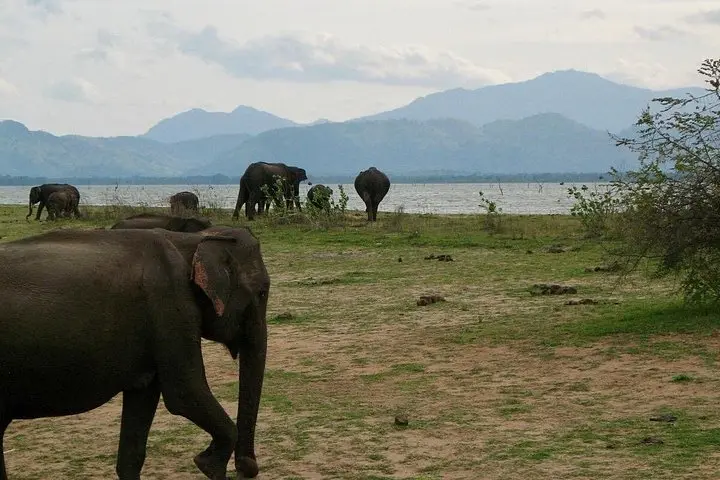
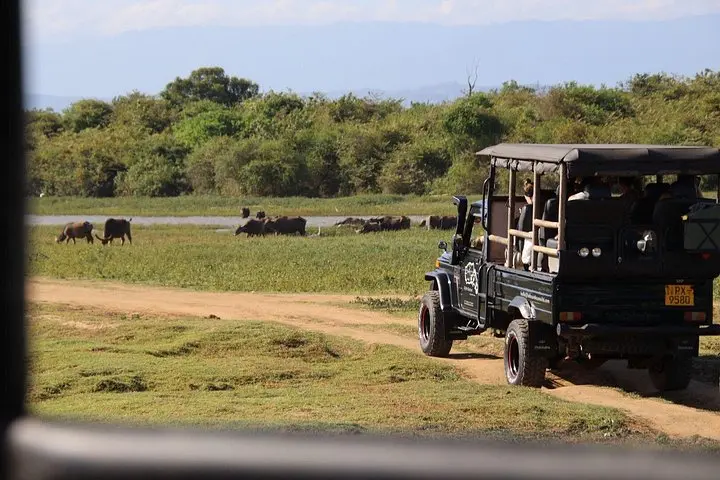
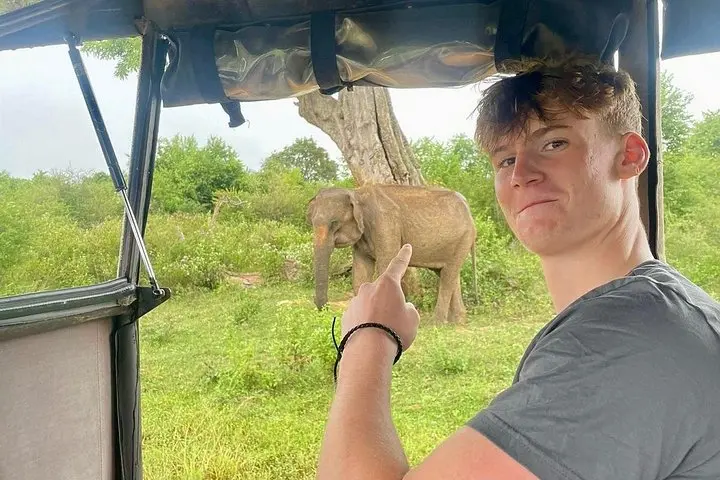
A low-slung safari jeep rolls out across sun-baked grasslands, dust lifting in its wake as a line of elephants converges on the reservoir like guests arriving for a meeting. The water glints, birds wheel and the driver widens the track to give a family the space they want; in Udawalawe the landscape has an impatient, expectant quality—rivers and pools that seem to dare wildlife to approach.
A low-slung safari jeep rolls out across sun-baked grasslands, dust lifting in its wake as a line of elephants converges on the reservoir like guests arriving for a meeting. The water glints, birds wheel and the driver widens the track to give a family the space they want; in Udawalawe the landscape has an impatient, expectant quality—rivers and pools that seem to dare wildlife to approach.
Created in 1972 to protect animals displaced by the Udawalawe reservoir, the park is dominated by open plains, scattered scrub, and the large man-made tank that functions as a magnet for elephants year-round. Geologically the area is low-lying alluvial plain and rolling outcrop, with dry-zone forests that change color through the year. Nearby villages and the Elephant Transit Home add a cultural layer: ETH rehabilitates orphaned calves and schedules public feedings while keeping hands-off protocols to preserve wild behavior.
On a private day tour you’ll typically leave early, spend three hours inside the park scanning for herds, buffalo and birds, then stop at the Transit Home to watch scheduled feedings. Expect dusty tracks, long light for photography, and sudden, silent moments when a bull appears at the water’s edge. Practical points: wear neutral colors, bring binoculars, pack water and sun protection, and keep noise low—elephants register small changes and will move on if stressed. Tours commonly include pickup, lunch, and entry fees, making a full but straightforward day out that keeps the focus on observing wildlife respectfully.