THE ADVENTURE COLLECTIVE® · Independent discovery and booking for outdoor travel

Get close to Sri Lanka’s famed elephant herds on a private 4WD safari through Udawalawe National Park. With hotel pickup and a picnic option, this 2–4 hour experience targets peak wildlife viewing windows for photography and short itineraries.
Get close to Sri Lanka’s famed elephant herds on a private 4WD safari through Udawalawe National Park. With hotel pickup and a picnic option, this 2–4 hour experience targets peak wildlife viewing windows for photography and short itineraries.
You step from a shaded hotel drive into a raised 4WD that hums across red-dust tracks, the reservoir glinting to your right and a ragged fringe of thorn scrub ahead. Early light cuts through mist over the grasslands and the first silhouettes that appear are not trees but elephant backs — slow, deliberate, social.
Verified experiences and guided adventures in the surrounding area.
Operated by Fivemo Tours · Udawalawe, Sabaragamuwa Province
You step from a shaded hotel drive into a raised 4WD that hums across red-dust tracks, the reservoir glinting to your right and a ragged fringe of thorn scrub ahead. Early light cuts through mist over the grasslands and the first silhouettes that appear are not trees but elephant backs — slow, deliberate, social.
Udawalawe National Park was carved out in the 1970s around a reservoir built to irrigate plains that had been seasonal marsh. Geologically the park sits on lowland plains with scattered rocky outcrops and sandy soils, creating open viewing corridors. Culturally the area is rural Sri Lanka: small farming settlements, tuk-tuks, and roadside fruit stalls that supply picnic extras. The park is known for one of the highest densities of wild Asian elephants on the island and for the Elephant Transit Home where orphaned calves are rehabilitated.
On a private 2–4 hour safari you’ll use a 4WD to reach grassland edges, shaded waterholes, and riverside pools — places where elephants, water buffalo, sambar deer, crocodiles, and dozens of water and raptor species congregate. Guides read signs of recent activity and position the vehicle for respectful photography; expect dusty drives, sudden stops, and long-distance views rather than steep hikes.
Practical guidance: choose morning or late afternoon for best activity, wear neutral, breathable layers and sturdy shoes, bring binoculars, sunscreen, insect repellent, and a camera with a 200–400mm lens if you have one. Hydrate; the sun in the plains is unrelenting. If you’re sensitive to motion, prepare for bumpy tracks. The private format and hotel pickup make this a compact, efficient wildlife encounter ideal for travelers who want concentrated animal viewing without a full-day commitment.
The private safari runs between 2 and 4 hours depending on start time and wildlife viewing; typical game drives last around 3 hours.
Udawalawe has a high density of elephants and sightings are likely, but wildlife cannot be guaranteed; private guides maximize your chances by choosing active zones.
Yes, pickup and drop-off from Udawalawe-area hotels are included in the tour price listed.
Yes; the tour is vehicle-based and rated easy, but it is not recommended for pregnant travelers or those with serious back or heart conditions due to bumpy tracks.
Fivemo Tours operates guided outdoor trips and adventures with an emphasis on safety, stewardship, and memorable experiences.


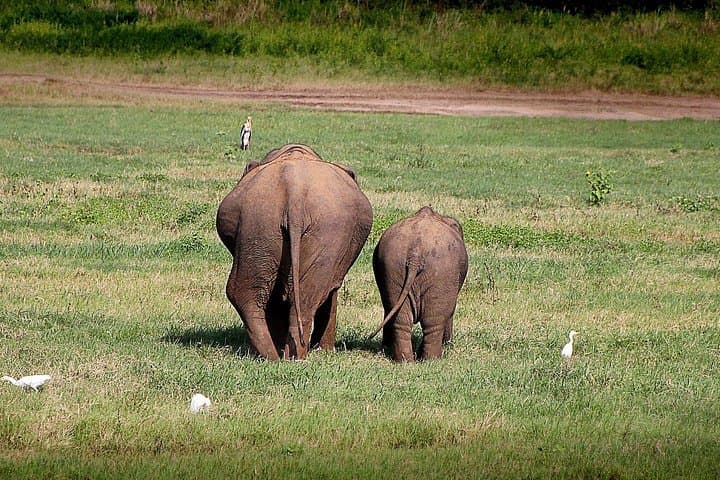

You step from a shaded hotel drive into a raised 4WD that hums across red-dust tracks, the reservoir glinting to your right and a ragged fringe of thorn scrub ahead. Early light cuts through mist over the grasslands and the first silhouettes that appear are not trees but elephant backs — slow, deliberate, social.
You step from a shaded hotel drive into a raised 4WD that hums across red-dust tracks, the reservoir glinting to your right and a ragged fringe of thorn scrub ahead. Early light cuts through mist over the grasslands and the first silhouettes that appear are not trees but elephant backs — slow, deliberate, social.
Udawalawe National Park was carved out in the 1970s around a reservoir built to irrigate plains that had been seasonal marsh. Geologically the park sits on lowland plains with scattered rocky outcrops and sandy soils, creating open viewing corridors. Culturally the area is rural Sri Lanka: small farming settlements, tuk-tuks, and roadside fruit stalls that supply picnic extras. The park is known for one of the highest densities of wild Asian elephants on the island and for the Elephant Transit Home where orphaned calves are rehabilitated.
On a private 2–4 hour safari you’ll use a 4WD to reach grassland edges, shaded waterholes, and riverside pools — places where elephants, water buffalo, sambar deer, crocodiles, and dozens of water and raptor species congregate. Guides read signs of recent activity and position the vehicle for respectful photography; expect dusty drives, sudden stops, and long-distance views rather than steep hikes.
Practical guidance: choose morning or late afternoon for best activity, wear neutral, breathable layers and sturdy shoes, bring binoculars, sunscreen, insect repellent, and a camera with a 200–400mm lens if you have one. Hydrate; the sun in the plains is unrelenting. If you’re sensitive to motion, prepare for bumpy tracks. The private format and hotel pickup make this a compact, efficient wildlife encounter ideal for travelers who want concentrated animal viewing without a full-day commitment.