THE ADVENTURE COLLECTIVE® · Independent discovery and booking for outdoor travel

A private jeep takes you from Hambantota Port into the open grasslands of Udawalawe National Park where elephant herds and water-dependent wildlife gather. Choose half-day or full-day options; full-day increases chances of quiet sightings and reaches more remote areas.
A private jeep takes you from Hambantota Port into the open grasslands of Udawalawe National Park where elephant herds and water-dependent wildlife gather. Choose half-day or full-day options; full-day increases chances of quiet sightings and reaches more remote areas.
A low sun outlines the grasslands as the jeep eases across a rough track and the first silhouettes appear: a band of elephants moving like slow ships through low bush. The air smells of dust and damp earth; birds call from acacia and the reservoir sends a steady whisper to the trees.
Verified experiences and guided adventures in the surrounding area.
Operated by Bentota Travel Mart · Udawalawe, Southern Province
A low sun outlines the grasslands as the jeep eases across a rough track and the first silhouettes appear: a band of elephants moving like slow ships through low bush. The air smells of dust and damp earth; birds call from acacia and the reservoir sends a steady whisper to the trees.
Udawalawe National Park was created in the early 1970s around the Udawalawe Reservoir to protect catchment lands and give wildlife space after agricultural changes elsewhere on the island. Geologically the park sits on undulating plains and ancient metamorphic rock, with broad tanks (reservoirs) that concentrate wildlife. The local culture is rural—farming communities and small towns around the park provide food and market stops, and the Elephant Transit Home near the entrance offers a conservation-focused contrast to the raw feel of game drives.
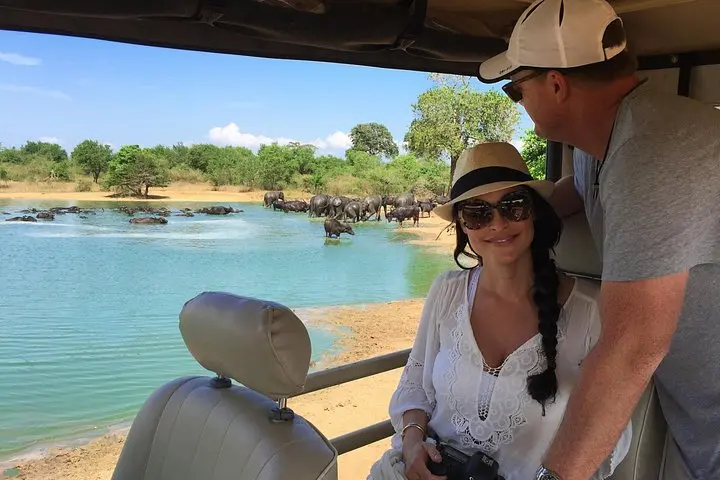
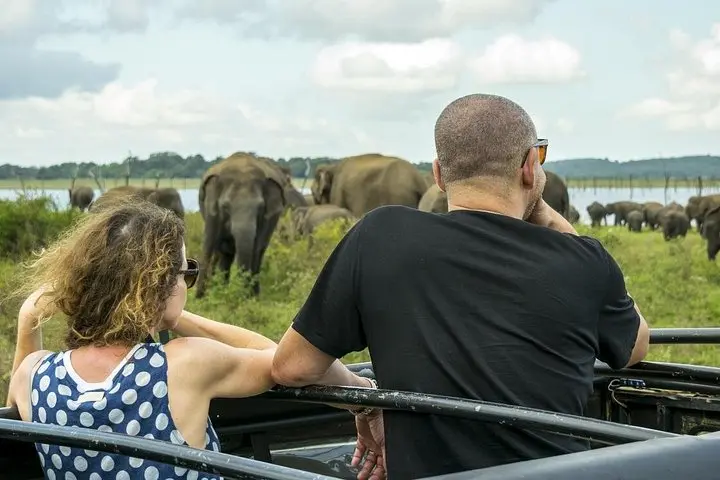
On a safari you’ll expect grassland and scrub terrain, dusty and occasionally bumpy tracks, and concentrated sightings—large elephant herds, water buffalo, and sambar often gather near water. Guides read animal movement like maps and will time drives for early morning or late afternoon activity.
Practical guidance: choose a half-day (3–4 hours) if you want a quick wildlife hit from Hambantota Port; opt for a full-day (6–8 hours) with picnic lunch to reach quieter sectors and increase sighting odds. The ride can be rough—travelers with back issues should plan accordingly. Bring binoculars, sunscreen, a wide-brim hat, and a camera with a telephoto lens. Respect park rules: stay in the jeep, keep noise low, and don’t attempt to feed or approach animals. With a private jeep and return transport included, this excursion is a direct, efficient way to see Sri Lanka’s elephants close to Hambantota.
Pickup and drop-off are provided at Hambantota International Port; confirm your ship’s timing when booking.
Udawalawe is renowned for large elephant herds; expect water buffalo, sambar, and a variety of waterbirds near the reservoir.
Yes—infant seats are available and the activity is family-friendly, though long drives can be tiring for very young children.
Yes—national park entry and return transport are included; picnic lunch is provided with the full-day option.
Bentota Travel Mart operates guided outdoor trips and adventures with an emphasis on safety, stewardship, and memorable experiences.
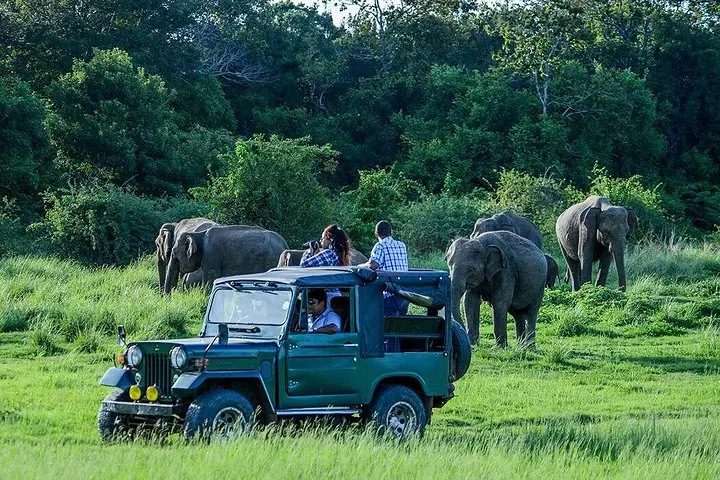
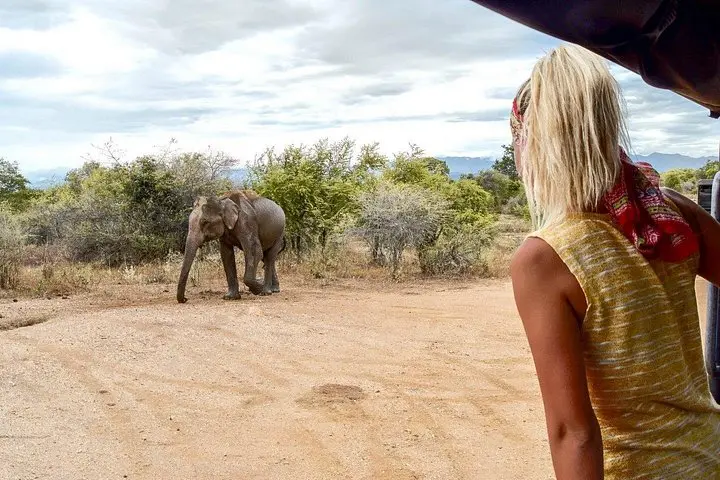
A low sun outlines the grasslands as the jeep eases across a rough track and the first silhouettes appear: a band of elephants moving like slow ships through low bush. The air smells of dust and damp earth; birds call from acacia and the reservoir sends a steady whisper to the trees.
A low sun outlines the grasslands as the jeep eases across a rough track and the first silhouettes appear: a band of elephants moving like slow ships through low bush. The air smells of dust and damp earth; birds call from acacia and the reservoir sends a steady whisper to the trees.
Udawalawe National Park was created in the early 1970s around the Udawalawe Reservoir to protect catchment lands and give wildlife space after agricultural changes elsewhere on the island. Geologically the park sits on undulating plains and ancient metamorphic rock, with broad tanks (reservoirs) that concentrate wildlife. The local culture is rural—farming communities and small towns around the park provide food and market stops, and the Elephant Transit Home near the entrance offers a conservation-focused contrast to the raw feel of game drives.
On a safari you’ll expect grassland and scrub terrain, dusty and occasionally bumpy tracks, and concentrated sightings—large elephant herds, water buffalo, and sambar often gather near water. Guides read animal movement like maps and will time drives for early morning or late afternoon activity.
Practical guidance: choose a half-day (3–4 hours) if you want a quick wildlife hit from Hambantota Port; opt for a full-day (6–8 hours) with picnic lunch to reach quieter sectors and increase sighting odds. The ride can be rough—travelers with back issues should plan accordingly. Bring binoculars, sunscreen, a wide-brim hat, and a camera with a telephoto lens. Respect park rules: stay in the jeep, keep noise low, and don’t attempt to feed or approach animals. With a private jeep and return transport included, this excursion is a direct, efficient way to see Sri Lanka’s elephants close to Hambantota.