THE ADVENTURE COLLECTIVE® · Independent discovery and booking for outdoor travel

Combine a Jeep safari through Udawalawe National Park with a supervised visit to the Elephant Transit Home on a full-day trip from Hambantota. Expect reliable elephant sightings, grassland scenery, and practical conservation insights.
Combine a Jeep safari through Udawalawe National Park with a supervised visit to the Elephant Transit Home on a full-day trip from Hambantota. Expect reliable elephant sightings, grassland scenery, and practical conservation insights.
Morning light skims the water of the Udawalawe Reservoir as a Toyota Hilux jeep crunches along a dusty track. The air feels close and alive; grasses bend and a lone elephant appears at the tree line, deliberate and unhurried. This is the tone of a full-day safari from Hambantota — a concentrated window into southern Sri Lanka’s open grasslands, gallery forests, and the slow-moving reservoir that draws wildlife.
Verified experiences and guided adventures in the surrounding area.
Operated by Dinuka Safari · Hambantota, Southern Province
Morning light skims the water of the Udawalawe Reservoir as a Toyota Hilux jeep crunches along a dusty track. The air feels close and alive; grasses bend and a lone elephant appears at the tree line, deliberate and unhurried. This is the tone of a full-day safari from Hambantota — a concentrated window into southern Sri Lanka’s open grasslands, gallery forests, and the slow-moving reservoir that draws wildlife.
Udawalawe National Park was created in 1972 to protect a watershed and the animals that rely on it. Geologically the park sits on ancient metamorphic rocks cut by drainage that feeds the reservoir; ecologically it favors savanna and scrub that support large elephant herds. Culture here is rural and pragmatic — small farming communities, fishermen on the reservoir, and conservation staff at the Elephant Transit Home (ETH), which rehabilitates orphaned calves with a goal of returning them to the wild.
Expect guided jeep drives across varied terrain, close-up elephant viewing, and a supervised hour at the ETH where calves are monitored but kept wild — no petting or feeding. Guides supply binoculars and local insight; the operator limits vehicles for lower disturbance.
Practical notes: the trip runs about 6–7 hours with port pickup in Hambantota, seating for up to six in a Hilux jeep. Bring sun protection, a warm layer for early starts, comfortable closed-toe shoes for short walks at the ETH, and a charged camera with spare memory. Respect quiet zones around calves, follow guide instructions, and time your visit for early morning or late afternoon light when animals and birds are most active.
The full-day excursion is approximately 6–7 hours and typically includes pickup and drop-off from Hambantota Port or nearby Hambantota hotels.
Udawalawe has one of Sri Lanka’s most reliable elephant populations and sightings of elephants are very likely, though wildlife is never guaranteed.
No — ETH follows strict rehabilitation protocols to keep calves wild; touching or feeding is not allowed and visits are supervised.
The jeep safari is suitable for children and most fitness levels, but the operator advises against it for those with serious spinal, heart, or pregnancy-related restrictions.
Dinuka Safari operates guided outdoor trips and adventures with an emphasis on safety, stewardship, and memorable experiences.

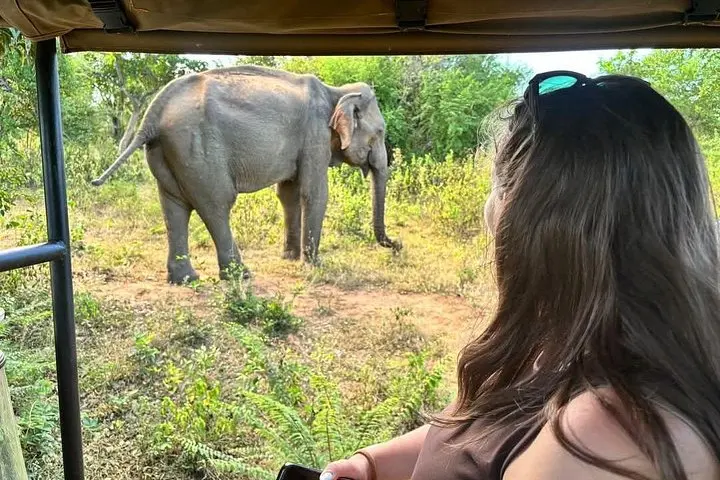
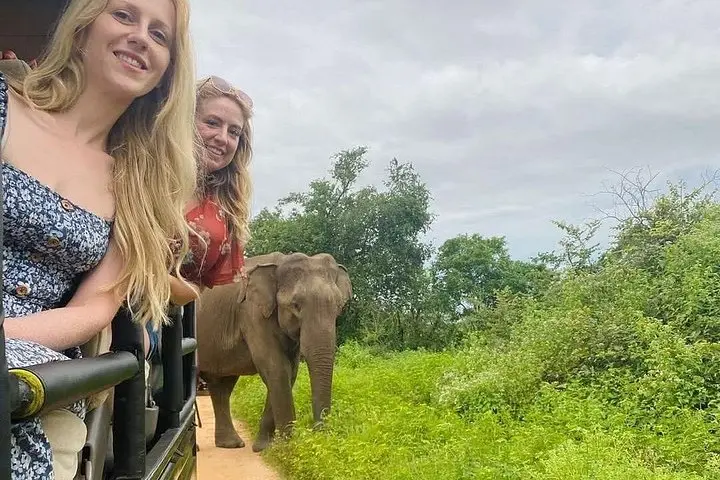
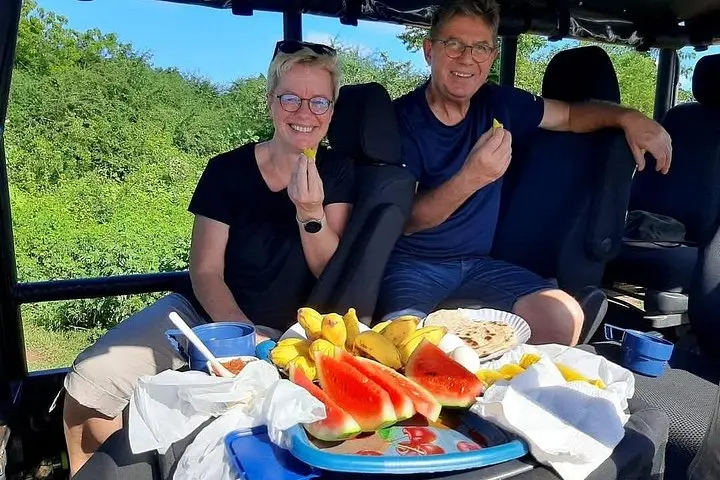
Morning light skims the water of the Udawalawe Reservoir as a Toyota Hilux jeep crunches along a dusty track. The air feels close and alive; grasses bend and a lone elephant appears at the tree line, deliberate and unhurried. This is the tone of a full-day safari from Hambantota — a concentrated window into southern Sri Lanka’s open grasslands, gallery forests, and the slow-moving reservoir that draws wildlife.
Morning light skims the water of the Udawalawe Reservoir as a Toyota Hilux jeep crunches along a dusty track. The air feels close and alive; grasses bend and a lone elephant appears at the tree line, deliberate and unhurried. This is the tone of a full-day safari from Hambantota — a concentrated window into southern Sri Lanka’s open grasslands, gallery forests, and the slow-moving reservoir that draws wildlife.
Udawalawe National Park was created in 1972 to protect a watershed and the animals that rely on it. Geologically the park sits on ancient metamorphic rocks cut by drainage that feeds the reservoir; ecologically it favors savanna and scrub that support large elephant herds. Culture here is rural and pragmatic — small farming communities, fishermen on the reservoir, and conservation staff at the Elephant Transit Home (ETH), which rehabilitates orphaned calves with a goal of returning them to the wild.
Expect guided jeep drives across varied terrain, close-up elephant viewing, and a supervised hour at the ETH where calves are monitored but kept wild — no petting or feeding. Guides supply binoculars and local insight; the operator limits vehicles for lower disturbance.
Practical notes: the trip runs about 6–7 hours with port pickup in Hambantota, seating for up to six in a Hilux jeep. Bring sun protection, a warm layer for early starts, comfortable closed-toe shoes for short walks at the ETH, and a charged camera with spare memory. Respect quiet zones around calves, follow guide instructions, and time your visit for early morning or late afternoon light when animals and birds are most active.