THE ADVENTURE COLLECTIVE® · Independent discovery and booking for outdoor travel

Spend a day tracking elephants and visiting the Elephant Transit Home in Udawalawe National Park. This full-day tour combines open-habitat game viewing with a conservation-focused visit to a government-run orphanage for baby elephants.
Spend a day tracking elephants and visiting the Elephant Transit Home in Udawalawe National Park. This full-day tour combines open-habitat game viewing with a conservation-focused visit to a government-run orphanage for baby elephants.
Dust lifts from the jeep as it eases onto a wide track beneath an open sky — the reservoir glints ahead and the land seems to breathe. In Udawalawe, herds of Sri Lankan elephants move with deliberate purpose, water and scrubland pulling them like a current. The day begins with wildlife on the move and ends with a quieter, intimate look at conservation at the Elephant Transit Home.
Verified experiences and guided adventures in the surrounding area.
Operated by Rameca Travel and Leisure (Pvt) Ltd · Udawalawe, Sabaragamuwa Province
Dust lifts from the jeep as it eases onto a wide track beneath an open sky — the reservoir glints ahead and the land seems to breathe. In Udawalawe, herds of Sri Lankan elephants move with deliberate purpose, water and scrubland pulling them like a current. The day begins with wildlife on the move and ends with a quieter, intimate look at conservation at the Elephant Transit Home.
Udawalawe National Park was created after the reservoir’s construction displaced wildlife; its mixture of dry-zone scrub, grasslands and water margins makes it one of the best places on the island to see large mammals. Geologically the landscape sits on ancient metamorphic rock; soils here support hardy grasses and thorny acacias that feed sambar, buffalo and the elephants. Culturally, the park sits between wet- and dry-zone communities — rural villages and Buddhist shrines dot the approaches and local guides often share stories of human-wildlife coexistence and the Transit Home’s role in rehabilitating orphaned calves.
Practical guidance: expect a full 8–9½ hour day with several hours of guided game viewing (jeep safari) and a scheduled visit to the Elephant Transit Home. Wear sturdy closed shoes for walking, light breathable layers, and a wide-brim hat; bring binoculars and a zoom lens for photography. Hydrate frequently — temperatures in the dry zone climb quickly — and pack insect repellent. Follow park rules: stay in the vehicle during safaris, keep distance from wildlife, and respect the Transit Home’s viewing protocols; these maintain safety and support the release program’s success. Timing your visit for early morning or late afternoon improves sightings and keeps the heat manageable.
This is a full-day experience lasting roughly 8 to 9.5 hours, combining a game drive in Udawalawe National Park with a visit to the Elephant Transit Home.
Udawalawe is known for a resident population of elephants and sightings are common, though wildlife is never guaranteed and depends on time of day and seasonal movement.
The Transit Home is government-run and focuses on rehabilitating orphaned calves for eventual release; visitors observe under controlled conditions to minimize stress on animals.
Bring local currency for park fees (if applicable), tips for your guide, and any snacks or souvenirs; lunch may be included by the tour operator per itinerary.
Rameca Travel and Leisure (Pvt) Ltd operates guided outdoor trips and adventures with an emphasis on safety, stewardship, and memorable experiences.
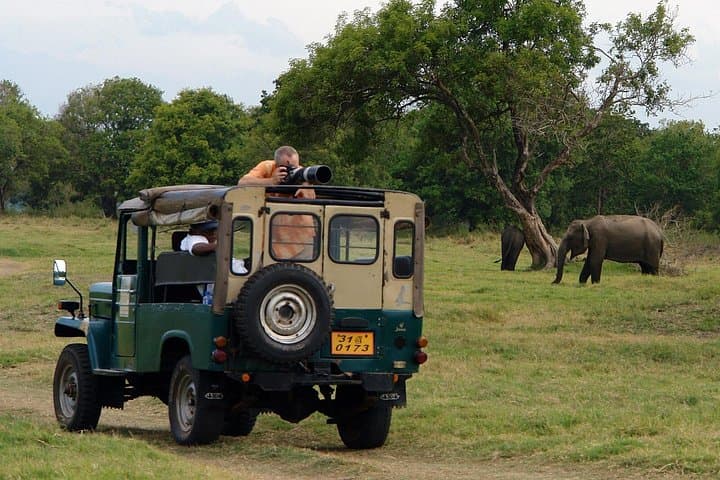


Dust lifts from the jeep as it eases onto a wide track beneath an open sky — the reservoir glints ahead and the land seems to breathe. In Udawalawe, herds of Sri Lankan elephants move with deliberate purpose, water and scrubland pulling them like a current. The day begins with wildlife on the move and ends with a quieter, intimate look at conservation at the Elephant Transit Home.
Dust lifts from the jeep as it eases onto a wide track beneath an open sky — the reservoir glints ahead and the land seems to breathe. In Udawalawe, herds of Sri Lankan elephants move with deliberate purpose, water and scrubland pulling them like a current. The day begins with wildlife on the move and ends with a quieter, intimate look at conservation at the Elephant Transit Home.
Udawalawe National Park was created after the reservoir’s construction displaced wildlife; its mixture of dry-zone scrub, grasslands and water margins makes it one of the best places on the island to see large mammals. Geologically the landscape sits on ancient metamorphic rock; soils here support hardy grasses and thorny acacias that feed sambar, buffalo and the elephants. Culturally, the park sits between wet- and dry-zone communities — rural villages and Buddhist shrines dot the approaches and local guides often share stories of human-wildlife coexistence and the Transit Home’s role in rehabilitating orphaned calves.
Practical guidance: expect a full 8–9½ hour day with several hours of guided game viewing (jeep safari) and a scheduled visit to the Elephant Transit Home. Wear sturdy closed shoes for walking, light breathable layers, and a wide-brim hat; bring binoculars and a zoom lens for photography. Hydrate frequently — temperatures in the dry zone climb quickly — and pack insect repellent. Follow park rules: stay in the vehicle during safaris, keep distance from wildlife, and respect the Transit Home’s viewing protocols; these maintain safety and support the release program’s success. Timing your visit for early morning or late afternoon improves sightings and keeps the heat manageable.