THE ADVENTURE COLLECTIVE® · Independent discovery and booking for outdoor travel

Trace the arc of Mongolian history and the raw geology of the Gobi on a private 10-day circuit from Ulaanbaatar. Expect wild horse viewing, sand-dune sunsets, fossil-bearing red cliffs, and ger nights under a huge sky.
Trace the arc of Mongolian history and the raw geology of the Gobi on a private 10-day circuit from Ulaanbaatar. Expect wild horse viewing, sand-dune sunsets, fossil-bearing red cliffs, and ger nights under a huge sky.
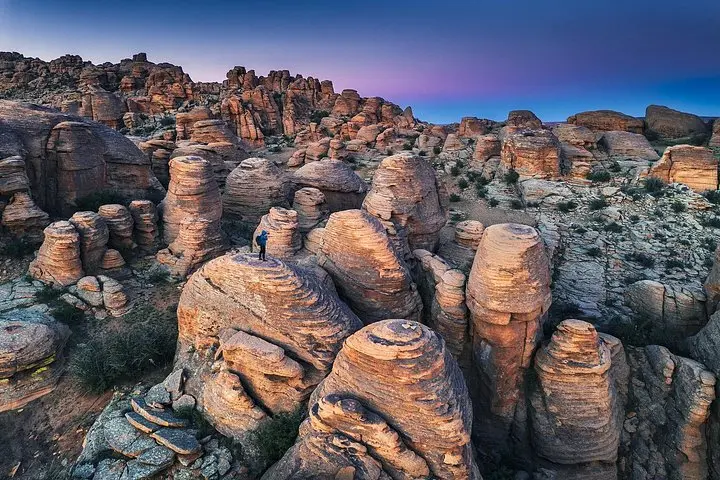
The trip opens with the driver threading Ulaanbaatar’s outskirts toward wide skies and a horizon that feels like a living map. Early light hits the steppe and the Takhi — Przewalski horses — lift their heads as if to count passing visitors. Over ten days the landscape alternates between wind-sculpted dunes, red cliffs that echo ancient seabeds, and the granite shoulders of Baga Gazriin Chuluu.
Verified experiences and guided adventures in the surrounding area.
Operated by Nomade Mongolia Travel & Tour · Ulaanbaatar, Ulaanbaatar
The trip opens with the driver threading Ulaanbaatar’s outskirts toward wide skies and a horizon that feels like a living map. Early light hits the steppe and the Takhi — Przewalski horses — lift their heads as if to count passing visitors. Over ten days the landscape alternates between wind-sculpted dunes, red cliffs that echo ancient seabeds, and the granite shoulders of Baga Gazriin Chuluu.
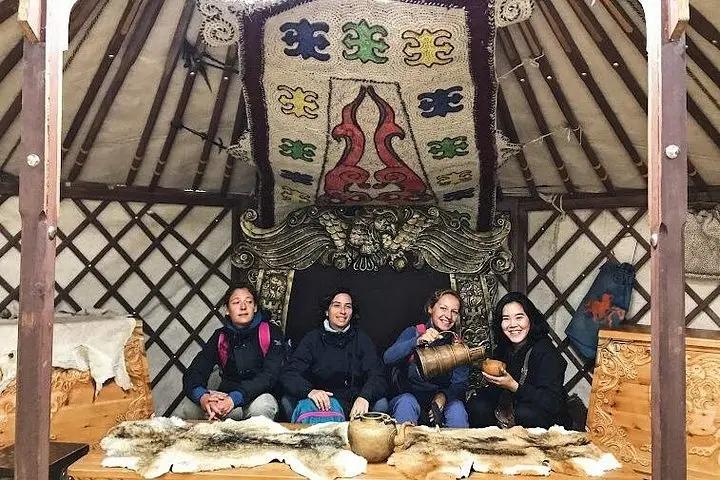
This route follows layers of history: Orkhon Valley’s ruins mark the Mongol Empire’s heartbeat; Erdene Zuu monastery preserves Buddhist revival after 20th-century purges; Bayanzag’s flaming cliffs keep fossilized traces of the Cretaceous. Geology is on display — compacted seabeds, wind-built sand ridges that sing when the air moves, and folded granite rising from an otherwise flat plain. Local culture is present in ger stays, herder visits, and horse and camel saddles that are still in daily use.
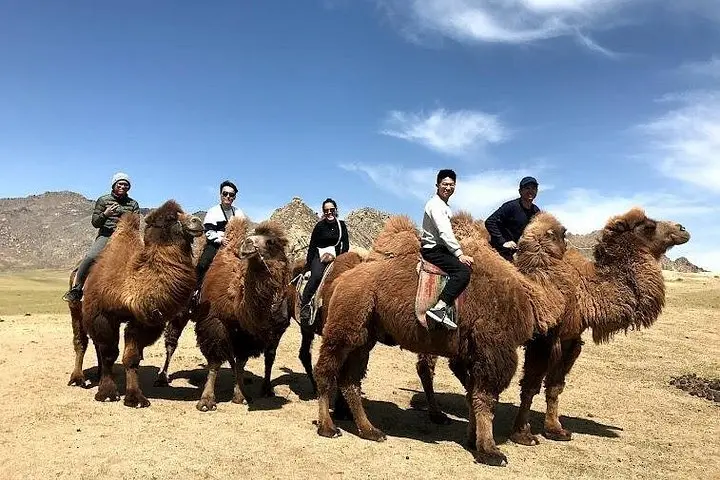
Practical guidance: the driving is long; expect multiple 3–6 hour legs between points. Short hikes and guided horse or camel rides are included; basic riding confidence helps. Temperatures swing widely — pack layers, sun protection, and a warm sleep layer for ger nights. Hydrate proactively; bottled water is provided but carry a refillable bottle for day use. Footwear should handle rocky trails and soft sand; gaiters are useful at Khongoryn Els.
Travelers should budget time for altitude and dust, keep photocopies of travel documents, and allow space in luggage for local crafts bought in Ulaanbaatar. The itinerary balances wildlife viewing, cultural sites, and the elemental appeal of Mongolia’s wide places.
The tour is moderate: most days involve driving with short hikes and 1–2 hour riding sessions; participants should be comfortable mounting a horse or camel and hiking on uneven ground.
Accommodations alternate between ger guesthouses, tourist camps and occasional lodges; facilities are basic in remote areas but comfortable for the region.
Yes — Hustai National Park is managed for Takhi viewing; sightings are common but not guaranteed, as animals roam free within protected ranges.
Standard travel vaccinations are recommended; no special permits for tourist sites are typically required, but keep passport details handy and check entry requirements for Mongolia before travel.
Nomade Mongolia Travel & Tour operates guided outdoor trips and adventures with an emphasis on safety, stewardship, and memorable experiences.
The trip opens with the driver threading Ulaanbaatar’s outskirts toward wide skies and a horizon that feels like a living map. Early light hits the steppe and the Takhi — Przewalski horses — lift their heads as if to count passing visitors. Over ten days the landscape alternates between wind-sculpted dunes, red cliffs that echo ancient seabeds, and the granite shoulders of Baga Gazriin Chuluu.
The trip opens with the driver threading Ulaanbaatar’s outskirts toward wide skies and a horizon that feels like a living map. Early light hits the steppe and the Takhi — Przewalski horses — lift their heads as if to count passing visitors. Over ten days the landscape alternates between wind-sculpted dunes, red cliffs that echo ancient seabeds, and the granite shoulders of Baga Gazriin Chuluu.
This route follows layers of history: Orkhon Valley’s ruins mark the Mongol Empire’s heartbeat; Erdene Zuu monastery preserves Buddhist revival after 20th-century purges; Bayanzag’s flaming cliffs keep fossilized traces of the Cretaceous. Geology is on display — compacted seabeds, wind-built sand ridges that sing when the air moves, and folded granite rising from an otherwise flat plain. Local culture is present in ger stays, herder visits, and horse and camel saddles that are still in daily use.
Practical guidance: the driving is long; expect multiple 3–6 hour legs between points. Short hikes and guided horse or camel rides are included; basic riding confidence helps. Temperatures swing widely — pack layers, sun protection, and a warm sleep layer for ger nights. Hydrate proactively; bottled water is provided but carry a refillable bottle for day use. Footwear should handle rocky trails and soft sand; gaiters are useful at Khongoryn Els.
Travelers should budget time for altitude and dust, keep photocopies of travel documents, and allow space in luggage for local crafts bought in Ulaanbaatar. The itinerary balances wildlife viewing, cultural sites, and the elemental appeal of Mongolia’s wide places.