THE ADVENTURE COLLECTIVE® · Independent discovery and booking for outdoor travel

An eight-day loop from Addis Ababa to Lalibela, the Simien plateau, Axum, Gondar and Lake Tana that pairs highland hiking with UNESCO sites and living Orthodox traditions. Ideal for travelers who want concentrated history, wildlife, and dramatic geology.
An eight-day loop from Addis Ababa to Lalibela, the Simien plateau, Axum, Gondar and Lake Tana that pairs highland hiking with UNESCO sites and living Orthodox traditions. Ideal for travelers who want concentrated history, wildlife, and dramatic geology.
You step off the plane into the thin, cool air of Addis Ababa and the city seems to inhale and exhale around you — honking minibuses, the scent of fresh coffee, and a skyline cut by distant ridgelines.
Verified experiences and guided adventures in the surrounding area.
Operated by WALK IN ETHIOPIA TOUR AND TRAVEL · Addis Ababa, Addis Ababa
You step off the plane into the thin, cool air of Addis Ababa and the city seems to inhale and exhale around you — honking minibuses, the scent of fresh coffee, and a skyline cut by distant ridgelines.
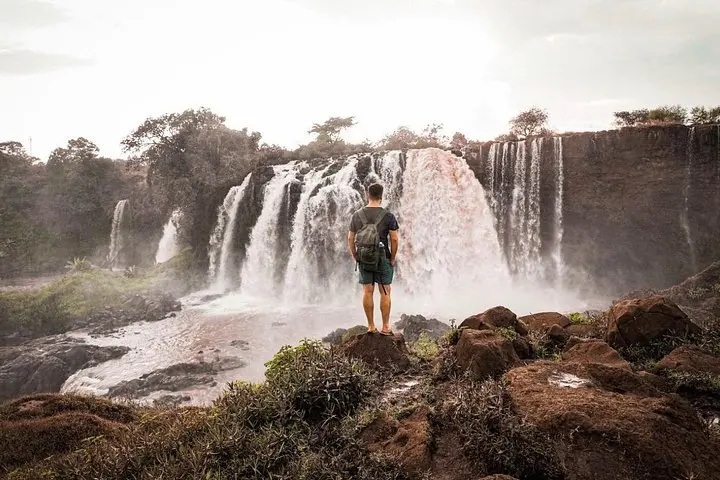
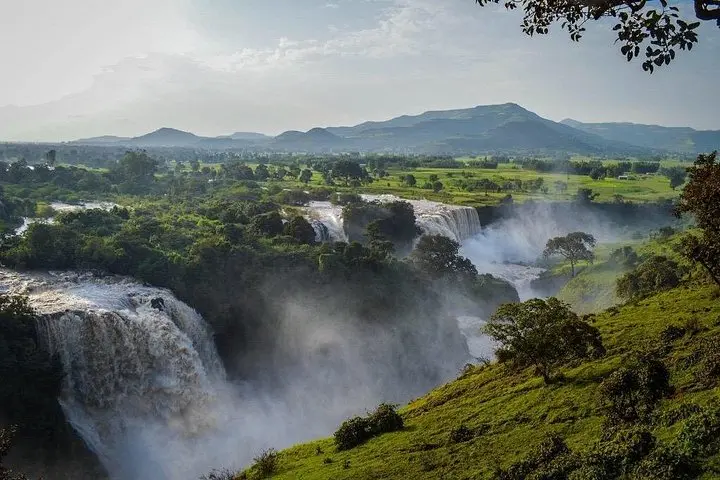
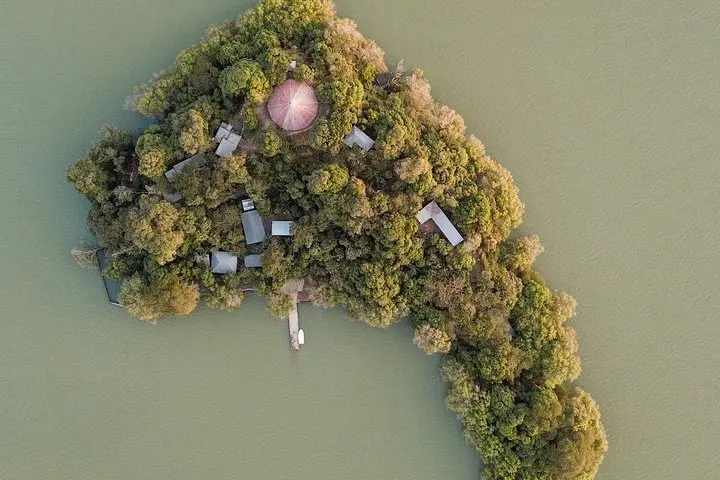
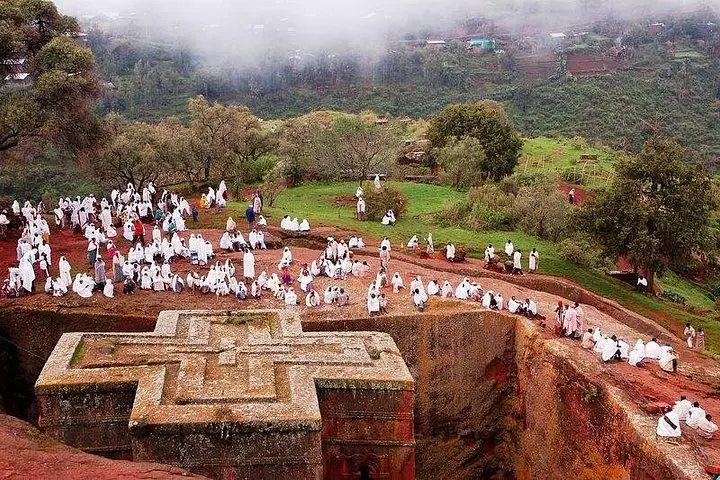
Across eight days you'll move from the capital's museums and marketplaces to the sacred islands of Lake Tana, the thunder of the Blue Nile Falls, the castellated compound of Gondar, the high moors of the Simien Mountains, the ancient stelae of Axum, and the rock-hewn churches of Lalibela. Geology drives the route: an elevated Ethiopian plateau ringed by eroded basalt escarpments, deep river gorges, and towering volcanic massif like Ras Dashen (about 4,543 m). Culture is equally central — Orthodox liturgy, centuries-old manuscripts, and a coffee culture that frames daily life.
Expect varied terrain: paved roads and market alleys in towns, short steep trails at Blue Nile Falls (round-trip ~1 hour, moderate steps), and high-elevation walking in the Simiens where day hikes can gain 200–600 m on rough, sometimes rocky tracks. Wildlife sightings often include gelada baboons and raptors against sculpted cliffs.
Practical guidance: allow time to acclimatize — several sites sit above 2,000 m. Pack layered clothing for cold mornings and sun-exposed afternoons, sturdy footwear for uneven paths, and a refillable water bottle; potable water may be limited between hotels. Cash (Ethiopian birr) is useful outside major cities; tipping and respectful dress in churches are expected. Travel windows favor the dry months for clearer skies and easier driving; bring sunscreen and a basic first-aid kit. With modest fitness and an appetite for history, this itinerary delivers a concentrated survey of Ethiopia’s landscapes and living traditions.
Yes — several sites are above 2,000 m. Take it easy on arrival days, stay hydrated, avoid heavy exertion the first 24–48 hours, and consult a travel doctor about medication if prone to altitude sickness.
Standard travel vaccines are recommended and a visa is required for most nationalities; check current Ethiopian entry requirements and ensure passport validity for at least six months.
Most days involve short to moderate walks (30 minutes to a few hours) around sites; the Simien section includes more sustained high-elevation walking but not technical scrambling.
The itinerary is private and adaptable; children and older travelers can participate if comfortable with travel logistics and altitude—discuss modifications with the operator.
WALK IN ETHIOPIA TOUR AND TRAVEL operates guided outdoor trips and adventures with an emphasis on safety, stewardship, and memorable experiences.
You step off the plane into the thin, cool air of Addis Ababa and the city seems to inhale and exhale around you — honking minibuses, the scent of fresh coffee, and a skyline cut by distant ridgelines.
You step off the plane into the thin, cool air of Addis Ababa and the city seems to inhale and exhale around you — honking minibuses, the scent of fresh coffee, and a skyline cut by distant ridgelines.
Across eight days you'll move from the capital's museums and marketplaces to the sacred islands of Lake Tana, the thunder of the Blue Nile Falls, the castellated compound of Gondar, the high moors of the Simien Mountains, the ancient stelae of Axum, and the rock-hewn churches of Lalibela. Geology drives the route: an elevated Ethiopian plateau ringed by eroded basalt escarpments, deep river gorges, and towering volcanic massif like Ras Dashen (about 4,543 m). Culture is equally central — Orthodox liturgy, centuries-old manuscripts, and a coffee culture that frames daily life.
Expect varied terrain: paved roads and market alleys in towns, short steep trails at Blue Nile Falls (round-trip ~1 hour, moderate steps), and high-elevation walking in the Simiens where day hikes can gain 200–600 m on rough, sometimes rocky tracks. Wildlife sightings often include gelada baboons and raptors against sculpted cliffs.
Practical guidance: allow time to acclimatize — several sites sit above 2,000 m. Pack layered clothing for cold mornings and sun-exposed afternoons, sturdy footwear for uneven paths, and a refillable water bottle; potable water may be limited between hotels. Cash (Ethiopian birr) is useful outside major cities; tipping and respectful dress in churches are expected. Travel windows favor the dry months for clearer skies and easier driving; bring sunscreen and a basic first-aid kit. With modest fitness and an appetite for history, this itinerary delivers a concentrated survey of Ethiopia’s landscapes and living traditions.