THE ADVENTURE COLLECTIVE® · Independent discovery and booking for outdoor travel

A concentrated five-day loop through Hunza’s high valleys — from the fort-dotted ridgelines of Karimabad to the turquoise sweep of Attabad Lake and the spires of Passu. Expect short glacier hikes, boat rides, historic forts and dramatic sunset viewpoints.
A concentrated five-day loop through Hunza’s high valleys — from the fort-dotted ridgelines of Karimabad to the turquoise sweep of Attabad Lake and the spires of Passu. Expect short glacier hikes, boat rides, historic forts and dramatic sunset viewpoints.
You arrive on a sharp morning, mountain air pressing cool and clear as the Karakoram peels open around you. Karimabad perches above the Hunza River; terraces and apricot trees slope toward blue glaciers while Rakaposhi and Golden Peak hold the horizon like watchful cliffs. The valley moves—rivers daring you to follow, winds pushing you toward the ridgelines.
Verified experiences and guided adventures in the surrounding area.
Operated by Traverse Pakistan · Karimabad, Gilgit-Baltistan
You arrive on a sharp morning, mountain air pressing cool and clear as the Karakoram peels open around you. Karimabad perches above the Hunza River; terraces and apricot trees slope toward blue glaciers while Rakaposhi and Golden Peak hold the horizon like watchful cliffs. The valley moves—rivers daring you to follow, winds pushing you toward the ridgelines.
This five-day circuit threads history and geology. Baltit and Altit forts chronicle centuries of Silk Road trade and local Mir rule; high above, the Karakoram’s collision with the Eurasian plate built the jagged spines you see today. Attabad Lake (formed 2010) stretches roughly 21 km of startling turquoise where a landslide dammed the Hunza River. Passu Cones and Batura Muztagh show glacial sculpting—ice-carved moraines and crevassed tongues that shaped local culture, irrigation and orchards.
Expect diverse terrain: paved village lanes, cobbled fort approaches, short glacier walks and boat crossings. Typical day hikes run 2–6 km with rolling to steep sections and occasional 300–600 m gains; altitude sits between 2,500–3,500 m at many stops. You’ll cross the jittery Hussaini bridge, paddle Borith’s calm waters, and stand at Eagles Nest for sunset on Rakaposhi.
Practical edge: acclimatize the first day, plan for sun, wind and sudden cold, and carry layered clothing, water and basic crampons for icy patches. Local guides handle permits and logistics; bring an appetite for hearty Hunza cuisine and leave room for slow afternoons where the valley insists you slow down.
No technical climbing is required for guided glacier walks listed here; guides supply routes, but basic sure-footedness and comfort on ice and scree are necessary.
Most stops and accommodations range 2,400–3,000 m, with short forays higher depending on trails; allow time to acclimatize.
This itinerary includes four nights at luxury hotels/resorts and meals as specified (breakfast, lunch, dinner) per the tour inclusions.
The bridge is rustic and sways; locals maintain it. Cross with caution, avoid peak winds, and follow your guide’s instructions.
Traverse Pakistan operates guided outdoor trips and adventures with an emphasis on safety, stewardship, and memorable experiences.

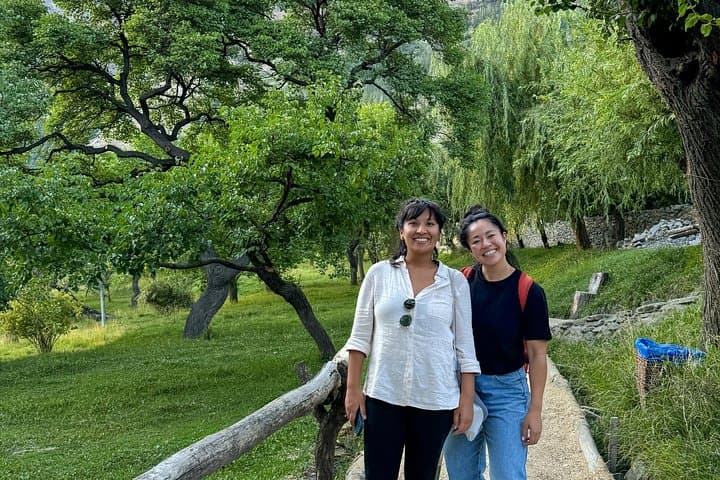


You arrive on a sharp morning, mountain air pressing cool and clear as the Karakoram peels open around you. Karimabad perches above the Hunza River; terraces and apricot trees slope toward blue glaciers while Rakaposhi and Golden Peak hold the horizon like watchful cliffs. The valley moves—rivers daring you to follow, winds pushing you toward the ridgelines.
You arrive on a sharp morning, mountain air pressing cool and clear as the Karakoram peels open around you. Karimabad perches above the Hunza River; terraces and apricot trees slope toward blue glaciers while Rakaposhi and Golden Peak hold the horizon like watchful cliffs. The valley moves—rivers daring you to follow, winds pushing you toward the ridgelines.
This five-day circuit threads history and geology. Baltit and Altit forts chronicle centuries of Silk Road trade and local Mir rule; high above, the Karakoram’s collision with the Eurasian plate built the jagged spines you see today. Attabad Lake (formed 2010) stretches roughly 21 km of startling turquoise where a landslide dammed the Hunza River. Passu Cones and Batura Muztagh show glacial sculpting—ice-carved moraines and crevassed tongues that shaped local culture, irrigation and orchards.
Expect diverse terrain: paved village lanes, cobbled fort approaches, short glacier walks and boat crossings. Typical day hikes run 2–6 km with rolling to steep sections and occasional 300–600 m gains; altitude sits between 2,500–3,500 m at many stops. You’ll cross the jittery Hussaini bridge, paddle Borith’s calm waters, and stand at Eagles Nest for sunset on Rakaposhi.
Practical edge: acclimatize the first day, plan for sun, wind and sudden cold, and carry layered clothing, water and basic crampons for icy patches. Local guides handle permits and logistics; bring an appetite for hearty Hunza cuisine and leave room for slow afternoons where the valley insists you slow down.