THE ADVENTURE COLLECTIVE® · Independent discovery and booking for outdoor travel

Walk three hours through London’s oldest streets with a private local guide, from Roman walls to St. Paul’s cathedral. This concise, customizable tour mixes on-street storytelling with lesser-known stops like Pepys Garden and the York Watergate.
Walk three hours through London’s oldest streets with a private local guide, from Roman walls to St. Paul’s cathedral. This concise, customizable tour mixes on-street storytelling with lesser-known stops like Pepys Garden and the York Watergate.
Morning light slides across the south bank and the Thames pulls the city into motion — this three-hour private walking tour threads through the City of London’s oldest streets, where stone and story meet. You begin near Tower Hill, feeling the weight of Roman Londinium beneath modern paving, and move with a local guide whose voice stitches together the Roman wall, the Monument to the Great Fire, and the soaring dome of St. Paul’s Cathedral.
Verified experiences and guided adventures in the surrounding area.
Operated by Friendly Local Guides · London, England
Morning light slides across the south bank and the Thames pulls the city into motion — this three-hour private walking tour threads through the City of London’s oldest streets, where stone and story meet. You begin near Tower Hill, feeling the weight of Roman Londinium beneath modern paving, and move with a local guide whose voice stitches together the Roman wall, the Monument to the Great Fire, and the soaring dome of St. Paul’s Cathedral.
London’s layers are geological and cultural: London Clay and river alluvium shaped the Thames’s bends, while Roman engineers and 17th-century rebuilders like Sir Christopher Wren reshaped the skyline after 1666. Expect stops at small, charged places — Pepys’s garden, a ruined Wren church now grown with trees, and the York Watergate that marks an older riverbank. The guide mixes archival detail with street-level color: who lived where, why lanes curve, and how commerce and catastrophe rewired the city.
Practical guide: the route is mostly paved with some cobbles and short flights of steps; wear sturdy shoes and allow time for photos and questions. Public transport links are nearby, and the private format means the pace can be adjusted for mobility or interest. Bring a refillable bottle, a lightweight rain layer, and a fully charged phone for maps and historic images the guide may reference. By the end you’ll have a mapped timeline in your head — Roman foundations, medieval guilds, Wren’s rebirth — and actionable tips for continuing the city’s history walk on your own.
Meeting and finish points are central to the City of London, typically near Tower Hill or the Monument; exact pickup is confirmed at booking.
This walking tour focuses on exterior sights and street history—admissions to paid interiors (e.g., St. Paul’s Cathedral) are not included unless specified otherwise.
Parts of the walk include cobbles, narrow lanes, and steps; travelers with mobility needs should request itinerary adjustments when booking to assess suitability.
Yes — as a private tour the guide can adapt stops and pacing for interests like Roman London, the Great Fire, or Wren’s architecture.
Friendly Local Guides operates guided outdoor trips and adventures with an emphasis on safety, stewardship, and memorable experiences.
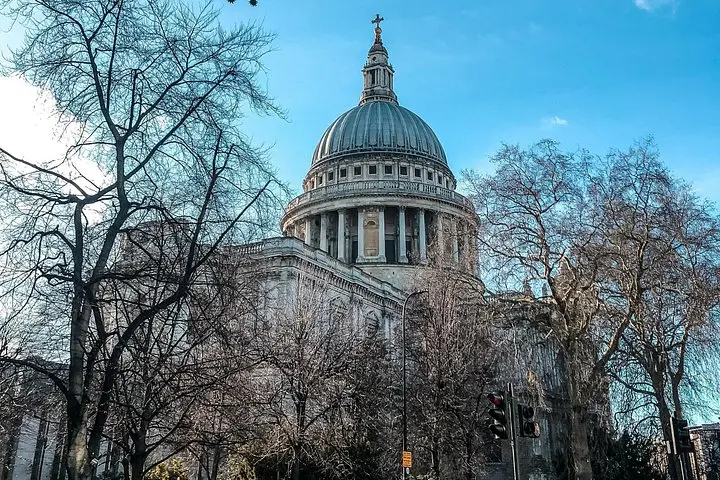



Morning light slides across the south bank and the Thames pulls the city into motion — this three-hour private walking tour threads through the City of London’s oldest streets, where stone and story meet. You begin near Tower Hill, feeling the weight of Roman Londinium beneath modern paving, and move with a local guide whose voice stitches together the Roman wall, the Monument to the Great Fire, and the soaring dome of St. Paul’s Cathedral.
Morning light slides across the south bank and the Thames pulls the city into motion — this three-hour private walking tour threads through the City of London’s oldest streets, where stone and story meet. You begin near Tower Hill, feeling the weight of Roman Londinium beneath modern paving, and move with a local guide whose voice stitches together the Roman wall, the Monument to the Great Fire, and the soaring dome of St. Paul’s Cathedral.
London’s layers are geological and cultural: London Clay and river alluvium shaped the Thames’s bends, while Roman engineers and 17th-century rebuilders like Sir Christopher Wren reshaped the skyline after 1666. Expect stops at small, charged places — Pepys’s garden, a ruined Wren church now grown with trees, and the York Watergate that marks an older riverbank. The guide mixes archival detail with street-level color: who lived where, why lanes curve, and how commerce and catastrophe rewired the city.
Practical guide: the route is mostly paved with some cobbles and short flights of steps; wear sturdy shoes and allow time for photos and questions. Public transport links are nearby, and the private format means the pace can be adjusted for mobility or interest. Bring a refillable bottle, a lightweight rain layer, and a fully charged phone for maps and historic images the guide may reference. By the end you’ll have a mapped timeline in your head — Roman foundations, medieval guilds, Wren’s rebirth — and actionable tips for continuing the city’s history walk on your own.