THE ADVENTURE COLLECTIVE® · Independent discovery and booking for outdoor travel

Three nights, four days and a concentrated loop through Uluru, Kata Tjuta and Kings Canyon — this guided camping adventure pairs early-morning sunrises, cultural briefings from Anangu storytellers and full-day walks across some of Australia’s most dramatic desert sandstone. Practical, efficient and rich with geology and culture.
Three nights, four days and a concentrated loop through Uluru, Kata Tjuta and Kings Canyon — this guided camping adventure pairs early-morning sunrises, cultural briefings from Anangu storytellers and full-day walks across some of Australia’s most dramatic desert sandstone. Practical, efficient and rich with geology and culture.
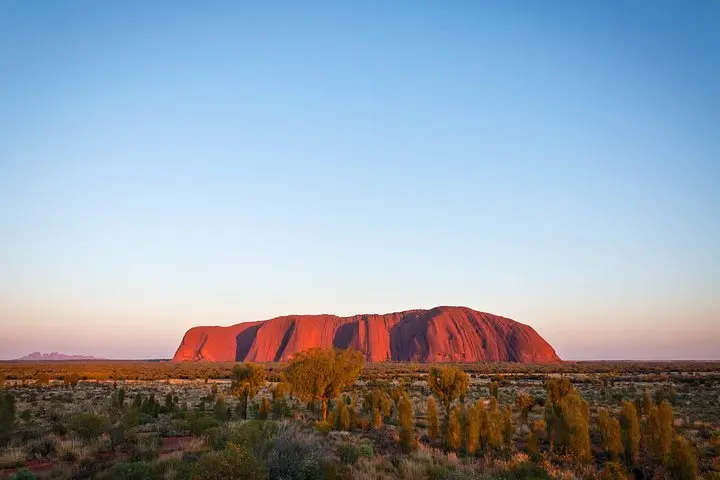
You step out of the bus before dawn and the desert pulls itself into focus — a horizon of scorched ochre and a sky the color of washed denim. The first light finds Uluru like a slow exhale, its faces warming from purple to brick red while your guide points out carved grooves and panels of ancient art. This three-night camping loop from Yulara stitches together the Red Centre’s headline acts: the domes of Kata Tjuta, the full base walk of Uluru and the high rims and hidden pockets of Kings Canyon.
Verified experiences and guided adventures in the surrounding area.
Operated by Adventure Tours Australia · Yulara, Northern Territory
You step out of the bus before dawn and the desert pulls itself into focus — a horizon of scorched ochre and a sky the color of washed denim. The first light finds Uluru like a slow exhale, its faces warming from purple to brick red while your guide points out carved grooves and panels of ancient art. This three-night camping loop from Yulara stitches together the Red Centre’s headline acts: the domes of Kata Tjuta, the full base walk of Uluru and the high rims and hidden pockets of Kings Canyon.
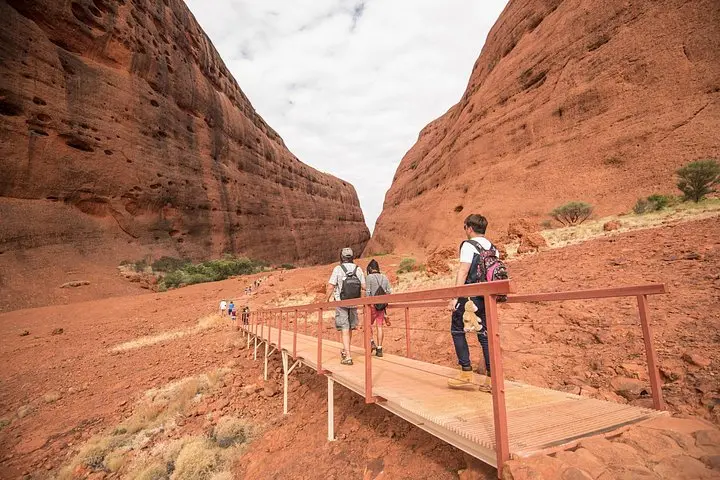
Kata Tjuta’s 36 domes are composed of conglomerate rock — a jumble of pebbles and sandstone cemented together — that eroded differently than Uluru’s massive arkose sandstone. Walking the Valley of the Winds, you move through canyons that feel younger and louder than the monoliths: wind pushes through narrow chutes and sunlight punches holes in the shade. At Uluru the experience is quieter and more intimate; the base walk is where the scale of the place makes sense, where waterlines, caves and hand-painted panels tell Anangu creation stories that predate the European map.
The trip’s third act is Watarrka National Park and Kings Canyon, a gorge with sheer sandstone walls, deep gullies and cool rock pools. The canyon supports hundreds of plant species and microhabitats — a reminder that the desert can be both harsh and richly productive.
Culturally, this is Anangu country. Guides will relay creation stories and point to rock art; the Cultural Centre in Yulara showcases local artists and is the ethically correct place to buy works made by First Nations people. Geologically, expect heavy iron staining on sandstone, collapsed domes at Kata Tjuta and signs of millennia of wind-driven weathering.
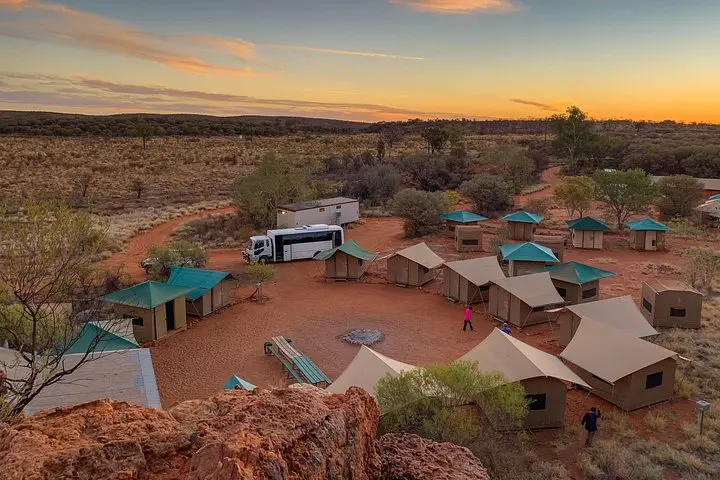
Practically: the itinerary moves fast. Expect an early Uluru sunrise, a three-hour Kata Tjuta hike, a full base walk at Uluru and a strenuous Kings Canyon rim trek. Nights are spent in powered camps with shared facilities — think soft bedding and basic amenities rather than luxury glamping. Bring at least 3 litres of water, sun protection, sturdy boots and a small daypack.
Timing matters. In summer the heat can make midday walking dangerous; guides plan around the worst hours. Winter mornings are cold and crisp, perfect for long hikes. The trip includes most meals and transfers from Yulara; park entry fees are covered by the operator. Optional evening experiences — Field of Light, camel rides or Sounds of Silence — can be slotted into free evenings.
This circuit is an efficient, grounded way to see the Red Centre’s essentials in a short window. It’s equal parts natural theatre, cultural education and practical outback logistics, designed to get you up close to Australia’s most iconic landscapes while keeping the camping simple and the days purposeful.
Park entry fees are typically included by the tour operator; confirm at booking. If not included, pay at the park entry or Cultural Centre.
Climbing Uluru is strongly discouraged and the climb is permanently closed; your guide will explain respectful alternatives and cultural context.
Accommodation is in powered camps with shared facilities — basic, comfortable bedding and communal dining rather than private glamping tents.
Most breakfasts, lunches and dinners are included as outlined in the itinerary; Day 1 lunch is not included, so plan to eat before pickup if arriving that day.
Children may join but need moderate stamina for long walks and early starts; operators often set minimum age limits—check at booking.
The operator requires arrivals before the stated cutoff (usually 1:40 pm). If you miss the pickup you may not be able to join; contact the supplier for alternative options.
Adventure Tours Australia operates guided outdoor trips and adventures with an emphasis on safety, stewardship, and memorable experiences.
You step out of the bus before dawn and the desert pulls itself into focus — a horizon of scorched ochre and a sky the color of washed denim. The first light finds Uluru like a slow exhale, its faces warming from purple to brick red while your guide points out carved grooves and panels of ancient art. This three-night camping loop from Yulara stitches together the Red Centre’s headline acts: the domes of Kata Tjuta, the full base walk of Uluru and the high rims and hidden pockets of Kings Canyon.
You step out of the bus before dawn and the desert pulls itself into focus — a horizon of scorched ochre and a sky the color of washed denim. The first light finds Uluru like a slow exhale, its faces warming from purple to brick red while your guide points out carved grooves and panels of ancient art. This three-night camping loop from Yulara stitches together the Red Centre’s headline acts: the domes of Kata Tjuta, the full base walk of Uluru and the high rims and hidden pockets of Kings Canyon.
Kata Tjuta’s 36 domes are composed of conglomerate rock — a jumble of pebbles and sandstone cemented together — that eroded differently than Uluru’s massive arkose sandstone. Walking the Valley of the Winds, you move through canyons that feel younger and louder than the monoliths: wind pushes through narrow chutes and sunlight punches holes in the shade. At Uluru the experience is quieter and more intimate; the base walk is where the scale of the place makes sense, where waterlines, caves and hand-painted panels tell Anangu creation stories that predate the European map.
The trip’s third act is Watarrka National Park and Kings Canyon, a gorge with sheer sandstone walls, deep gullies and cool rock pools. The canyon supports hundreds of plant species and microhabitats — a reminder that the desert can be both harsh and richly productive.
Culturally, this is Anangu country. Guides will relay creation stories and point to rock art; the Cultural Centre in Yulara showcases local artists and is the ethically correct place to buy works made by First Nations people. Geologically, expect heavy iron staining on sandstone, collapsed domes at Kata Tjuta and signs of millennia of wind-driven weathering.
Practically: the itinerary moves fast. Expect an early Uluru sunrise, a three-hour Kata Tjuta hike, a full base walk at Uluru and a strenuous Kings Canyon rim trek. Nights are spent in powered camps with shared facilities — think soft bedding and basic amenities rather than luxury glamping. Bring at least 3 litres of water, sun protection, sturdy boots and a small daypack.
Timing matters. In summer the heat can make midday walking dangerous; guides plan around the worst hours. Winter mornings are cold and crisp, perfect for long hikes. The trip includes most meals and transfers from Yulara; park entry fees are covered by the operator. Optional evening experiences — Field of Light, camel rides or Sounds of Silence — can be slotted into free evenings.
This circuit is an efficient, grounded way to see the Red Centre’s essentials in a short window. It’s equal parts natural theatre, cultural education and practical outback logistics, designed to get you up close to Australia’s most iconic landscapes while keeping the camping simple and the days purposeful.