THE ADVENTURE COLLECTIVE® · Independent discovery and booking for outdoor travel

Travel from Alice Springs to Uluru for a compact overnight that mixes sunset drinks and a BBQ with sunrise views and a walk through Kata Tjuta’s Walpa Gorge. This guided trip pairs big desert light with cultural insight and easy walking.
Travel from Alice Springs to Uluru for a compact overnight that mixes sunset drinks and a BBQ with sunrise views and a walk through Kata Tjuta’s Walpa Gorge. This guided trip pairs big desert light with cultural insight and easy walking.
The bus leaves Alice Springs before dawn and the land changes its voice on the way to Uluru — low scrub punctuated by saltbush, then long, empty horizons that make your eyes flatten.
Verified experiences and guided adventures in the surrounding area.
Operated by Emu Run Experience · Yulara, Northern Territory
The bus leaves Alice Springs before dawn and the land changes its voice on the way to Uluru — low scrub punctuated by saltbush, then long, empty horizons that make your eyes flatten.
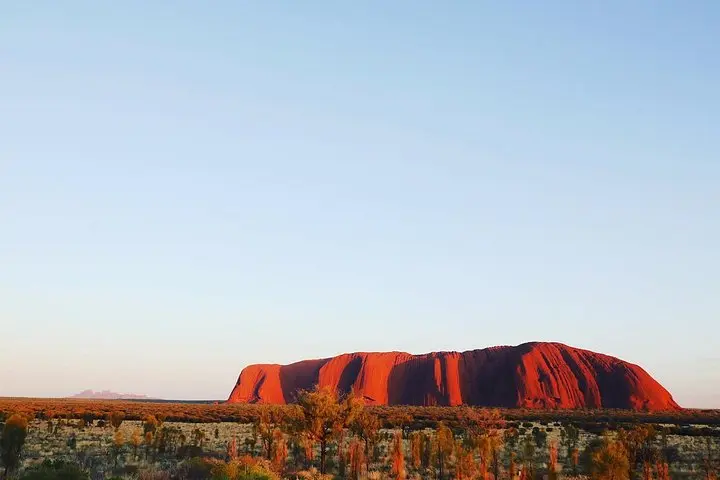
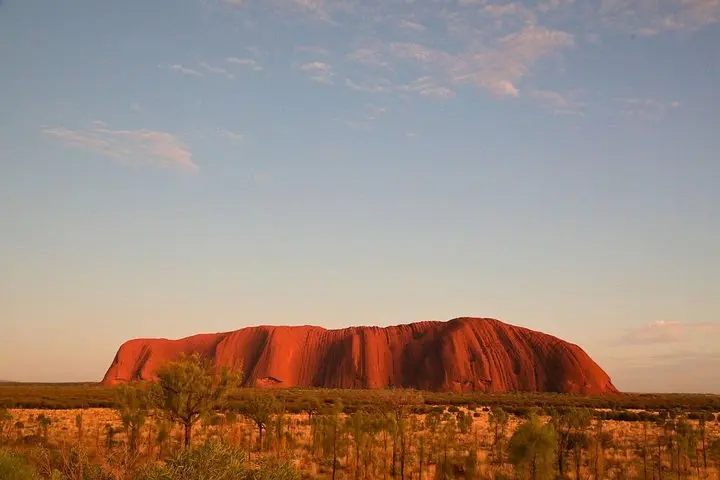
By afternoon the great monolith rises out of the red plain like a storybook illustration made real: Uluru’s dark shadow slides across ochre slopes as your guide lays out drinks and a sunset BBQ. You stand with a glass in hand as the rock’s colors loosen and shift, each layer catching the light differently until the last sun folds behind the outback.
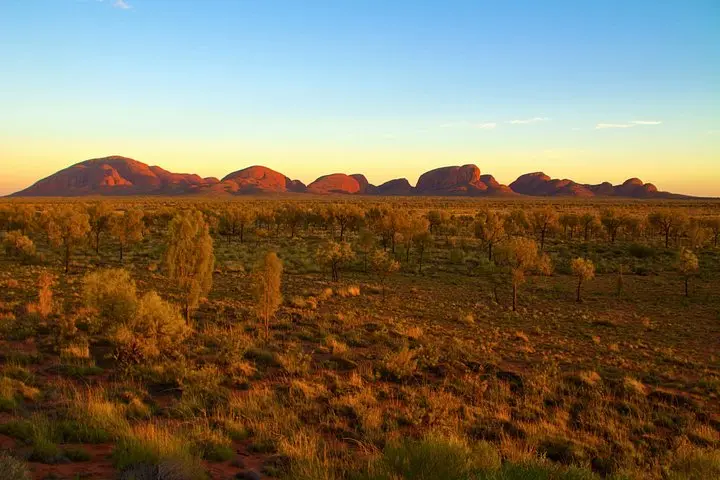
This overnight escape is compact but rich: an evening at Uluru with canapés and a bubbly toast, a night at Ayers Rock Resort, a sunrise coffee at the base, then a gentle walk through the domes of Kata Tjuta — Walpa Gorge — before heading back. The itinerary balances spectacle with context. Guides share Anangu cultural stories about law, songlines and custodianship while interpreters help decode the rock art and sacred sites you’ll pass.
Geologically, Uluru is a sandstone slab hardened over 500 million years and tilted on its side. Kata Tjuta’s conglomerate domes are older still — a different chapter in the same desert book. The region’s heat, wind and episodic rains sculpt the crevices and channels you’ll see on short walks.
Practicalities are deliberate here. Uluru’s full base walk is roughly 10.6 km if you want to circle it; the tour offers shorter, interpretive sections instead. Walpa Gorge is a 1–2 hour, roughly 2.6 km return walk through a narrow cleft, with minimal elevation but loose gravel underfoot.
Sun and heat are the primary hazards: summer daytime temperatures commonly top 40°C (104°F), while winter nights can dip near freezing. The tour includes park fees, dinner, breakfast and shared pickup from Alice Springs or Ayers Rock Resort, and accommodations at the Outback Pioneer Hotel (or equivalent).
For a smooth trip, carry at least 2–3 liters of water, wear sturdy walking shoes, and bring windproof layers for morning and night. Respect signage: Uluru is a living cultural landscape, and climbing the rock is closed — your guide will explain why.
This overnight window is compact but intentionally paced: big light, deeper context, and time to let the desert’s scale settle in. For photographers it’s a masterclass in color; for travelers it’s an invitation to listen to place, not just to check a landmark off a list.
Expect roughly 4.5–5 hours one way with a coffee stop at Erldunda; the tour times include that transfer.
Yes — Uluru-Kata Tjuta National Park entry fees are included in the tour price.
No — climbing Uluru has been permanently closed; the tour focuses on culturally appropriate walks and viewpoints.
Yes for most, but participants should have moderate fitness; the operator advises caution for those with serious heart issues.
The operator may cancel for extreme weather or low numbers; their cancellation policy details refunds depending on timing.
Accommodation is at Ayers Rock Resort’s Outback Pioneer Hotel or a similar property within the resort complex.
Emu Run Experience operates guided outdoor trips and adventures with an emphasis on safety, stewardship, and memorable experiences.
The bus leaves Alice Springs before dawn and the land changes its voice on the way to Uluru — low scrub punctuated by saltbush, then long, empty horizons that make your eyes flatten.
The bus leaves Alice Springs before dawn and the land changes its voice on the way to Uluru — low scrub punctuated by saltbush, then long, empty horizons that make your eyes flatten.
By afternoon the great monolith rises out of the red plain like a storybook illustration made real: Uluru’s dark shadow slides across ochre slopes as your guide lays out drinks and a sunset BBQ. You stand with a glass in hand as the rock’s colors loosen and shift, each layer catching the light differently until the last sun folds behind the outback.
This overnight escape is compact but rich: an evening at Uluru with canapés and a bubbly toast, a night at Ayers Rock Resort, a sunrise coffee at the base, then a gentle walk through the domes of Kata Tjuta — Walpa Gorge — before heading back. The itinerary balances spectacle with context. Guides share Anangu cultural stories about law, songlines and custodianship while interpreters help decode the rock art and sacred sites you’ll pass.
Geologically, Uluru is a sandstone slab hardened over 500 million years and tilted on its side. Kata Tjuta’s conglomerate domes are older still — a different chapter in the same desert book. The region’s heat, wind and episodic rains sculpt the crevices and channels you’ll see on short walks.
Practicalities are deliberate here. Uluru’s full base walk is roughly 10.6 km if you want to circle it; the tour offers shorter, interpretive sections instead. Walpa Gorge is a 1–2 hour, roughly 2.6 km return walk through a narrow cleft, with minimal elevation but loose gravel underfoot.
Sun and heat are the primary hazards: summer daytime temperatures commonly top 40°C (104°F), while winter nights can dip near freezing. The tour includes park fees, dinner, breakfast and shared pickup from Alice Springs or Ayers Rock Resort, and accommodations at the Outback Pioneer Hotel (or equivalent).
For a smooth trip, carry at least 2–3 liters of water, wear sturdy walking shoes, and bring windproof layers for morning and night. Respect signage: Uluru is a living cultural landscape, and climbing the rock is closed — your guide will explain why.
This overnight window is compact but intentionally paced: big light, deeper context, and time to let the desert’s scale settle in. For photographers it’s a masterclass in color; for travelers it’s an invitation to listen to place, not just to check a landmark off a list.