THE ADVENTURE COLLECTIVE® · Independent discovery and booking for outdoor travel

See Uluru, Kata Tjuta and the vast salt plains of Lake Amadeus from a fixed-wing aircraft. This two-hour scenic flight pairs guaranteed window seats with live pilot commentary for a high-altitude primer on the Red Centre's geology and culture.
See Uluru, Kata Tjuta and the vast salt plains of Lake Amadeus from a fixed-wing aircraft. This two-hour scenic flight pairs guaranteed window seats with live pilot commentary for a high-altitude primer on the Red Centre's geology and culture.
You lift off from the red dust of Yulara and the ground falls away. Below, Uluru opens like a folded map—ochre face catching light, dark fissures running like scars, a flat top that seems too precise to be natural. The pilot banks gently and Kata Tjuta’s domes appear on the horizon: a cluster of rounded, rust-colored heads rising from a flat plain. Out the window the salt pan of Lake Amadeus stretches white and crystalline, its edges bleeding into the desert like paint into water. Wild camels dot the plains like small, moving shadows.
Verified experiences and guided adventures in the surrounding area.
Operated by Ayers Rock Scenic Plane Flights · Yulara, Northern Territory
You lift off from the red dust of Yulara and the ground falls away. Below, Uluru opens like a folded map—ochre face catching light, dark fissures running like scars, a flat top that seems too precise to be natural. The pilot banks gently and Kata Tjuta’s domes appear on the horizon: a cluster of rounded, rust-colored heads rising from a flat plain. Out the window the salt pan of Lake Amadeus stretches white and crystalline, its edges bleeding into the desert like paint into water. Wild camels dot the plains like small, moving shadows.
This fixed-wing flight is less a joyride and more a reorientation. The flight path threads together the Northern Territory’s geological memoirs: Uluru, an inselberg of arkosic sandstone laid down around 550 million years ago; Kata Tjuta, composed of conglomerates and boulders cemented into those bulbous forms; and Lake Amadeus, a remnant salt lake shaped by ancient drainage patterns and climatic cycles. For the Anangu people—traditional custodians of the land—these features hold generations of law, story, and ceremony; many sections of the rock are culturally sensitive and off-limits on the ground, which makes the aerial perspective both revealing and respectful.
Culturally, the flight is framed by commentary from pilots who are briefed on Tjukurpa (Anangu law) and the landscape’s significance. You won’t land on sacred sites here; the experience is about scale and access—seeing formations and patterns the ground can’t show. On clear days the contrasts are dramatic: red sand against blue sky, black mulga patches, and the gleaming white of salt crusts.
Practically: flights run about two hours and guarantee window seats—every passenger gets a view. Headsets are provided for live commentary; weight restrictions and minimum passenger numbers apply, so confirmations can be tentative until the flight is filled. Weather is the chief variable: gusty winds or low clouds can delay or cancel flights. Hotel transfers from Yulara are generally included; arrange precise pickup times with the provider.
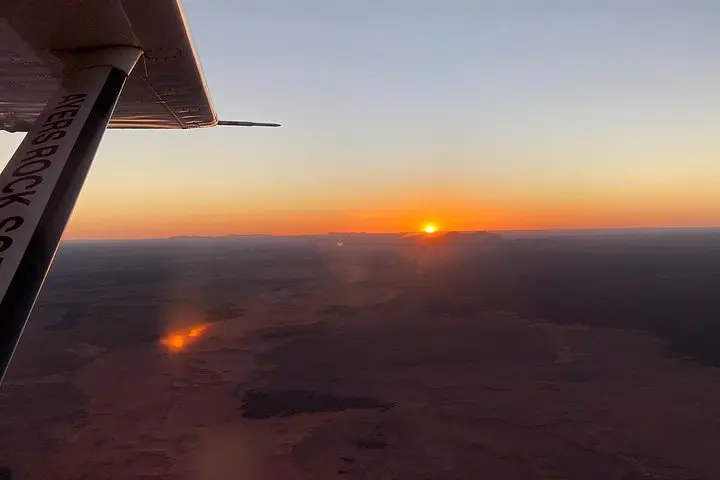
What to pack: bring a camera with a fast lens and adjustable exposure—midday light can be harsh, while sunrise and sunset return warm, textured tones. A light windbreaker and sunglasses will keep you comfortable in the cockpit’s draft. For photographers, disable your flash and brace against the window for sharper images. Respect local guidance: do not request unscheduled landings or fly drones over sacred areas.
This flight is a concentrated primer on the centre of Australia—geology, culture, and wildlife condensed into two hours. It’s a spatial translation: stories etched on rock, revealed at flight speed, with the desert below continuing its slow, indifferent work.
Yes—this operator guarantees window seats for all passengers so everyone has an unobstructed view.
Absolutely; photography is encouraged—turn off flash and brace against the window for steadier shots.
The provider will offer an alternative date or a full refund; cancelations are common with strong winds or low cloud.
Children are welcome but infants must sit on an adult’s lap; check local safety rules and weight limits before booking.
No—these are overflight tours designed to observe from the air; landing on sacred sites is restricted.
Wild camels and birds of prey are frequently spotted, but sightings can’t be guaranteed—timing and luck play roles.
Ayers Rock Scenic Plane Flights operates guided outdoor trips and adventures with an emphasis on safety, stewardship, and memorable experiences.
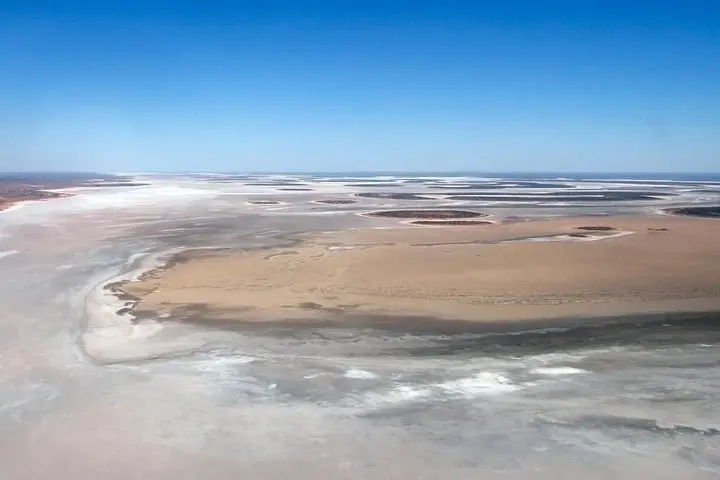
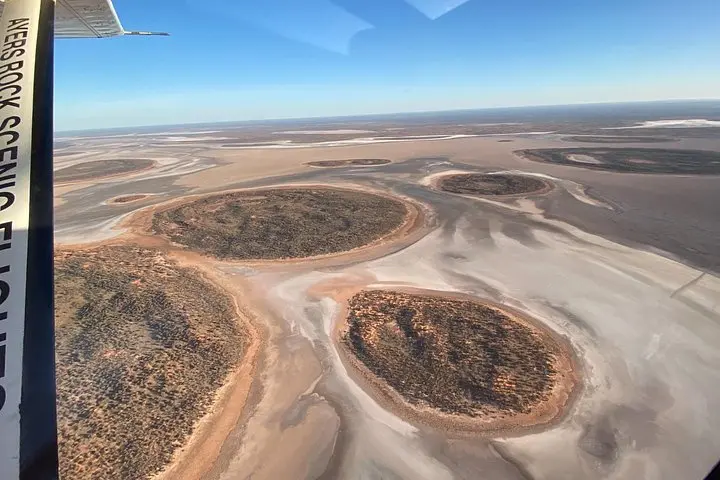
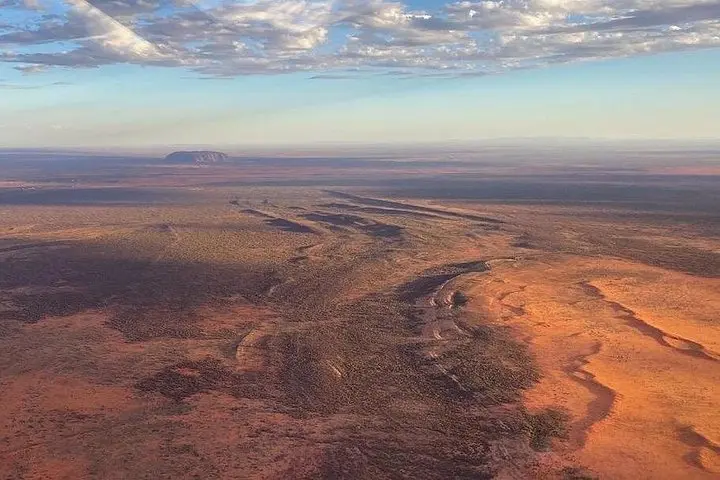
You lift off from the red dust of Yulara and the ground falls away. Below, Uluru opens like a folded map—ochre face catching light, dark fissures running like scars, a flat top that seems too precise to be natural. The pilot banks gently and Kata Tjuta’s domes appear on the horizon: a cluster of rounded, rust-colored heads rising from a flat plain. Out the window the salt pan of Lake Amadeus stretches white and crystalline, its edges bleeding into the desert like paint into water. Wild camels dot the plains like small, moving shadows.
You lift off from the red dust of Yulara and the ground falls away. Below, Uluru opens like a folded map—ochre face catching light, dark fissures running like scars, a flat top that seems too precise to be natural. The pilot banks gently and Kata Tjuta’s domes appear on the horizon: a cluster of rounded, rust-colored heads rising from a flat plain. Out the window the salt pan of Lake Amadeus stretches white and crystalline, its edges bleeding into the desert like paint into water. Wild camels dot the plains like small, moving shadows.
This fixed-wing flight is less a joyride and more a reorientation. The flight path threads together the Northern Territory’s geological memoirs: Uluru, an inselberg of arkosic sandstone laid down around 550 million years ago; Kata Tjuta, composed of conglomerates and boulders cemented into those bulbous forms; and Lake Amadeus, a remnant salt lake shaped by ancient drainage patterns and climatic cycles. For the Anangu people—traditional custodians of the land—these features hold generations of law, story, and ceremony; many sections of the rock are culturally sensitive and off-limits on the ground, which makes the aerial perspective both revealing and respectful.
Culturally, the flight is framed by commentary from pilots who are briefed on Tjukurpa (Anangu law) and the landscape’s significance. You won’t land on sacred sites here; the experience is about scale and access—seeing formations and patterns the ground can’t show. On clear days the contrasts are dramatic: red sand against blue sky, black mulga patches, and the gleaming white of salt crusts.
Practically: flights run about two hours and guarantee window seats—every passenger gets a view. Headsets are provided for live commentary; weight restrictions and minimum passenger numbers apply, so confirmations can be tentative until the flight is filled. Weather is the chief variable: gusty winds or low clouds can delay or cancel flights. Hotel transfers from Yulara are generally included; arrange precise pickup times with the provider.
What to pack: bring a camera with a fast lens and adjustable exposure—midday light can be harsh, while sunrise and sunset return warm, textured tones. A light windbreaker and sunglasses will keep you comfortable in the cockpit’s draft. For photographers, disable your flash and brace against the window for sharper images. Respect local guidance: do not request unscheduled landings or fly drones over sacred areas.
This flight is a concentrated primer on the centre of Australia—geology, culture, and wildlife condensed into two hours. It’s a spatial translation: stories etched on rock, revealed at flight speed, with the desert below continuing its slow, indifferent work.