THE ADVENTURE COLLECTIVE® · Independent discovery and booking for outdoor travel

Fast, steep and intensely rewarding—the Umbwe Route gets climbers from rainforest to Uhuru Peak in six days. Expect steep ascents, scree fields and a tough summit night; this itinerary favors experienced trekkers ready for rapid altitude gain.
Fast, steep and intensely rewarding—the Umbwe Route gets climbers from rainforest to Uhuru Peak in six days. Expect steep ascents, scree fields and a tough summit night; this itinerary favors experienced trekkers ready for rapid altitude gain.
Dawn thinly slices through the rainforest canopy at Umbwe Gate as porters adjust loads and guides check ropes. The trail launches upward almost immediately—mossy roots give way to scree, and the mountain’s bulk presses close. Over six days you move from humid forest into alpine desert and finally hard-packed snow beneath the summit crater.
Verified experiences and guided adventures in the surrounding area.
Operated by MORAKA AFRICA SAFARIS · Moshi, Kilimanjaro Region
Dawn thinly slices through the rainforest canopy at Umbwe Gate as porters adjust loads and guides check ropes. The trail launches upward almost immediately—mossy roots give way to scree, and the mountain’s bulk presses close. Over six days you move from humid forest into alpine desert and finally hard-packed snow beneath the summit crater.
Geology here is volcanic: Kilimanjaro’s three volcanic cones—Kibo, Mawenzi and Shira—record a deep, explosive history that leaves steep ridges and loose volcanic scree on the Umbwe flank. Culturally, the slopes are within Chagga country; Moshi town to the south has long served as the logistical hub for expeditions. The route’s short itinerary rewards nimble, experienced trekkers with dramatic vistas of glaciers, the Western Breach, and the crater rim at Stella Point.
Practical guidance is straightforward: this is the steepest, fastest non-technical route on Kilimanjaro and carries a higher altitude-sickness risk because of the rapid profile. Expect the hardest push on summit night—a 4.86 km, 1,233 m ascent that takes 5–7 hours in near-dark conditions. Daily hikes range from roughly 3–11.5 km with significant elevation change; pack layers for large temperature swings, use gaiters and trekking poles for loose volcanic ash, and plan for cold and wind above 4,500 m.
Logistics: permits and park fees are mandatory, guides and porters are standard, and Moshi is the usual base town. Hydrate constantly, pace conservatively, and budget rest days on other routes if you are new to high-altitude trekking—Umbwe rewards fitness and respect for the mountain.
No technical climbing gear is required—the route is steep and non-technical, but expect loose scree and occasional snow near the summit; guides may recommend microspikes depending on conditions.
Dry periods (January–March and June–October) offer more stable weather; the long rains (March–May) make trails muddy and less predictable.
Risk is higher because of the rapid ascent profile; proper pacing, hydration, and an experienced guide are essential—be prepared to descend if symptoms worsen.
Umbwe favors experienced trekkers—novice hikers should consider routes with longer acclimatization profiles unless they have prior high-altitude experience and excellent fitness.
MORAKA AFRICA SAFARIS operates guided outdoor trips and adventures with an emphasis on safety, stewardship, and memorable experiences.

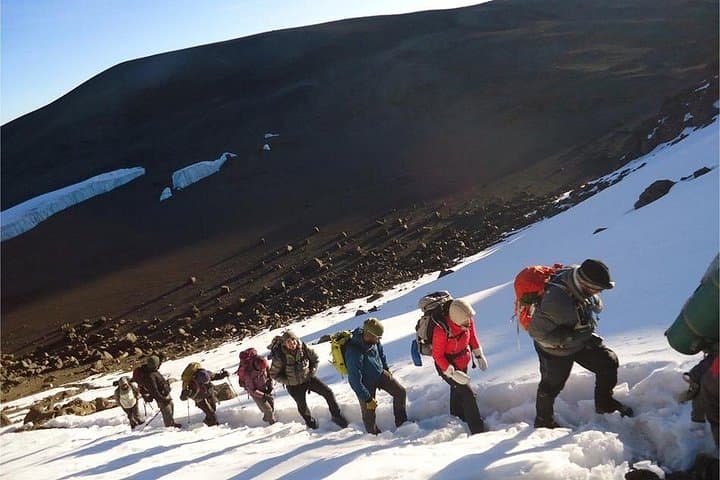


Dawn thinly slices through the rainforest canopy at Umbwe Gate as porters adjust loads and guides check ropes. The trail launches upward almost immediately—mossy roots give way to scree, and the mountain’s bulk presses close. Over six days you move from humid forest into alpine desert and finally hard-packed snow beneath the summit crater.
Dawn thinly slices through the rainforest canopy at Umbwe Gate as porters adjust loads and guides check ropes. The trail launches upward almost immediately—mossy roots give way to scree, and the mountain’s bulk presses close. Over six days you move from humid forest into alpine desert and finally hard-packed snow beneath the summit crater.
Geology here is volcanic: Kilimanjaro’s three volcanic cones—Kibo, Mawenzi and Shira—record a deep, explosive history that leaves steep ridges and loose volcanic scree on the Umbwe flank. Culturally, the slopes are within Chagga country; Moshi town to the south has long served as the logistical hub for expeditions. The route’s short itinerary rewards nimble, experienced trekkers with dramatic vistas of glaciers, the Western Breach, and the crater rim at Stella Point.
Practical guidance is straightforward: this is the steepest, fastest non-technical route on Kilimanjaro and carries a higher altitude-sickness risk because of the rapid profile. Expect the hardest push on summit night—a 4.86 km, 1,233 m ascent that takes 5–7 hours in near-dark conditions. Daily hikes range from roughly 3–11.5 km with significant elevation change; pack layers for large temperature swings, use gaiters and trekking poles for loose volcanic ash, and plan for cold and wind above 4,500 m.
Logistics: permits and park fees are mandatory, guides and porters are standard, and Moshi is the usual base town. Hydrate constantly, pace conservatively, and budget rest days on other routes if you are new to high-altitude trekking—Umbwe rewards fitness and respect for the mountain.