THE ADVENTURE COLLECTIVE® · Independent discovery and booking for outdoor travel

A straight, steep and seldom-crowded path up Kilimanjaro, the Umbwe Route is for experienced trekkers who want a raw ascent and solitude. Expect rapid altitude gain, varied terrain, and a challenging midnight push to Uhuru Peak.
A straight, steep and seldom-crowded path up Kilimanjaro, the Umbwe Route is for experienced trekkers who want a raw ascent and solitude. Expect rapid altitude gain, varied terrain, and a challenging midnight push to Uhuru Peak.
The trail begins in the wet, dark green of Kilimanjaro’s southern rain forest, where mist threads between towering fig and camphor trees and the path climbs like a rope pulled tight up the mountain.
Verified experiences and guided adventures in the surrounding area.
Operated by Rupia Adventure · Arusha, Arusha Region
The trail begins in the wet, dark green of Kilimanjaro’s southern rain forest, where mist threads between towering fig and camphor trees and the path climbs like a rope pulled tight up the mountain.
On the Umbwe Route, you feel the mountain as an active force — the slope presses upward and the trees seem to lean away. Over six focused trekking days the route bites through habitat zones: rainforest, heath and moorland, then alpine desert and finally the jagged, icy rim of Kibo. Umbwe is short, direct and famously steep; it asks for stamina and fast acclimatization. Climbers who choose it accept a lower success rate for a quieter, more committed experience.
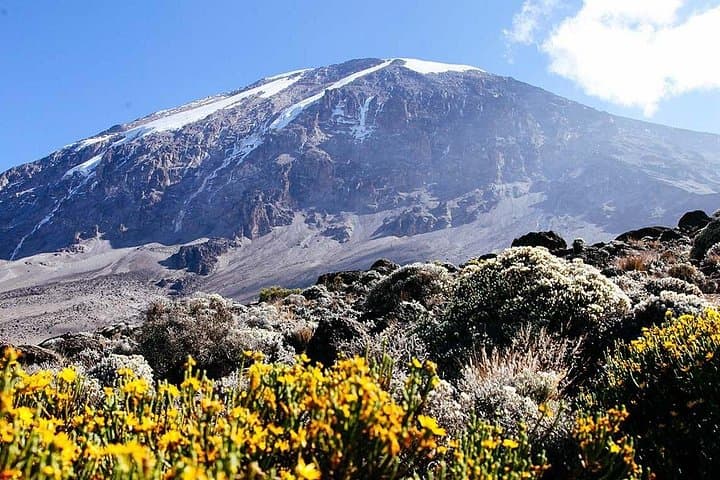
Geologically, Kilimanjaro is a three-peaked volcanic massif. Umbwe threads the southern flanks beneath Mawenzi’s serrated teeth toward Kibo’s broad crater. You’ll pass a landscape shaped by lava flows and ancient glaciers that are now a scarcer, shining memory — the rim’s glaciers have retreated dramatically in living memory, leaving glacial erratics and the pale dust of long-vanished ice.
Culturally, the lower slopes are Chagga country: small farms of banana and coffee spill down into the valleys, and you’ll likely see terraces and smallholder plots on the drive from Arusha. Local guides and porters are the backbone of any Kilimanjaro climb; their knowledge of the mountain, weather patterns, and patient encouragement is essential.
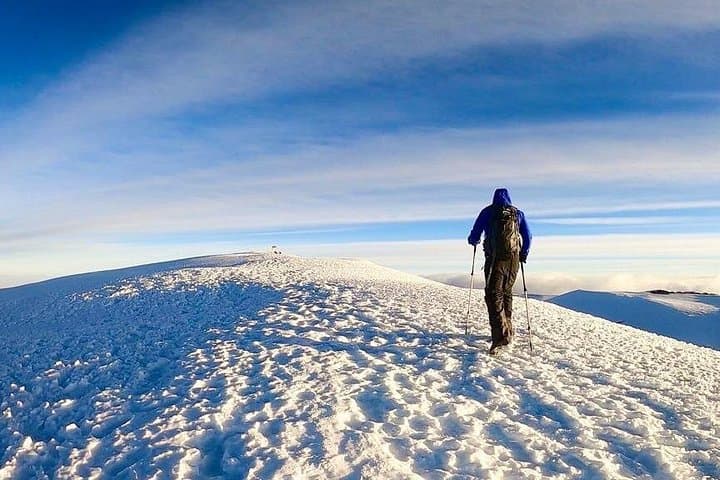
Practically, Umbwe is a demanding itinerary. Expect around 4,200–4,300 meters of elevation gain from gate to Uhuru Peak (5,895 m) over roughly 55–65 km depending on exact trails used and the itinerary’s arrival/departure logistics. Daily hiking hours vary from short acclimatization walks to midnight summit pushes. The summit night begins around midnight, with the cold and wind intensifying above 4,500 m; frequent short breaks and a steady, conservative pace are crucial.
Terrain shifts quickly: rooty rainforest trails give way to rocky ridgelines and loose scree near Barafu. Trekking poles, crampon-capable boots, and a warm, compressible sleeping bag are practical musts. Hydrate constantly — the mountain’s dry air will take more water than you expect — and plan for sudden weather: sun, sleet and wind can switch in hours.
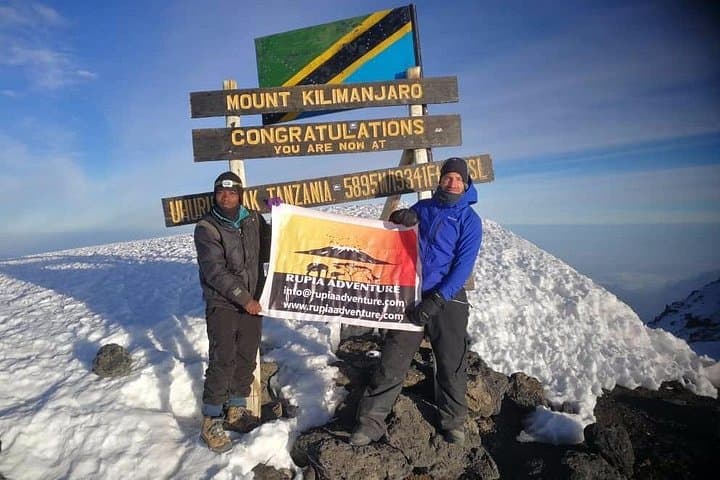
If you want solitude and a direct, technical ascent rather than a panoramic gradual climb, Umbwe delivers. It demands respect, sensible pacing, and preparation — but rewards you with raw mountain time, a dramatic sunrise over Mawenzi at Stella Point, and the hard-won view from Uhuru Peak overlooking the continent below.
Umbwe is one of the steepest and most direct routes — technically non-technical but physically demanding with faster altitude gain and a lower summit success rate.
Operators run 6-day summit itineraries for trekking, though 7–8 days is safer for acclimatization; this particular product includes arrival/departure days extending the schedule.
Prior high-altitude trekking experience is strongly recommended because the itinerary provides limited time for acclimatization.
You’ll sleep in communal tents at camps like Umbwe, Barranco, Karanga and Barafu; operators provide mattresses, but bring a proper sleeping bag.
Expect rainforest rain low down, cold and windy conditions above 4,000 m, and possible snow or ice near the summit — dress in layers and bring a windproof shell.
Kilimanjaro National Park requires registered guides and porters; solo independent trekking is not permitted for safety and conservation reasons.
Rupia Adventure operates guided outdoor trips and adventures with an emphasis on safety, stewardship, and memorable experiences.

The trail begins in the wet, dark green of Kilimanjaro’s southern rain forest, where mist threads between towering fig and camphor trees and the path climbs like a rope pulled tight up the mountain.
The trail begins in the wet, dark green of Kilimanjaro’s southern rain forest, where mist threads between towering fig and camphor trees and the path climbs like a rope pulled tight up the mountain.
On the Umbwe Route, you feel the mountain as an active force — the slope presses upward and the trees seem to lean away. Over six focused trekking days the route bites through habitat zones: rainforest, heath and moorland, then alpine desert and finally the jagged, icy rim of Kibo. Umbwe is short, direct and famously steep; it asks for stamina and fast acclimatization. Climbers who choose it accept a lower success rate for a quieter, more committed experience.
Geologically, Kilimanjaro is a three-peaked volcanic massif. Umbwe threads the southern flanks beneath Mawenzi’s serrated teeth toward Kibo’s broad crater. You’ll pass a landscape shaped by lava flows and ancient glaciers that are now a scarcer, shining memory — the rim’s glaciers have retreated dramatically in living memory, leaving glacial erratics and the pale dust of long-vanished ice.
Culturally, the lower slopes are Chagga country: small farms of banana and coffee spill down into the valleys, and you’ll likely see terraces and smallholder plots on the drive from Arusha. Local guides and porters are the backbone of any Kilimanjaro climb; their knowledge of the mountain, weather patterns, and patient encouragement is essential.
Practically, Umbwe is a demanding itinerary. Expect around 4,200–4,300 meters of elevation gain from gate to Uhuru Peak (5,895 m) over roughly 55–65 km depending on exact trails used and the itinerary’s arrival/departure logistics. Daily hiking hours vary from short acclimatization walks to midnight summit pushes. The summit night begins around midnight, with the cold and wind intensifying above 4,500 m; frequent short breaks and a steady, conservative pace are crucial.
Terrain shifts quickly: rooty rainforest trails give way to rocky ridgelines and loose scree near Barafu. Trekking poles, crampon-capable boots, and a warm, compressible sleeping bag are practical musts. Hydrate constantly — the mountain’s dry air will take more water than you expect — and plan for sudden weather: sun, sleet and wind can switch in hours.
If you want solitude and a direct, technical ascent rather than a panoramic gradual climb, Umbwe delivers. It demands respect, sensible pacing, and preparation — but rewards you with raw mountain time, a dramatic sunrise over Mawenzi at Stella Point, and the hard-won view from Uhuru Peak overlooking the continent below.