THE ADVENTURE COLLECTIVE® · Independent discovery and booking for outdoor travel

Spend three hours in Unawatuna learning traditional Sri Lankan clay-pot cooking. Start at a local market, grind spices by hand, and enjoy a family-style meal in an open kitchen with jungle and sea views.
Spend three hours in Unawatuna learning traditional Sri Lankan clay-pot cooking. Start at a local market, grind spices by hand, and enjoy a family-style meal in an open kitchen with jungle and sea views.
The kitchen sits open to a green slope where the jungle leans close and the sea calls from beyond the trees. You step in under a tiled awning, the chef’s knives bright, clay pots warmed over flame, and the air fragrant with cinnamon and roasted chili. Monkeys flit through the canopy and birds call like sentries as you prepare spices by hand and choose fish at the market an hour earlier.
Verified experiences and guided adventures in the surrounding area.
Operated by Sea waves cooking class · Unawatuna, Southern Province
The kitchen sits open to a green slope where the jungle leans close and the sea calls from beyond the trees. You step in under a tiled awning, the chef’s knives bright, clay pots warmed over flame, and the air fragrant with cinnamon and roasted chili. Monkeys flit through the canopy and birds call like sentries as you prepare spices by hand and choose fish at the market an hour earlier.
Sri Lankan food carries layers of history — South Indian, Arab, European and Malay influences folded into curries driven by local coconut, curry leaves and freshly cracked spices. In Unawatuna, where coral reefs once defined the shoreline, families in small restaurants still cook in clay pots and follow recipes passed down decades, blending trade-era flavors with coastal produce.
Expect a three-hour private session: a market selection, hands-on spice grinding, clay-pot technique, and a shared meal of five vegetable dishes plus fish or chicken. The terrain to reach the restaurant is flat with short steps into the garden kitchen; the experience leans cultural more than athletic, but it places you in nature—sea breezes testing the pots, jungle sounds nudging the rhythm.
Practical guidance: bring sun protection for the short walk to market, wear closed-toe shoes for the market and kitchen, and note shellfish or other allergens when booking. Sessions run twice daily and are conducted in English. This is part cooking lesson, part cultural exchange—expect to leave with a clearer sense of Sri Lankan pantry staples and the tactile skills to try a curry at home.
No—this is a hands-on, beginner-friendly class where the chef guides each step from spice preparation to plating.
Yes; the vendor offers fish or chicken options and vegetarian dishes—state allergies when booking so ingredients can be adjusted.
Yes—the experience includes a guided walk to the local fish and vegetable market to choose fresh ingredients for the class.
Classes are conducted in English and led by a chef with decades of experience; translators are not typically required.
Sea waves cooking class operates guided outdoor trips and adventures with an emphasis on safety, stewardship, and memorable experiences.
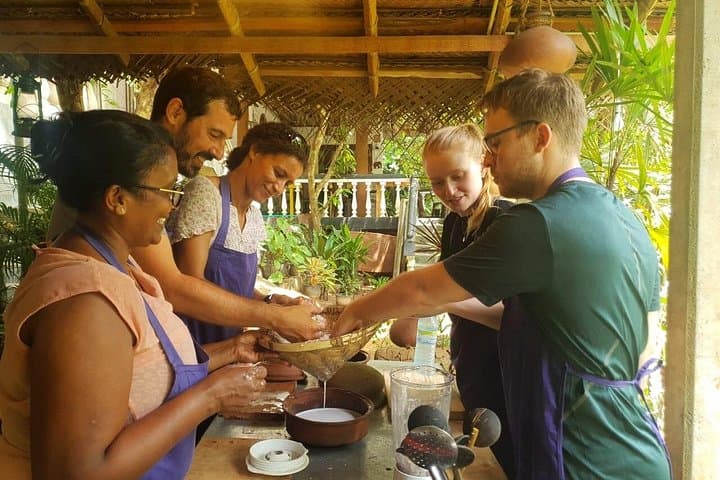
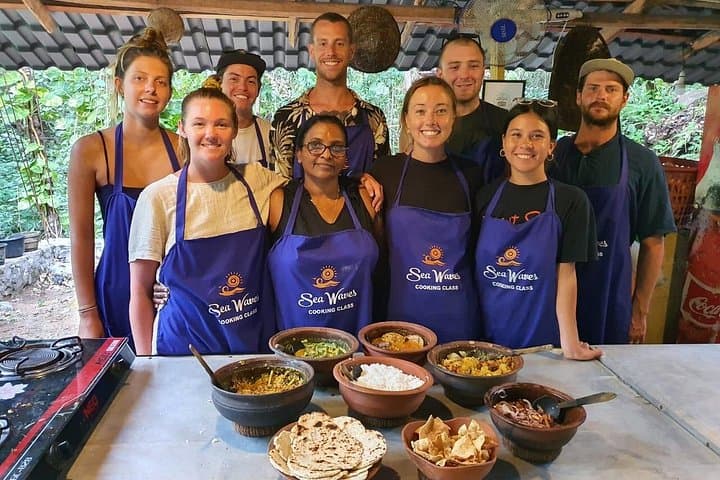
The kitchen sits open to a green slope where the jungle leans close and the sea calls from beyond the trees. You step in under a tiled awning, the chef’s knives bright, clay pots warmed over flame, and the air fragrant with cinnamon and roasted chili. Monkeys flit through the canopy and birds call like sentries as you prepare spices by hand and choose fish at the market an hour earlier.
The kitchen sits open to a green slope where the jungle leans close and the sea calls from beyond the trees. You step in under a tiled awning, the chef’s knives bright, clay pots warmed over flame, and the air fragrant with cinnamon and roasted chili. Monkeys flit through the canopy and birds call like sentries as you prepare spices by hand and choose fish at the market an hour earlier.
Sri Lankan food carries layers of history — South Indian, Arab, European and Malay influences folded into curries driven by local coconut, curry leaves and freshly cracked spices. In Unawatuna, where coral reefs once defined the shoreline, families in small restaurants still cook in clay pots and follow recipes passed down decades, blending trade-era flavors with coastal produce.
Expect a three-hour private session: a market selection, hands-on spice grinding, clay-pot technique, and a shared meal of five vegetable dishes plus fish or chicken. The terrain to reach the restaurant is flat with short steps into the garden kitchen; the experience leans cultural more than athletic, but it places you in nature—sea breezes testing the pots, jungle sounds nudging the rhythm.
Practical guidance: bring sun protection for the short walk to market, wear closed-toe shoes for the market and kitchen, and note shellfish or other allergens when booking. Sessions run twice daily and are conducted in English. This is part cooking lesson, part cultural exchange—expect to leave with a clearer sense of Sri Lankan pantry staples and the tactile skills to try a curry at home.