THE ADVENTURE COLLECTIVE® · Independent discovery and booking for outdoor travel

Experience the Atacama’s famously dark skies with guided telescope viewings, astrophotography, and a campfire. This 2.5‑hour tour near San Pedro de Atacama pairs scientific context and cultural perspectives for an accessible night‑sky outing.
Experience the Atacama’s famously dark skies with guided telescope viewings, astrophotography, and a campfire. This 2.5‑hour tour near San Pedro de Atacama pairs scientific context and cultural perspectives for an accessible night‑sky outing.
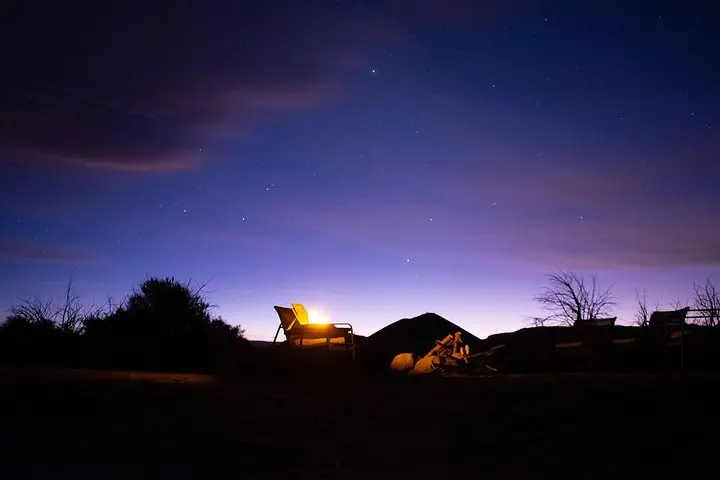
The desert opens like a black page and the sky begins to write on it—stars come forward with the slow certainty of a tide. On this 2.5‑hour evening tour outside San Pedro de Atacama, guides lead small groups to an adapted observation site where darkness is deliberate and noise is kept to a whisper.
Verified experiences and guided adventures in the surrounding area.
Operated by Bajo la Noche de Atacama · San Pedro de Atacama, Antofagasta
The desert opens like a black page and the sky begins to write on it—stars come forward with the slow certainty of a tide. On this 2.5‑hour evening tour outside San Pedro de Atacama, guides lead small groups to an adapted observation site where darkness is deliberate and noise is kept to a whisper.
Geology and high desert air shape the experience: at roughly 2,400 meters elevation, the altiplano’s dry atmosphere and minimal humidity make faint deep‑sky objects sharper through automatic telescopes. Indigenous Atacameño communities read the same stars for seasons and travel; modern guides layer that long relationship with contemporary astrophotography and scientific context.
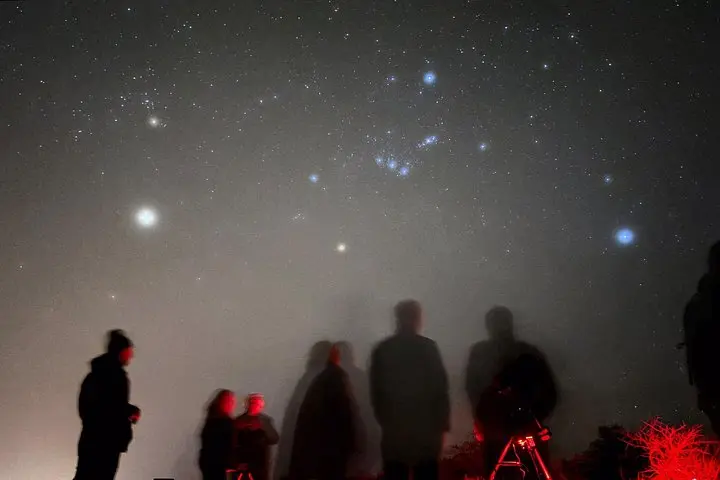
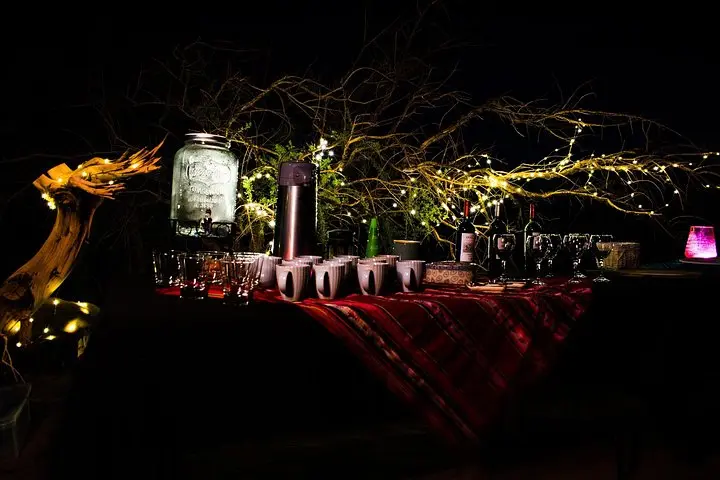
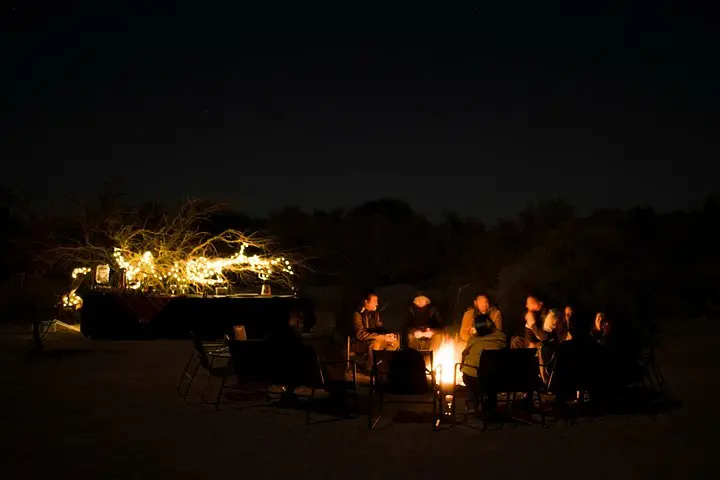
Guests move between naked‑eye lectures with laser pointers, close looks at planets and nebulae through motorized scopes, and an astrophotography portrait session—each participant receives at least one photo. Hot drinks, reserve wines, and snacks around a controlled campfire create a social end to an otherwise vast, silent dome.
Practical edge: bring warm, windproof layers, a small headlamp with a red filter, and a phone tripod if you plan to capture the show. Expect cool nights even in summer, and be mindful of altitude—slow pace, hydrate, and let your eyes adjust for 20–30 minutes for the best viewing. The site follows low‑impact practices to protect the dark sky; be ready to switch off screens and follow guide instructions for telescope use.
This tour fits travelers who want guided, low‑effort access to one of the clearest skies on Earth—an observational, social, and photographic introduction rather than a technical expedition.
Tours are canceled in poor observing conditions (clouds, high winds, or rain); the operator offers a full refund if canceled at least 24 hours before departure or reschedules when possible.
The experience is described as accessible for infants and small children in strollers; terrain is generally flat but bring a sturdy stroller for unpaved surfaces.
Personal cameras and small tripods are welcome for the astrophotography portion; large personal telescopes should be cleared with the operator in advance.
At about 2,400 m expect mild altitude effects for some visitors—go slowly, hydrate, and avoid heavy exertion before the tour; staff can advise if you have specific health concerns.
Bajo la Noche de Atacama operates guided outdoor trips and adventures with an emphasis on safety, stewardship, and memorable experiences.
The desert opens like a black page and the sky begins to write on it—stars come forward with the slow certainty of a tide. On this 2.5‑hour evening tour outside San Pedro de Atacama, guides lead small groups to an adapted observation site where darkness is deliberate and noise is kept to a whisper.
The desert opens like a black page and the sky begins to write on it—stars come forward with the slow certainty of a tide. On this 2.5‑hour evening tour outside San Pedro de Atacama, guides lead small groups to an adapted observation site where darkness is deliberate and noise is kept to a whisper.
Geology and high desert air shape the experience: at roughly 2,400 meters elevation, the altiplano’s dry atmosphere and minimal humidity make faint deep‑sky objects sharper through automatic telescopes. Indigenous Atacameño communities read the same stars for seasons and travel; modern guides layer that long relationship with contemporary astrophotography and scientific context.
Guests move between naked‑eye lectures with laser pointers, close looks at planets and nebulae through motorized scopes, and an astrophotography portrait session—each participant receives at least one photo. Hot drinks, reserve wines, and snacks around a controlled campfire create a social end to an otherwise vast, silent dome.
Practical edge: bring warm, windproof layers, a small headlamp with a red filter, and a phone tripod if you plan to capture the show. Expect cool nights even in summer, and be mindful of altitude—slow pace, hydrate, and let your eyes adjust for 20–30 minutes for the best viewing. The site follows low‑impact practices to protect the dark sky; be ready to switch off screens and follow guide instructions for telescope use.
This tour fits travelers who want guided, low‑effort access to one of the clearest skies on Earth—an observational, social, and photographic introduction rather than a technical expedition.