THE ADVENTURE COLLECTIVE® · Independent discovery and booking for outdoor travel

A four-hour guided introduction to Johannesburg’s inner city, led by storyteller Charlie Moyo. Explore Marshalltown’s gold-rush architecture, public art and sites linked to Gandhi and Mandela while learning the geological and cultural forces that built Joburg.
A four-hour guided introduction to Johannesburg’s inner city, led by storyteller Charlie Moyo. Explore Marshalltown’s gold-rush architecture, public art and sites linked to Gandhi and Mandela while learning the geological and cultural forces that built Joburg.
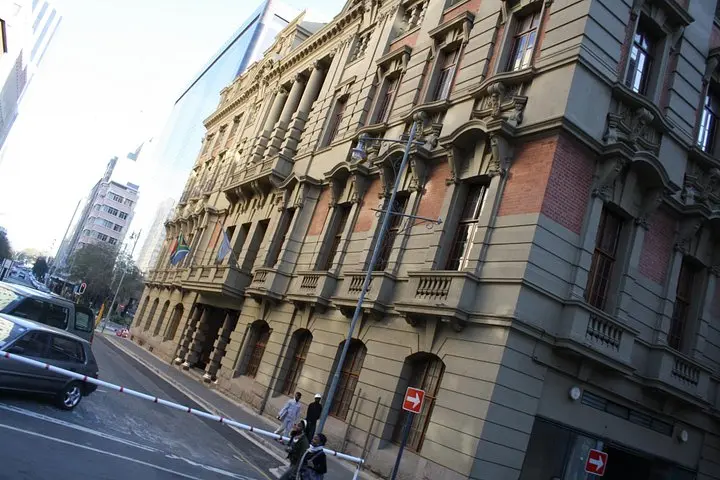
You step out of the morning bustle into Gandhi Square and the city opens like a ledger—rows of Edwardian facades, public sculptures, and pavements that still remember the gold rush. Charlie Moyo guides the group through Marshalltown with a storyteller’s cadence, pausing at the Shadow Boxer and Chancellor House where Mandela and Tambo once practiced law, letting the concrete and bronze speak of eras that shaped modern Joburg.
Verified experiences and guided adventures in the surrounding area.
Operated by LocalPlaces · Johannesburg, Gauteng
You step out of the morning bustle into Gandhi Square and the city opens like a ledger—rows of Edwardian facades, public sculptures, and pavements that still remember the gold rush. Charlie Moyo guides the group through Marshalltown with a storyteller’s cadence, pausing at the Shadow Boxer and Chancellor House where Mandela and Tambo once practiced law, letting the concrete and bronze speak of eras that shaped modern Joburg.
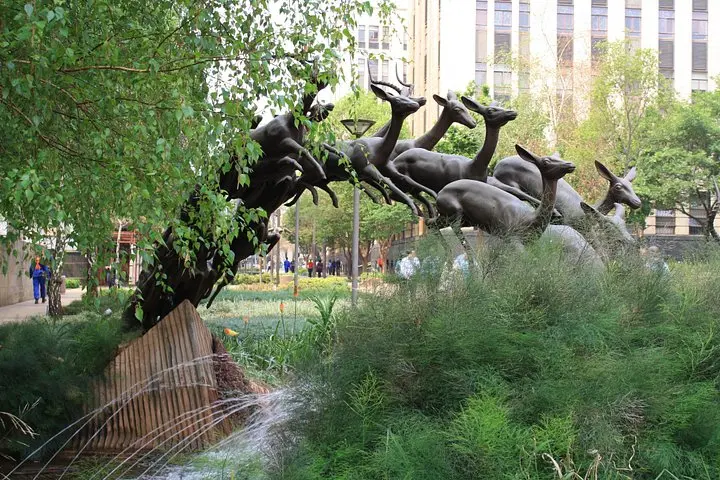
The tour threads history, geology and culture. Marshalltown sits atop the Witwatersrand, the ancient gold-bearing ridge that birthed Johannesburg in the late 19th century; buildings and monuments from the Edwardian boom stand beside contemporary murals that mark the city’s regeneration. You’ll hear how early mining capital and later urban decline reshaped neighborhoods, and how public art—Mapungubwe Rhino replica, the Impala Stampede—maps memory onto streets.
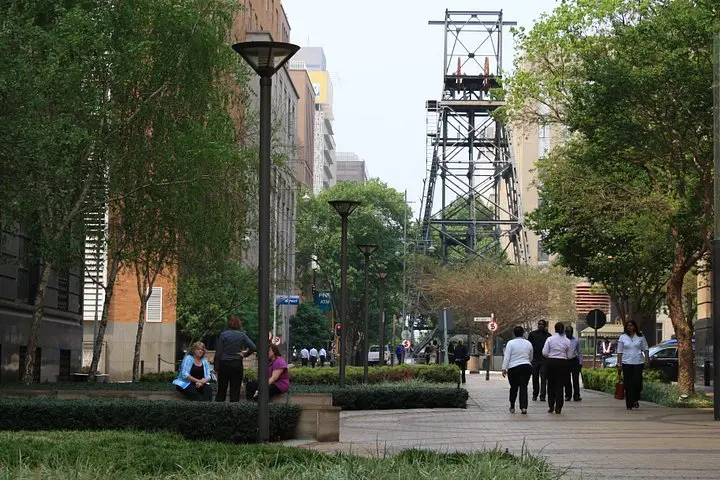
Culturally the walk is direct: courtrooms that hosted Gandhi, cafés where lawyers once argued, and sidewalks where vendors maintain an improvised economy. The texture is urban—concrete, brass, and urgent human rhythms—offset by wide civic plazas and unexpected quiet lanes.
Practical guidance: the tour runs roughly four hours and is rated easy and wheelchair accessible, but expect sustained walking and standing. Wear sturdy walking shoes, sun protection, and bring water; keep valuables secure and use public transport or a short taxi ride back to central accommodation. Mornings are cooler and quieter; late afternoons catch softer light on the façades. The Understanding Johannesburg walk is an efficient primer—history, geology and contemporary life condensed into a single, navigable loop that leaves you with context for further exploration.
Most departures meet at Gandhi Square in central Johannesburg and loop through Marshalltown, finishing near the starting plaza for easy transport connections.
Yes—this experience is described as physically easy and wheelchair accessible; notify the operator when booking to accommodate specific needs.
Expect continuous walking and standing over about four hours; distances are modest but sustained, so wear comfortable shoes.
Yes—public art and plazas are open for photography, though respect any signage at private buildings and the privacy of locals and workers.
LocalPlaces operates guided outdoor trips and adventures with an emphasis on safety, stewardship, and memorable experiences.
You step out of the morning bustle into Gandhi Square and the city opens like a ledger—rows of Edwardian facades, public sculptures, and pavements that still remember the gold rush. Charlie Moyo guides the group through Marshalltown with a storyteller’s cadence, pausing at the Shadow Boxer and Chancellor House where Mandela and Tambo once practiced law, letting the concrete and bronze speak of eras that shaped modern Joburg.
You step out of the morning bustle into Gandhi Square and the city opens like a ledger—rows of Edwardian facades, public sculptures, and pavements that still remember the gold rush. Charlie Moyo guides the group through Marshalltown with a storyteller’s cadence, pausing at the Shadow Boxer and Chancellor House where Mandela and Tambo once practiced law, letting the concrete and bronze speak of eras that shaped modern Joburg.
The tour threads history, geology and culture. Marshalltown sits atop the Witwatersrand, the ancient gold-bearing ridge that birthed Johannesburg in the late 19th century; buildings and monuments from the Edwardian boom stand beside contemporary murals that mark the city’s regeneration. You’ll hear how early mining capital and later urban decline reshaped neighborhoods, and how public art—Mapungubwe Rhino replica, the Impala Stampede—maps memory onto streets.
Culturally the walk is direct: courtrooms that hosted Gandhi, cafés where lawyers once argued, and sidewalks where vendors maintain an improvised economy. The texture is urban—concrete, brass, and urgent human rhythms—offset by wide civic plazas and unexpected quiet lanes.
Practical guidance: the tour runs roughly four hours and is rated easy and wheelchair accessible, but expect sustained walking and standing. Wear sturdy walking shoes, sun protection, and bring water; keep valuables secure and use public transport or a short taxi ride back to central accommodation. Mornings are cooler and quieter; late afternoons catch softer light on the façades. The Understanding Johannesburg walk is an efficient primer—history, geology and contemporary life condensed into a single, navigable loop that leaves you with context for further exploration.