THE ADVENTURE COLLECTIVE® · Independent discovery and booking for outdoor travel

Spend four focused hours inside Addis Ababa’s Unity Park for a compact, curated look at Ethiopia’s palace grounds, national symbols, and regional plantings. This accessible half-day tour pairs history, ethnographic exhibits, and short gardens walks with practical, small-group logistics.
Spend four focused hours inside Addis Ababa’s Unity Park for a compact, curated look at Ethiopia’s palace grounds, national symbols, and regional plantings. This accessible half-day tour pairs history, ethnographic exhibits, and short gardens walks with practical, small-group logistics.
You step through a guarded gate into a compact, manicured world inside the Grand (Jubilee) Palace — Unity Park unfolds as a short, intense lesson in Ethiopia’s public story. Native herbs ripple in planned beds, a trimmed avenue leads to statues and pavilions, and the Lion of Judah meets visitors with quiet authority, watching over a site that has been at the center of imperial and modern power.
Verified experiences and guided adventures in the surrounding area.
Operated by Zulla Discovery · Addis Ababa, Addis Ababa
You step through a guarded gate into a compact, manicured world inside the Grand (Jubilee) Palace — Unity Park unfolds as a short, intense lesson in Ethiopia’s public story. Native herbs ripple in planned beds, a trimmed avenue leads to statues and pavilions, and the Lion of Judah meets visitors with quiet authority, watching over a site that has been at the center of imperial and modern power.
The park occupies grounds long tied to Ethiopia’s monarchy and statehood. Menelik II’s victories and the palace’s later political role shape the exhibits: ethnographic displays, historical artifacts, and restored rooms that trace shifting power across the 19th and 20th centuries. Geologically, the park sits on Addis Ababa’s high plateau — dry, well-drained soils that support hardy native plantings rather than lush valley growth — while the garden design highlights Ethiopia’s regional diversity in compact form.
Culturally the site balances respect and accessibility: it’s a civic showcase as much as a public garden. Visitors should expect security screening, ID checks, and curated routes through indoor displays.
Practical guidance: the guided half-day runs about four hours, uses air-conditioned transport, and includes admission, bottled water, and snacks. Paths are paved and wheelchair-accessible, so physical demands are low, but bring sun protection and a light layer for breezy mornings. Photography rules vary by exhibit — follow staff directions. Early morning slots avoid crowds and midday heat; allow time afterward to explore nearby museums or Addis’s highland viewpoints.
Yes — the standard half-day package includes entrance to Unity Park as stated in the itinerary.
Unity Park and transport are wheelchair accessible; inform the operator at booking to confirm specific needs.
Carry a small amount of local currency (ETB) for souvenirs, tips for guides, or small onsite purchases; many places accept cash only.
Photography rules vary by exhibit; guides will advise which rooms allow photos—always follow staff instructions.
Zulla Discovery operates guided outdoor trips and adventures with an emphasis on safety, stewardship, and memorable experiences.
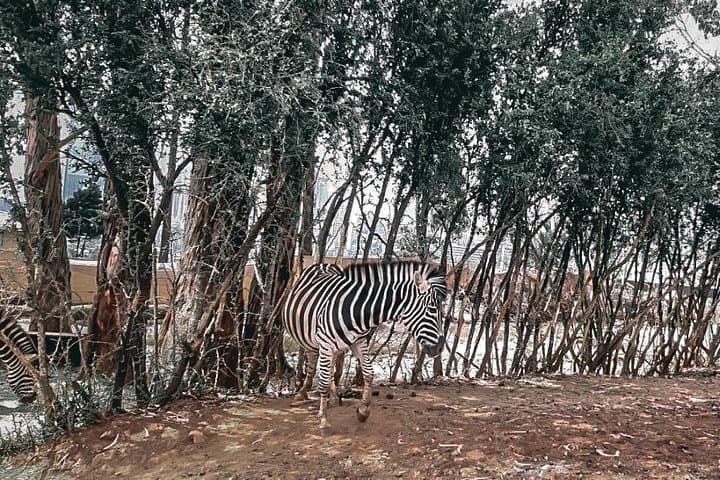


You step through a guarded gate into a compact, manicured world inside the Grand (Jubilee) Palace — Unity Park unfolds as a short, intense lesson in Ethiopia’s public story. Native herbs ripple in planned beds, a trimmed avenue leads to statues and pavilions, and the Lion of Judah meets visitors with quiet authority, watching over a site that has been at the center of imperial and modern power.
You step through a guarded gate into a compact, manicured world inside the Grand (Jubilee) Palace — Unity Park unfolds as a short, intense lesson in Ethiopia’s public story. Native herbs ripple in planned beds, a trimmed avenue leads to statues and pavilions, and the Lion of Judah meets visitors with quiet authority, watching over a site that has been at the center of imperial and modern power.
The park occupies grounds long tied to Ethiopia’s monarchy and statehood. Menelik II’s victories and the palace’s later political role shape the exhibits: ethnographic displays, historical artifacts, and restored rooms that trace shifting power across the 19th and 20th centuries. Geologically, the park sits on Addis Ababa’s high plateau — dry, well-drained soils that support hardy native plantings rather than lush valley growth — while the garden design highlights Ethiopia’s regional diversity in compact form.
Culturally the site balances respect and accessibility: it’s a civic showcase as much as a public garden. Visitors should expect security screening, ID checks, and curated routes through indoor displays.
Practical guidance: the guided half-day runs about four hours, uses air-conditioned transport, and includes admission, bottled water, and snacks. Paths are paved and wheelchair-accessible, so physical demands are low, but bring sun protection and a light layer for breezy mornings. Photography rules vary by exhibit — follow staff directions. Early morning slots avoid crowds and midday heat; allow time afterward to explore nearby museums or Addis’s highland viewpoints.