THE ADVENTURE COLLECTIVE® · Independent discovery and booking for outdoor travel

Walk past temple gates and rice-field courtyards to see the Moon of Pejeng and ancient sarcophagi on this two-hour guided tour. Local guides unpack centuries of ritual, art and myth while you move through living sacred sites.
Walk past temple gates and rice-field courtyards to see the Moon of Pejeng and ancient sarcophagi on this two-hour guided tour. Local guides unpack centuries of ritual, art and myth while you move through living sacred sites.
You step off the shaded road and into a courtyard where the air smells of incense and wet stone; the guide drapes a sarong around your waist and the group falls quiet. For the next two hours you move between small temple compounds, rice-edge courtyards and open-air sarcophagi, each stop a hinge in a story that stretches from Bali’s pre-Hindu past to the island’s living ceremonial life.
Verified experiences and guided adventures in the surrounding area.
Operated by Ubud Story Walks · Ubud, Bali
You step off the shaded road and into a courtyard where the air smells of incense and wet stone; the guide drapes a sarong around your waist and the group falls quiet. For the next two hours you move between small temple compounds, rice-edge courtyards and open-air sarcophagi, each stop a hinge in a story that stretches from Bali’s pre-Hindu past to the island’s living ceremonial life.
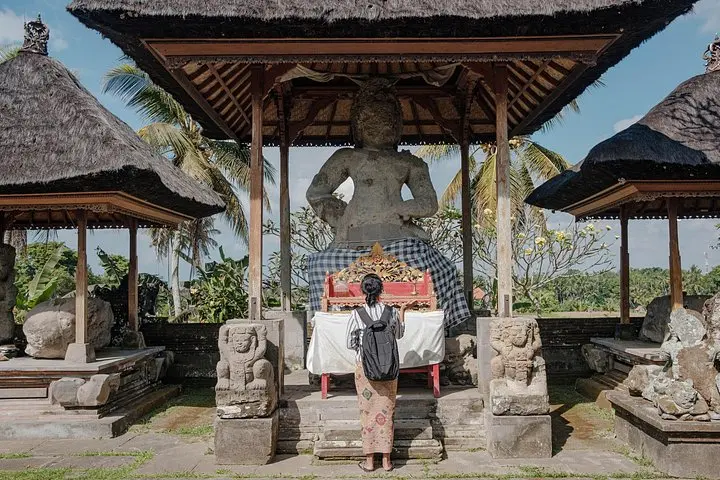
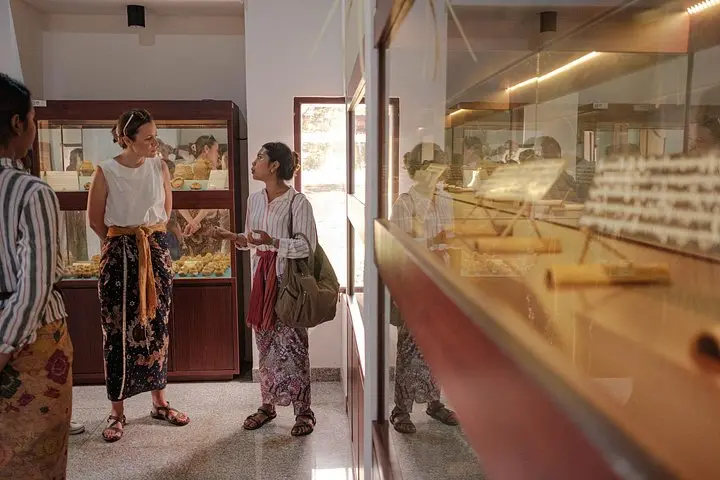
The tour centers on Pejeng’s famed Moon — a massive bronze kettle drum said to be Southeast Asia’s largest — and the temples that guarded it for centuries. Pejeng sits on volcanic plains cut by irrigation channels; the landscape and the artifacts reflect the island’s role as a crossroads for Indianized kingdoms and local ritual practice. Expect close-up views of carved stone statuary, a 13th‑century Bhairawa figure, and the unusual giant sarcophagi that point to earlier burial customs and regional links to Tantric belief.
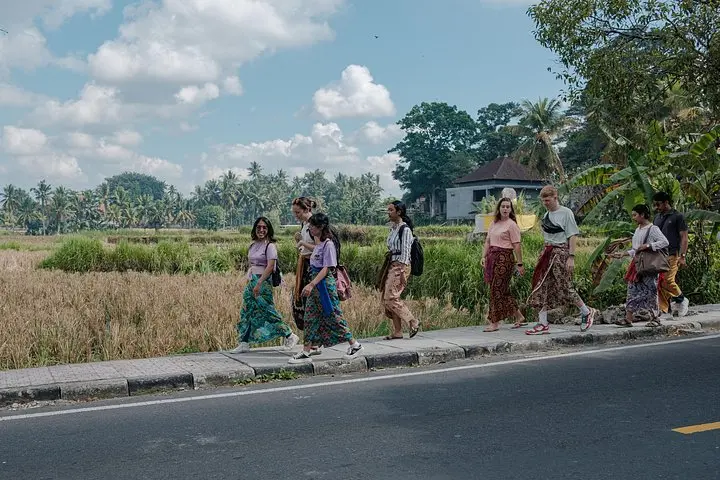
Practicalities are straightforward: this is an urban walking tour with uneven steps and narrow sidewalks, so steady footwear matters more than endurance. The operator provides sarong and sash plus coffee and a snack; temple donations are included. Tours run rain or shine; bring a reusable water bottle and a small daypack. Aim for a morning slot to avoid the hottest midday light and to see ritual spaces at their quietest. With reverence required at every stop and a local guide to unpack the myths, the Myth of Pejeng tour is a compact, sensory way to read Bali’s layered past on foot.
No — sarongs and sashes are provided, but guests may bring their own for comfort and fit.
Yes — the pace is gentle, but participants should be able to manage a few flights of uneven steps and short walks on sidewalks.
Tours run rain or shine; in severe weather the operator may contact you to reschedule or cancel.
Yes — the tour notes that temple donations (Rp 60,000) are included in the itinerary.
Ubud Story Walks operates guided outdoor trips and adventures with an emphasis on safety, stewardship, and memorable experiences.
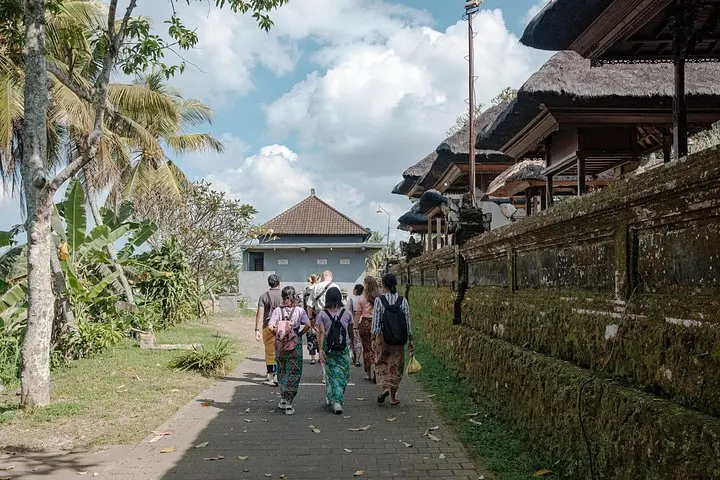
You step off the shaded road and into a courtyard where the air smells of incense and wet stone; the guide drapes a sarong around your waist and the group falls quiet. For the next two hours you move between small temple compounds, rice-edge courtyards and open-air sarcophagi, each stop a hinge in a story that stretches from Bali’s pre-Hindu past to the island’s living ceremonial life.
You step off the shaded road and into a courtyard where the air smells of incense and wet stone; the guide drapes a sarong around your waist and the group falls quiet. For the next two hours you move between small temple compounds, rice-edge courtyards and open-air sarcophagi, each stop a hinge in a story that stretches from Bali’s pre-Hindu past to the island’s living ceremonial life.
The tour centers on Pejeng’s famed Moon — a massive bronze kettle drum said to be Southeast Asia’s largest — and the temples that guarded it for centuries. Pejeng sits on volcanic plains cut by irrigation channels; the landscape and the artifacts reflect the island’s role as a crossroads for Indianized kingdoms and local ritual practice. Expect close-up views of carved stone statuary, a 13th‑century Bhairawa figure, and the unusual giant sarcophagi that point to earlier burial customs and regional links to Tantric belief.
Practicalities are straightforward: this is an urban walking tour with uneven steps and narrow sidewalks, so steady footwear matters more than endurance. The operator provides sarong and sash plus coffee and a snack; temple donations are included. Tours run rain or shine; bring a reusable water bottle and a small daypack. Aim for a morning slot to avoid the hottest midday light and to see ritual spaces at their quietest. With reverence required at every stop and a local guide to unpack the myths, the Myth of Pejeng tour is a compact, sensory way to read Bali’s layered past on foot.