THE ADVENTURE COLLECTIVE® · Independent discovery and booking for outdoor travel

Walk into the grasslands of Mosi-oa-Tunya with a licensed guide and an armed wildlife officer to track white rhinos on foot. This three-hour walking safari combines close wildlife encounters, interpretive guidance, and a riverbank picnic at the Zambezi.
Walk into the grasslands of Mosi-oa-Tunya with a licensed guide and an armed wildlife officer to track white rhinos on foot. This three-hour walking safari combines close wildlife encounters, interpretive guidance, and a riverbank picnic at the Zambezi.
Dawn settles over the grasslands and the Zambezi nudges the park’s edge, daring you to keep pace. On a Rhino Walking Safari you move quietly across hard-packed trails and long grass, following spoor and listening for the weight of a rhinoceros before you see it — a low, deliberate silhouette against the light.
Verified experiences and guided adventures in the surrounding area.
Operated by Traverse Zambia Safaris Limited · Livingstone, Southern Province
Dawn settles over the grasslands and the Zambezi nudges the park’s edge, daring you to keep pace. On a Rhino Walking Safari you move quietly across hard-packed trails and long grass, following spoor and listening for the weight of a rhinoceros before you see it — a low, deliberate silhouette against the light.
Mosi-oa-Tunya National Park sits on the Zambezi’s floodplain, its soils sculpted by seasonal rivers and ancient rock outcrops. The park’s history is braided with colonial-era hunting reserves turned protected areas; today licensed guides and armed wildlife officers shepherd small groups to minimize disturbance. Tracking white rhinos on foot reveals both animal behavior and the dry-season ecology that concentrates game near riverine bulbs of green.
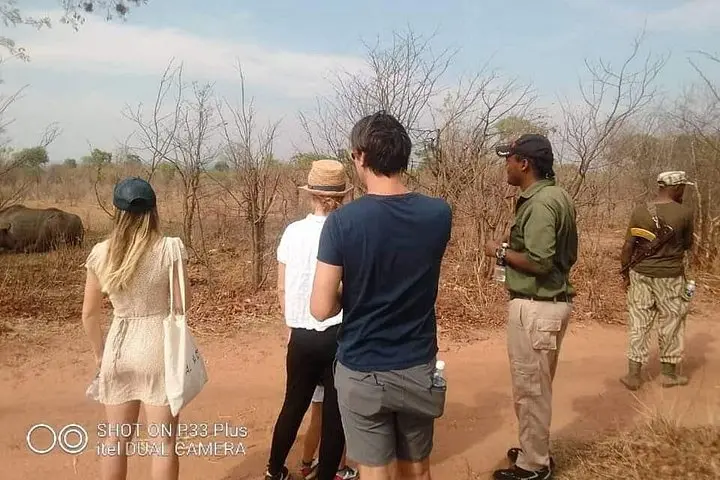
Expect close, educational encounters: guides interpret tracks, dung, and grazing patterns while the wildlife officer prioritizes safety. After the walk you’ll reach a picnic site on the Zambezi bank for snacks and river views.
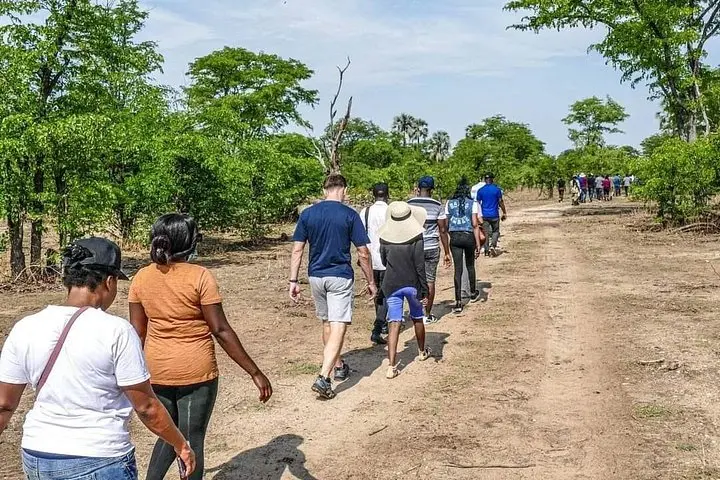
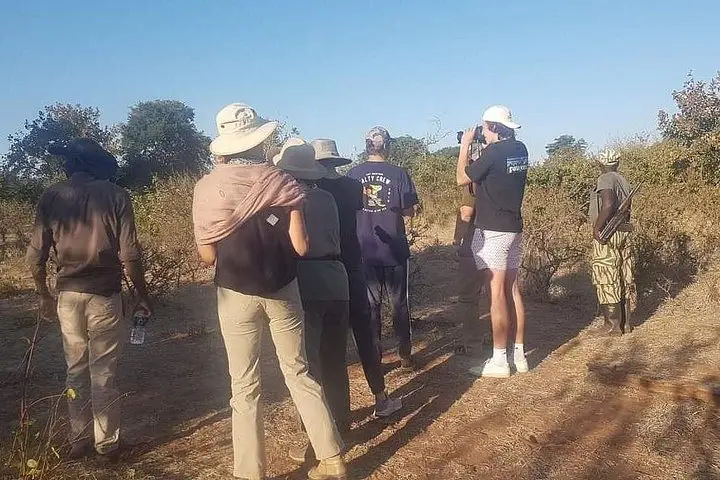
Practical guidance: the activity runs about three hours with a moderate amount of walking over uneven ground; wear long pants, durable walking shoes, and sun protection. Bring a camera with a zoom or binoculars to photograph from a safe, guided distance. Hydration is essential in the Zambian sun and morning departures beat heat and increase sighting odds. Respect distance rules around rhinos — approach only as directed by the guide and officer. This is an intimate, low-impact way to connect with large wildlife while supporting local conservation and ranger programs.
Guides and the armed wildlife officer control approach distance based on animal behavior; guests are allowed close photographic views only when staff judge it safe.
Children are allowed but must be supervised; age suitability depends on the child’s ability to follow instructions and remain calm in wildlife encounters—check with the operator for age limits.
Long pants, closed-toe shoes, sun protection, a filled water bottle, and a small camera or binoculars are recommended; avoid bright clothing and strong scents.
Return transfers to and from Livingstone hotels are included per the tour listing—confirm pick-up time and location at booking.
Traverse Zambia Safaris Limited operates guided outdoor trips and adventures with an emphasis on safety, stewardship, and memorable experiences.
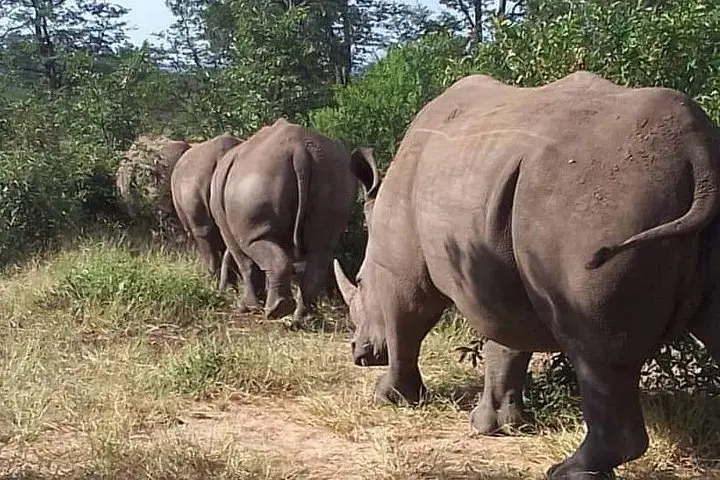
Dawn settles over the grasslands and the Zambezi nudges the park’s edge, daring you to keep pace. On a Rhino Walking Safari you move quietly across hard-packed trails and long grass, following spoor and listening for the weight of a rhinoceros before you see it — a low, deliberate silhouette against the light.
Dawn settles over the grasslands and the Zambezi nudges the park’s edge, daring you to keep pace. On a Rhino Walking Safari you move quietly across hard-packed trails and long grass, following spoor and listening for the weight of a rhinoceros before you see it — a low, deliberate silhouette against the light.
Mosi-oa-Tunya National Park sits on the Zambezi’s floodplain, its soils sculpted by seasonal rivers and ancient rock outcrops. The park’s history is braided with colonial-era hunting reserves turned protected areas; today licensed guides and armed wildlife officers shepherd small groups to minimize disturbance. Tracking white rhinos on foot reveals both animal behavior and the dry-season ecology that concentrates game near riverine bulbs of green.
Expect close, educational encounters: guides interpret tracks, dung, and grazing patterns while the wildlife officer prioritizes safety. After the walk you’ll reach a picnic site on the Zambezi bank for snacks and river views.
Practical guidance: the activity runs about three hours with a moderate amount of walking over uneven ground; wear long pants, durable walking shoes, and sun protection. Bring a camera with a zoom or binoculars to photograph from a safe, guided distance. Hydration is essential in the Zambian sun and morning departures beat heat and increase sighting odds. Respect distance rules around rhinos — approach only as directed by the guide and officer. This is an intimate, low-impact way to connect with large wildlife while supporting local conservation and ranger programs.