THE ADVENTURE COLLECTIVE® · Independent discovery and booking for outdoor travel

Travel beyond the familiar peaks to Lo Manthang on a 14-day Upper Mustang trek. High desert trails, ancient gompas and wind-carved canyons offer cultural depth and rugged high-altitude walking.
Travel beyond the familiar peaks to Lo Manthang on a 14-day Upper Mustang trek. High desert trails, ancient gompas and wind-carved canyons offer cultural depth and rugged high-altitude walking.
The wind greets you before the walls of Lo Manthang appear: a dry breath that drives sand across a flat, ochre landscape and dares you to keep walking. You fly out of Pokhara into the deep Kali Gandaki canyon, then trade engines for walking poles as thawed riverbeds, mani walls and flat-roofed villages pull you toward a walled town that still feels a step behind time.
Verified experiences and guided adventures in the surrounding area.
Operated by Trekking Organizer Company in Nepal · Lo Manthang, Gandaki Province
The wind greets you before the walls of Lo Manthang appear: a dry breath that drives sand across a flat, ochre landscape and dares you to keep walking. You fly out of Pokhara into the deep Kali Gandaki canyon, then trade engines for walking poles as thawed riverbeds, mani walls and flat-roofed villages pull you toward a walled town that still feels a step behind time.
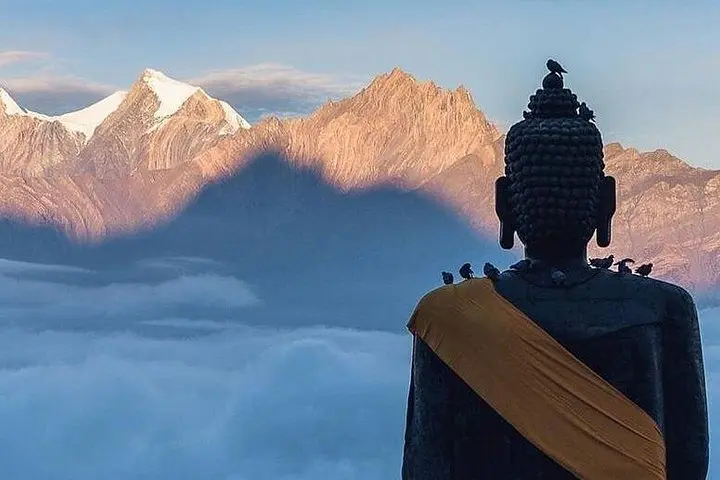
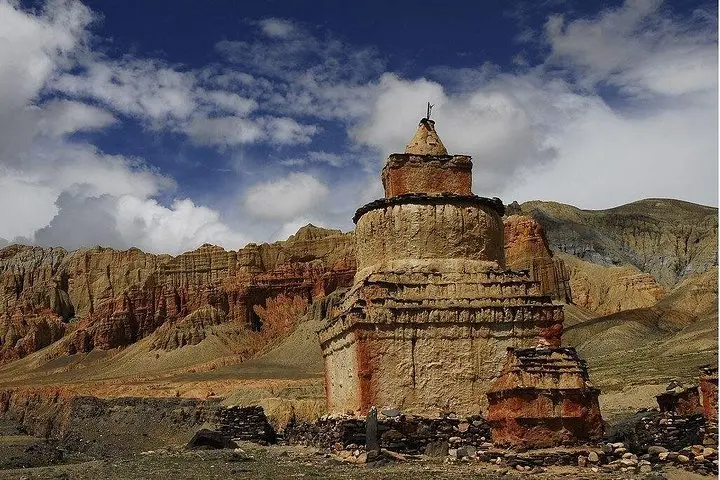
Upper Mustang sits in a rain-shadow carved between Annapurna and Dhaulagiri. Geologically the region is high plateau and eroded sandstone—cliffs, wind-swept badlands and the narrow, pummeled gorge of the Kali Gandaki. Culturally the valley reads like a borderland of Tibetan Buddhism: red gompas, chortens and the old kingdom of Lo, closed to outsiders until the early 1990s and still governed by permit and local custom.
Expect high desert terrain, frequent high winds and daily gains and drops of several hundred meters; the itinerary reaches Lo La at roughly 3,950 m and spends multiple days above 3,000 m. Trails alternate sand, stone tracks and short rocky passes; a few sections are exposed and can be slippery after rain.
Plan for slow ascents, at least one full acclimatization day in Lo Manthang, and flights that depend on mountain weather. Bring layers, a down jacket, sun protection and a compact first-aid kit. Hydrate early, keep pace steady on the passes, and respect restricted-area rules and local etiquette. When the wind moves through the canyons it feels alive—listen, steady your steps, and let the landscape decide your next breath.
Yes — Upper Mustang is a restricted area; foreign trekkers must obtain a special permit and pay a daily fee processed before entry.
Spring (March–May) and fall (September–November) offer the clearest skies and manageable temperatures; expect strong winds year-round.
Mountain flights are weather-dependent; flights can be delayed or rescheduled due to wind and visibility—build buffer days into your itinerary.
Basic tea-house lodges (tourist-standard) with shared facilities are common; services are rustic but sufficient for food and rest.
Trekking Organizer Company in Nepal operates guided outdoor trips and adventures with an emphasis on safety, stewardship, and memorable experiences.
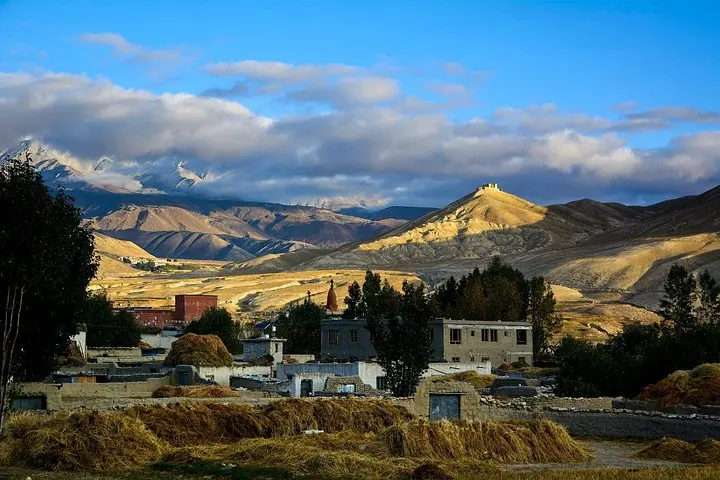
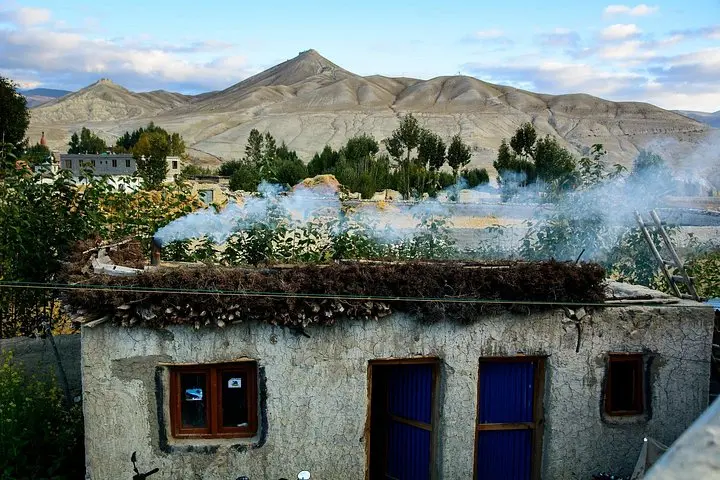
The wind greets you before the walls of Lo Manthang appear: a dry breath that drives sand across a flat, ochre landscape and dares you to keep walking. You fly out of Pokhara into the deep Kali Gandaki canyon, then trade engines for walking poles as thawed riverbeds, mani walls and flat-roofed villages pull you toward a walled town that still feels a step behind time.
The wind greets you before the walls of Lo Manthang appear: a dry breath that drives sand across a flat, ochre landscape and dares you to keep walking. You fly out of Pokhara into the deep Kali Gandaki canyon, then trade engines for walking poles as thawed riverbeds, mani walls and flat-roofed villages pull you toward a walled town that still feels a step behind time.
Upper Mustang sits in a rain-shadow carved between Annapurna and Dhaulagiri. Geologically the region is high plateau and eroded sandstone—cliffs, wind-swept badlands and the narrow, pummeled gorge of the Kali Gandaki. Culturally the valley reads like a borderland of Tibetan Buddhism: red gompas, chortens and the old kingdom of Lo, closed to outsiders until the early 1990s and still governed by permit and local custom.
Expect high desert terrain, frequent high winds and daily gains and drops of several hundred meters; the itinerary reaches Lo La at roughly 3,950 m and spends multiple days above 3,000 m. Trails alternate sand, stone tracks and short rocky passes; a few sections are exposed and can be slippery after rain.
Plan for slow ascents, at least one full acclimatization day in Lo Manthang, and flights that depend on mountain weather. Bring layers, a down jacket, sun protection and a compact first-aid kit. Hydrate early, keep pace steady on the passes, and respect restricted-area rules and local etiquette. When the wind moves through the canyons it feels alive—listen, steady your steps, and let the landscape decide your next breath.