THE ADVENTURE COLLECTIVE® · Independent discovery and booking for outdoor travel

Walk Urbino’s compact Renaissance center in 90–120 minutes: Ducal Palace exteriors, Raphael’s birthplace and local food tastings all within a short, accessible route. Ideal for travelers who want concentrated art history and flavors in one guided stroll.
Walk Urbino’s compact Renaissance center in 90–120 minutes: Ducal Palace exteriors, Raphael’s birthplace and local food tastings all within a short, accessible route. Ideal for travelers who want concentrated art history and flavors in one guided stroll.
A low stone gate gives way to a panorama: terracotta roofs step down the slope, the Ducal Palace rises like a contained stage, and the soft green of the Montefeltro hills presses against the town.
Verified experiences and guided adventures in the surrounding area.
Operated by crusoe.travel · Urbino, Marche
A low stone gate gives way to a panorama: terracotta roofs step down the slope, the Ducal Palace rises like a contained stage, and the soft green of the Montefeltro hills presses against the town.
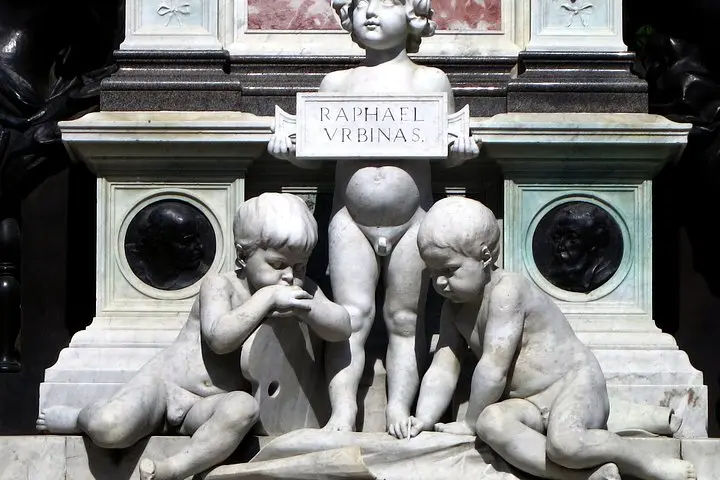
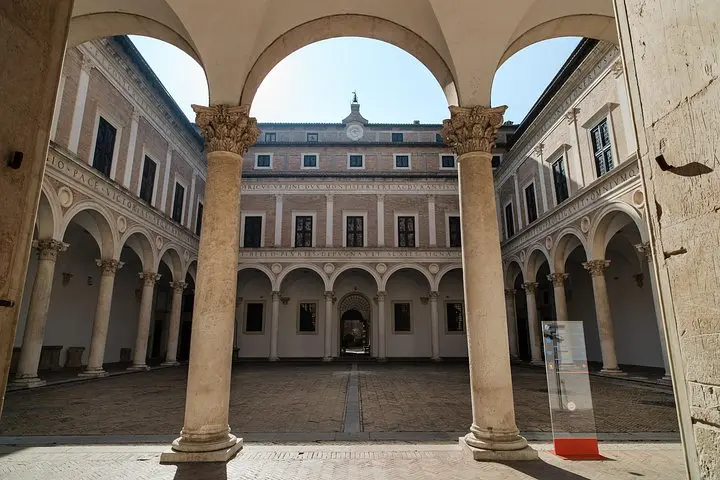
This two-hour walking tour threads Urbino’s compact streets, where 15th-century ambition meets small-town life. The guide outlines Federico da Montefeltro’s military and cultural project—the city’s defensive walls, the plan of the Ducal Palace and its role today as the Galleria Nazionale delle Marche—and points out Raphael’s birthplace on Raffaello Street. Geology is visible in the local stone: compact limestone and marl quarried from the surrounding hills that give the buildings their warm, pale color and the streets their steady grades.
Cultural stops include the palace exterior, the cathedral façade and a viewpoint over the valley; along the way you’ll sample crescia sfogliata, casciotta di Urbino and prosciutto di Carpegna—simple foods that anchor local identity. Urbino’s World Heritage status reflects both its architecture and its historic role as a Renaissance court.
Practicalities are straightforward: walks last about 90–120 minutes on paved and cobbled streets with short flights of steps; the tour is suitable for most fitness levels and advertised as wheelchair accessible from the meeting point just outside the city walls. Small groups (up to 15) keep the pace relaxed—bring comfortable shoes, a water bottle, sun protection in summer, and a light layer for winds off the hills. Morning or late-afternoon departures avoid the hottest hours and give the best light for photos.
The meeting point is just outside the city walls—your booking confirmation includes the exact location so you can arrive by local bus or on foot.
The tour is advertised as wheelchair accessible from the meeting point; contact the operator ahead of time to confirm transfer logistics and any route adjustments.
This walk focuses on exteriors and viewpoints; museum admissions (e.g., Galleria Nazionale delle Marche) are not included unless explicitly stated.
Yes—small samples of local specialties like crescia sfogliata, casciotta di Urbino and prosciutto di Carpegna are typically offered during the tour; bring small cash for purchases.
crusoe.travel operates guided outdoor trips and adventures with an emphasis on safety, stewardship, and memorable experiences.
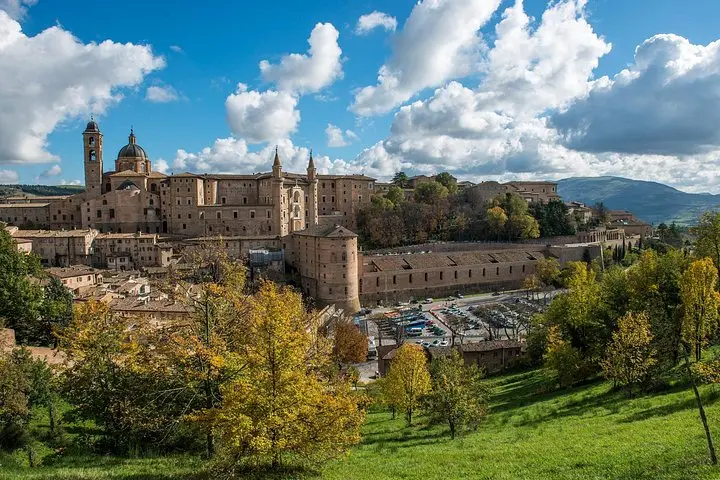
A low stone gate gives way to a panorama: terracotta roofs step down the slope, the Ducal Palace rises like a contained stage, and the soft green of the Montefeltro hills presses against the town.
A low stone gate gives way to a panorama: terracotta roofs step down the slope, the Ducal Palace rises like a contained stage, and the soft green of the Montefeltro hills presses against the town.
This two-hour walking tour threads Urbino’s compact streets, where 15th-century ambition meets small-town life. The guide outlines Federico da Montefeltro’s military and cultural project—the city’s defensive walls, the plan of the Ducal Palace and its role today as the Galleria Nazionale delle Marche—and points out Raphael’s birthplace on Raffaello Street. Geology is visible in the local stone: compact limestone and marl quarried from the surrounding hills that give the buildings their warm, pale color and the streets their steady grades.
Cultural stops include the palace exterior, the cathedral façade and a viewpoint over the valley; along the way you’ll sample crescia sfogliata, casciotta di Urbino and prosciutto di Carpegna—simple foods that anchor local identity. Urbino’s World Heritage status reflects both its architecture and its historic role as a Renaissance court.
Practicalities are straightforward: walks last about 90–120 minutes on paved and cobbled streets with short flights of steps; the tour is suitable for most fitness levels and advertised as wheelchair accessible from the meeting point just outside the city walls. Small groups (up to 15) keep the pace relaxed—bring comfortable shoes, a water bottle, sun protection in summer, and a light layer for winds off the hills. Morning or late-afternoon departures avoid the hottest hours and give the best light for photos.