THE ADVENTURE COLLECTIVE® · Independent discovery and booking for outdoor travel

Spend a full day on high Andean trails in Vallecitos, where steady climbs and big views meet Mendoza’s clear desert light. This guided trek balances approachable mileage with real altitude, offering geology, local lore, and a taste of the Cordon del Plata’s rugged character.
Spend a full day on high Andean trails in Vallecitos, where steady climbs and big views meet Mendoza’s clear desert light. This guided trek balances approachable mileage with real altitude, offering geology, local lore, and a taste of the Cordon del Plata’s rugged character.
Morning light lifts over the Mendoza River as the Andes shake off their night chill. The van hums west from the city, vineyards thinning into ochre foothills, and the reservoir at Potrerillos flashes blue like a dare. At Vallecitos, the trail rises immediately, a steady ramp through broom shrubs and slate-gray scree. The wind tests your balance, then eases; the mountains set the tempo, asking for patience and a measured stride.
Verified experiences and guided adventures in the surrounding area.
Operated by Kahuak · Potrerillos, Mendoza
Morning light lifts over the Mendoza River as the Andes shake off their night chill. The van hums west from the city, vineyards thinning into ochre foothills, and the reservoir at Potrerillos flashes blue like a dare. At Vallecitos, the trail rises immediately, a steady ramp through broom shrubs and slate-gray scree. The wind tests your balance, then eases; the mountains set the tempo, asking for patience and a measured stride.
This guided day trek threads into the Cordon del Plata, the training grounds for Aconcagua hopefuls and a classic introduction to high Andean hiking. Expect 5–6 hours on trail, 8–12 km round-trip depending on conditions and route choice, and 400–700 m of elevation gain. Trailheads sit around 2,800–3,000 m, so the air trims every step—altitude that keeps you honest but rewards you with broad views of the Potrerillos basin and serrated ridgelines that march toward the roof of the Americas.
Geology shows its hand in layered sedimentary slabs tilted by the Andean orogeny, with volcanic intrusions peppering the slopes. Underfoot, granite shards clatter and ochre soils hold the prints of fox and guanaco. When clouds move in, they move fast; when the sky clears, the sun presses down with high-desert intensity. The Mendoza River below has been harnessed into the Potrerillos Reservoir, a 12-km-long, 3-km-wide mirror that throws light back at the peaks.
Culturally, these hills are tied to arrieros and gaucho routes, and today they double as fitness grounds for local mountaineers. Mendoza’s wine industry—fed by snowmelt—sits downstream, linking what you see above with what you’ll taste after. Guides here balance safety with pace, folding in local stories between breath breaks. Lunch is simple and nourishing; the view does the rest.
Practicalities matter at this elevation. The route is non-technical but rocky, with a few short, steeper pushes and occasional snow patches in shoulder seasons. Good boots, sun protection, and layers are mandatory; trekking poles help knees on the descent. Hydration is critical—2 liters minimum—even with the dry breeze nudging you forward. Weather can shift quickly, and winds funnel through couloirs in the afternoon, so an early start is your ally.
Back at the trailhead, the reservoir gleams again, daring you to stay a little longer. You’ve earned a celebratory dinner in Mendoza, where the Malbec tastes a bit richer after the mountains have had their say.
It’s a moderate trek with 5–6 hours on trail, 8–12 km of distance, and 400–700 m of elevation gain at high altitude.
No. The route is non-technical; basic hiking fitness and comfort on rocky terrain are sufficient.
Hotel pickup in central Mendoza, professional bilingual guide, all necessary equipment, bottled water, and a boxed lunch.
Most hikers do fine with a steady pace and hydration, but mild symptoms can occur; notify your guide if you feel unwell.
Facilities are limited to the trailhead area; expect backcountry restroom practices during the hike.
The minimum age is 12, and participants should have a moderate fitness level to handle the elevation and terrain.
Kahuak operates guided outdoor trips and adventures with an emphasis on safety, stewardship, and memorable experiences.
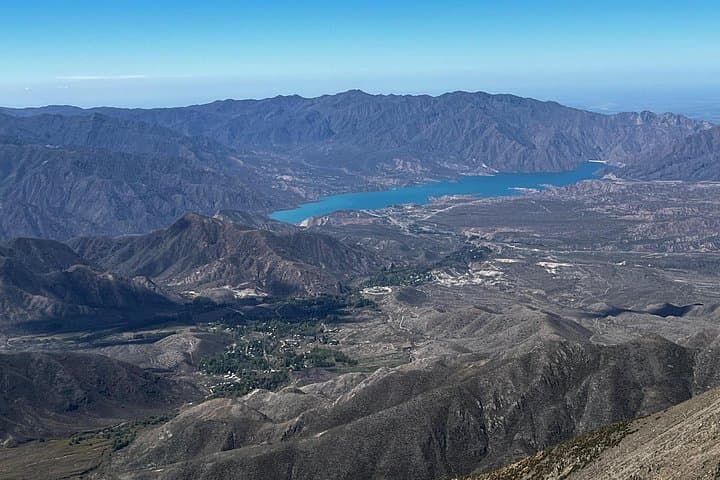


Morning light lifts over the Mendoza River as the Andes shake off their night chill. The van hums west from the city, vineyards thinning into ochre foothills, and the reservoir at Potrerillos flashes blue like a dare. At Vallecitos, the trail rises immediately, a steady ramp through broom shrubs and slate-gray scree. The wind tests your balance, then eases; the mountains set the tempo, asking for patience and a measured stride.
Morning light lifts over the Mendoza River as the Andes shake off their night chill. The van hums west from the city, vineyards thinning into ochre foothills, and the reservoir at Potrerillos flashes blue like a dare. At Vallecitos, the trail rises immediately, a steady ramp through broom shrubs and slate-gray scree. The wind tests your balance, then eases; the mountains set the tempo, asking for patience and a measured stride.
This guided day trek threads into the Cordon del Plata, the training grounds for Aconcagua hopefuls and a classic introduction to high Andean hiking. Expect 5–6 hours on trail, 8–12 km round-trip depending on conditions and route choice, and 400–700 m of elevation gain. Trailheads sit around 2,800–3,000 m, so the air trims every step—altitude that keeps you honest but rewards you with broad views of the Potrerillos basin and serrated ridgelines that march toward the roof of the Americas.
Geology shows its hand in layered sedimentary slabs tilted by the Andean orogeny, with volcanic intrusions peppering the slopes. Underfoot, granite shards clatter and ochre soils hold the prints of fox and guanaco. When clouds move in, they move fast; when the sky clears, the sun presses down with high-desert intensity. The Mendoza River below has been harnessed into the Potrerillos Reservoir, a 12-km-long, 3-km-wide mirror that throws light back at the peaks.
Culturally, these hills are tied to arrieros and gaucho routes, and today they double as fitness grounds for local mountaineers. Mendoza’s wine industry—fed by snowmelt—sits downstream, linking what you see above with what you’ll taste after. Guides here balance safety with pace, folding in local stories between breath breaks. Lunch is simple and nourishing; the view does the rest.
Practicalities matter at this elevation. The route is non-technical but rocky, with a few short, steeper pushes and occasional snow patches in shoulder seasons. Good boots, sun protection, and layers are mandatory; trekking poles help knees on the descent. Hydration is critical—2 liters minimum—even with the dry breeze nudging you forward. Weather can shift quickly, and winds funnel through couloirs in the afternoon, so an early start is your ally.
Back at the trailhead, the reservoir gleams again, daring you to stay a little longer. You’ve earned a celebratory dinner in Mendoza, where the Malbec tastes a bit richer after the mountains have had their say.