THE ADVENTURE COLLECTIVE® · Independent discovery and booking for outdoor travel

Stand on ancient whale bones and walk between waterfalls and dunes on a full-day trip from Cairo. This route pairs UNESCO-listed Wadi Al-Hitan’s fossils with the cascading lakes of Wadi El-Rayan and nearby archaeological sites.
Stand on ancient whale bones and walk between waterfalls and dunes on a full-day trip from Cairo. This route pairs UNESCO-listed Wadi Al-Hitan’s fossils with the cascading lakes of Wadi El-Rayan and nearby archaeological sites.
The van pulls off the cracked desert highway as the horizon tilts into broad, low hills; wind scours pale sand across fossil-bedded flats and the air takes on the mineral tang of long-buried sea. You stand on limestone strewn with whale bones—rib arches and vertebrae fossilized into the stone—while the sun pushes the desert into sharp relief and the dunes beyond hum with movement.
Verified experiences and guided adventures in the surrounding area.
Operated by Egyptian Daily Tours · Faiyum, Faiyum Governorate
The van pulls off the cracked desert highway as the horizon tilts into broad, low hills; wind scours pale sand across fossil-bedded flats and the air takes on the mineral tang of long-buried sea. You stand on limestone strewn with whale bones—rib arches and vertebrae fossilized into the stone—while the sun pushes the desert into sharp relief and the dunes beyond hum with movement.
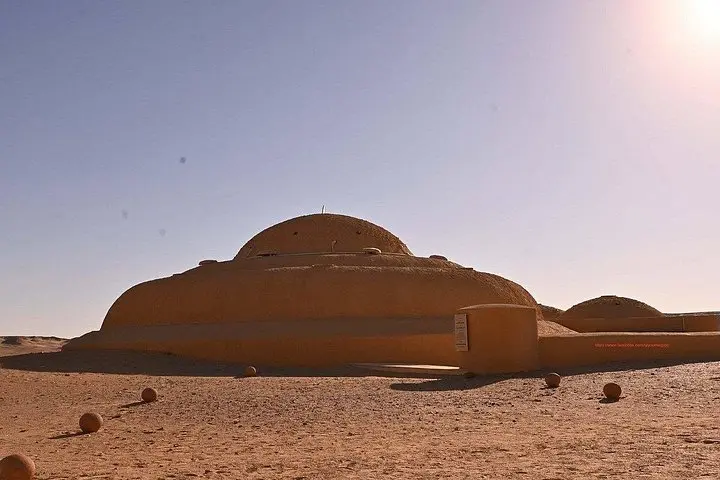
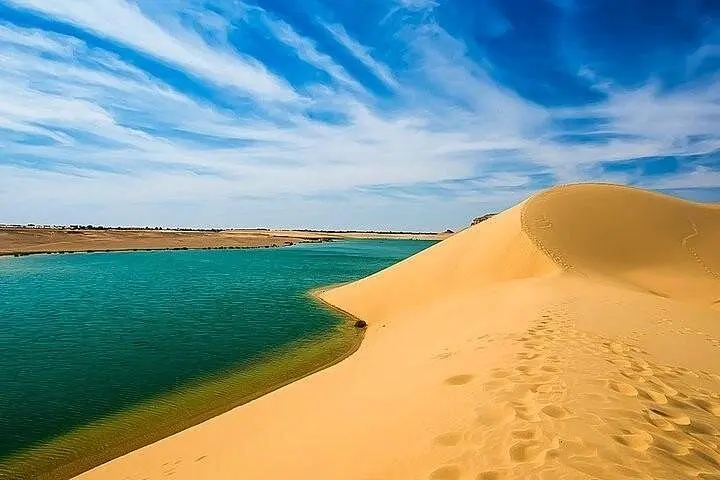
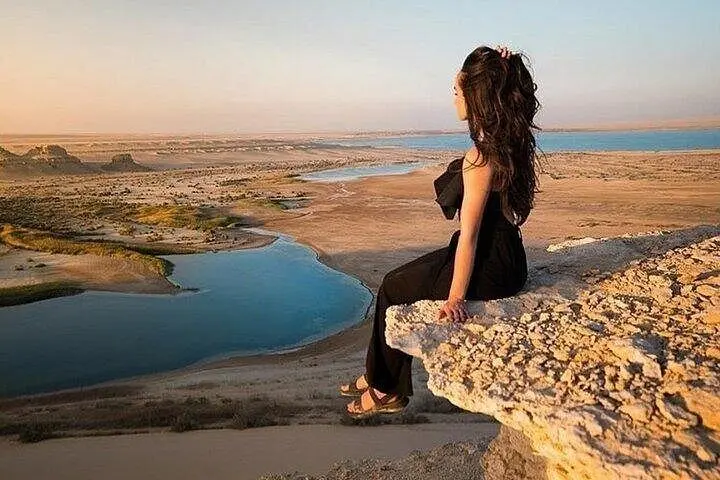
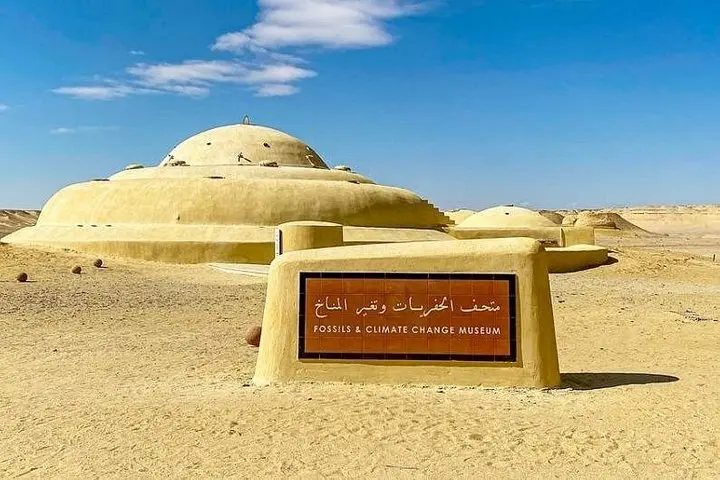
This day trip threads together two contrasting landscapes: Wadi Al-Hitan (Valley of the Whales), a UNESCO paleontological site where archaeocete fossils chart the whale’s march from land to sea, and Wadi El-Rayan, a man-made lake system fed by agricultural drainage with Egypt’s largest waterfalls and shifting dunes. Medinet Madi and Qasr Qarun add layers of human history—ancient irrigation works and Roman-era remains that reveal how people have shaped this basin for millennia.
Expect easy walking on uneven, rocky ground near excavation displays, intermittent sand underfoot at dune edges, and short boardwalks or paths at key viewpoints. Wildlife is subtle—desert foxes at dusk, migratory and resident waterfowl around the lakes—and sulfur springs lend a faint metallic scent at the lower basin.
Practical guidance: start before sunrise to avoid peak heat, carry at least 2 liters of water, sun protection, and sturdy shoes with good traction for fossil beds and dune slopes. Photography is unrestricted at most sites but respect fenced areas and follow guides at excavation points. Combine curiosity about deep time with basic desert sense—shade, hydration, and respect for fragile paleontological features will make the day both thrilling and responsible.
The tour is typically a 2–3 hour drive each way depending on traffic and the exact pickup location in Cairo, forming a full 10-hour day.
Check your booking option—some packages include site entry and a jeep safari, while others may require paying admission on arrival.
Sites have short walks over uneven rock; it’s generally suitable for children and active seniors, but those with mobility issues should plan accordingly.
No—fossil areas are fragile and often fenced; follow guide instructions to avoid damaging paleontological remains.
Egyptian Daily Tours operates guided outdoor trips and adventures with an emphasis on safety, stewardship, and memorable experiences.
The van pulls off the cracked desert highway as the horizon tilts into broad, low hills; wind scours pale sand across fossil-bedded flats and the air takes on the mineral tang of long-buried sea. You stand on limestone strewn with whale bones—rib arches and vertebrae fossilized into the stone—while the sun pushes the desert into sharp relief and the dunes beyond hum with movement.
The van pulls off the cracked desert highway as the horizon tilts into broad, low hills; wind scours pale sand across fossil-bedded flats and the air takes on the mineral tang of long-buried sea. You stand on limestone strewn with whale bones—rib arches and vertebrae fossilized into the stone—while the sun pushes the desert into sharp relief and the dunes beyond hum with movement.
This day trip threads together two contrasting landscapes: Wadi Al-Hitan (Valley of the Whales), a UNESCO paleontological site where archaeocete fossils chart the whale’s march from land to sea, and Wadi El-Rayan, a man-made lake system fed by agricultural drainage with Egypt’s largest waterfalls and shifting dunes. Medinet Madi and Qasr Qarun add layers of human history—ancient irrigation works and Roman-era remains that reveal how people have shaped this basin for millennia.
Expect easy walking on uneven, rocky ground near excavation displays, intermittent sand underfoot at dune edges, and short boardwalks or paths at key viewpoints. Wildlife is subtle—desert foxes at dusk, migratory and resident waterfowl around the lakes—and sulfur springs lend a faint metallic scent at the lower basin.
Practical guidance: start before sunrise to avoid peak heat, carry at least 2 liters of water, sun protection, and sturdy shoes with good traction for fossil beds and dune slopes. Photography is unrestricted at most sites but respect fenced areas and follow guides at excavation points. Combine curiosity about deep time with basic desert sense—shade, hydration, and respect for fragile paleontological features will make the day both thrilling and responsible.