THE ADVENTURE COLLECTIVE® · Independent discovery and booking for outdoor travel

Spend a long, vivid day exploring Georgia’s southwest: cliff-carved Vardzia, the layered Rabati Castle in Akhaltsikhe, and the mineral-spring town of Borjomi. This full-day tour mixes short hikes, medieval architecture and dramatic geology with practical logistics for travelers based in Tbilisi.
Spend a long, vivid day exploring Georgia’s southwest: cliff-carved Vardzia, the layered Rabati Castle in Akhaltsikhe, and the mineral-spring town of Borjomi. This full-day tour mixes short hikes, medieval architecture and dramatic geology with practical logistics for travelers based in Tbilisi.
The day begins on the highway south from Tbilisi, the car threading through folded foothills until the cliffs open into Vardzia’s cliff-face like a city frozen mid-construction. Sunlight cuts across rows of cave openings; the Church of the Dormition holds frescoes that still look back. The river below murmurs and dares you to follow its valley.
Verified experiences and guided adventures in the surrounding area.
Operated by Infinite Georgia · Vardzia (near Aspindza), Samtskhe-Javakheti
The day begins on the highway south from Tbilisi, the car threading through folded foothills until the cliffs open into Vardzia’s cliff-face like a city frozen mid-construction. Sunlight cuts across rows of cave openings; the Church of the Dormition holds frescoes that still look back. The river below murmurs and dares you to follow its valley.
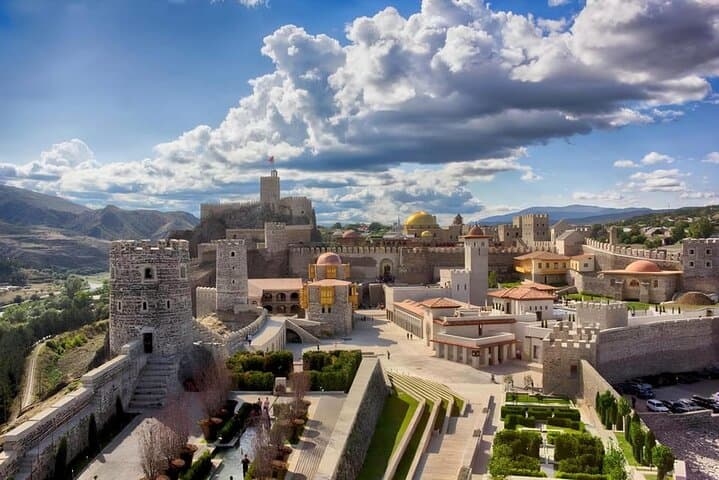
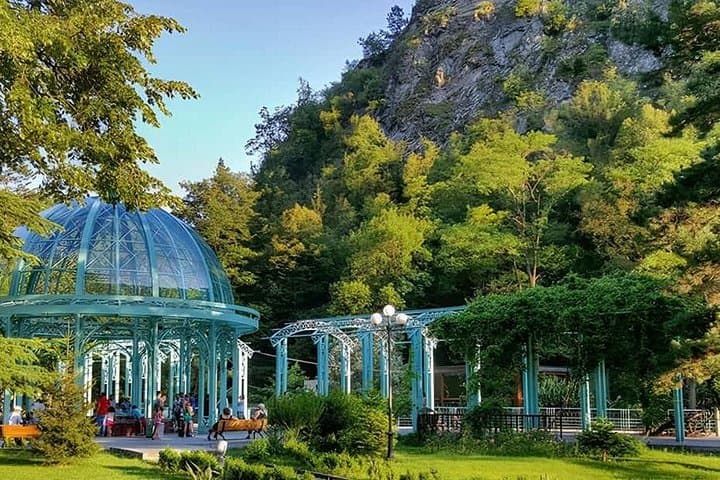
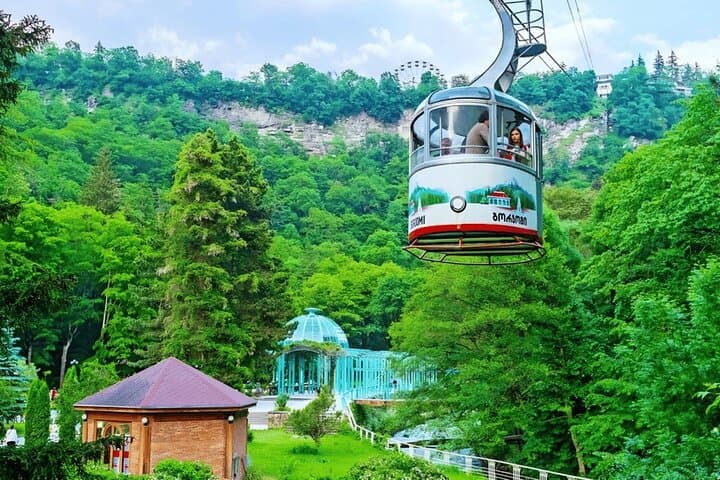
Vardzia was carved in the 12th century during Queen Tamar’s reign, later becoming a fortified monastery complex. Rabati Castle in Akhaltsikhe reflects layers of history — medieval Georgian foundations, Ottoman additions and 19th-century restorations — while Borjomi’s mineral springs have drawn visitors since the Russian imperial era. Geology here is dramatic: volcanic tuff and eroded cliffs allowed monastic architects to hollow entire living quarters into the slope, while the surrounding plateaus show ancient lava flow textures and river-carved gorges.
Expect a mix of short hikes, stair-steep climbs inside cave levels and flat strolls through restored castle courtyards. Wear sturdy walking shoes; frescoes are fragile so photography and touch are restricted in some chapels. Hydrate between stops — the day is long (expect lots of driving and several concentrated walking windows) — and carry layers because mountain winds can turn on a dime.
Practical: most full-day departures leave Tbilisi early and return late; admission fees are commonly extra; local guides provide historical context and point out lesser-seen viewpoints. This is a cultural-landscape day that balances ancient architecture, concentrated geology and the simple pleasure of tasting water people have called healing for centuries.
Most tours do not include archaeological site entrance fees—confirm with the operator and budget extra for tickets and local guides.
Expect several concentrated periods of walking: steps and narrow passages at Vardzia, courtyard strolls at Rabati, and short trails in Borjomi park—nothing technical but moderately active.
Children can join but Vardzia has many stairs and uneven surfaces so strollers are impractical; infants should be carried in slings on cave sections.
Yes—Borjomi has fountains and eateries; small cafes and kiosks are available in Akhaltsikhe and near major stops for snacks and lunch.
Infinite Georgia operates guided outdoor trips and adventures with an emphasis on safety, stewardship, and memorable experiences.
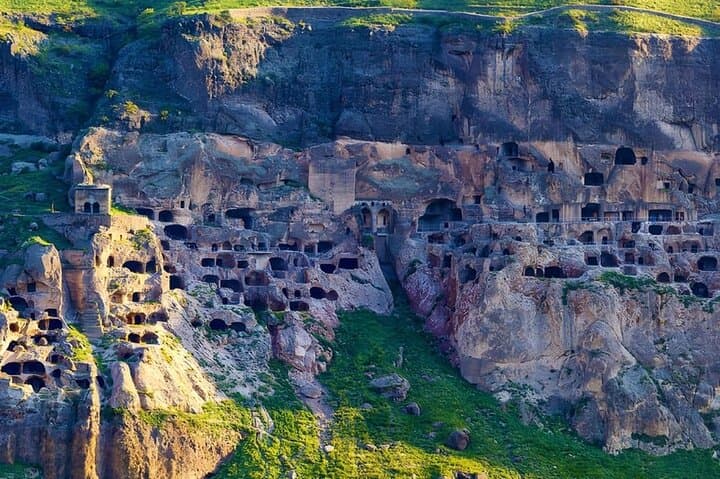
The day begins on the highway south from Tbilisi, the car threading through folded foothills until the cliffs open into Vardzia’s cliff-face like a city frozen mid-construction. Sunlight cuts across rows of cave openings; the Church of the Dormition holds frescoes that still look back. The river below murmurs and dares you to follow its valley.
The day begins on the highway south from Tbilisi, the car threading through folded foothills until the cliffs open into Vardzia’s cliff-face like a city frozen mid-construction. Sunlight cuts across rows of cave openings; the Church of the Dormition holds frescoes that still look back. The river below murmurs and dares you to follow its valley.
Vardzia was carved in the 12th century during Queen Tamar’s reign, later becoming a fortified monastery complex. Rabati Castle in Akhaltsikhe reflects layers of history — medieval Georgian foundations, Ottoman additions and 19th-century restorations — while Borjomi’s mineral springs have drawn visitors since the Russian imperial era. Geology here is dramatic: volcanic tuff and eroded cliffs allowed monastic architects to hollow entire living quarters into the slope, while the surrounding plateaus show ancient lava flow textures and river-carved gorges.
Expect a mix of short hikes, stair-steep climbs inside cave levels and flat strolls through restored castle courtyards. Wear sturdy walking shoes; frescoes are fragile so photography and touch are restricted in some chapels. Hydrate between stops — the day is long (expect lots of driving and several concentrated walking windows) — and carry layers because mountain winds can turn on a dime.
Practical: most full-day departures leave Tbilisi early and return late; admission fees are commonly extra; local guides provide historical context and point out lesser-seen viewpoints. This is a cultural-landscape day that balances ancient architecture, concentrated geology and the simple pleasure of tasting water people have called healing for centuries.