THE ADVENTURE COLLECTIVE® · Independent discovery and booking for outdoor travel

Explore Georgia’s cliff-carved monastery at Vardzia, the high shores of Paravani Lake, and centuries of fortified architecture at Khertvisi and Rabati in a full-day circuit from Tbilisi. History, geology and rural cuisine meet on this long but rewarding route.
Explore Georgia’s cliff-carved monastery at Vardzia, the high shores of Paravani Lake, and centuries of fortified architecture at Khertvisi and Rabati in a full-day circuit from Tbilisi. History, geology and rural cuisine meet on this long but rewarding route.
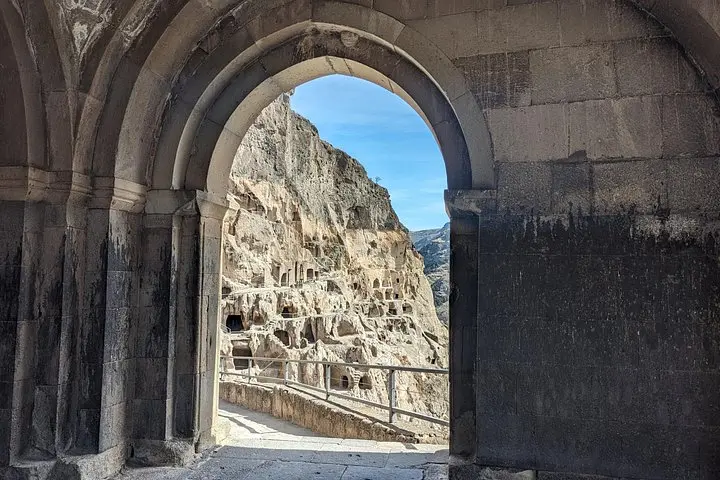
A low sun slices the cliff face and light spills into a maze of carved rooms — Vardzia’s terraces stare out over the valley as if keeping watch. This full-day circuit from Tbilisi threads high plateaus, a vast alpine lake, rivers that cut through basalt scarps, and layered fortresses that mark Georgia’s shifting borders.
Verified experiences and guided adventures in the surrounding area.
Operated by Wonderful Travel · Aspindza, Samtskhe-Javakheti
A low sun slices the cliff face and light spills into a maze of carved rooms — Vardzia’s terraces stare out over the valley as if keeping watch. This full-day circuit from Tbilisi threads high plateaus, a vast alpine lake, rivers that cut through basalt scarps, and layered fortresses that mark Georgia’s shifting borders.
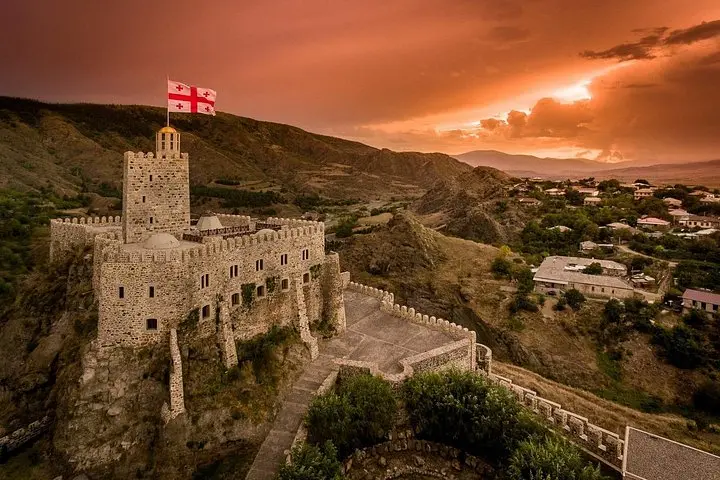
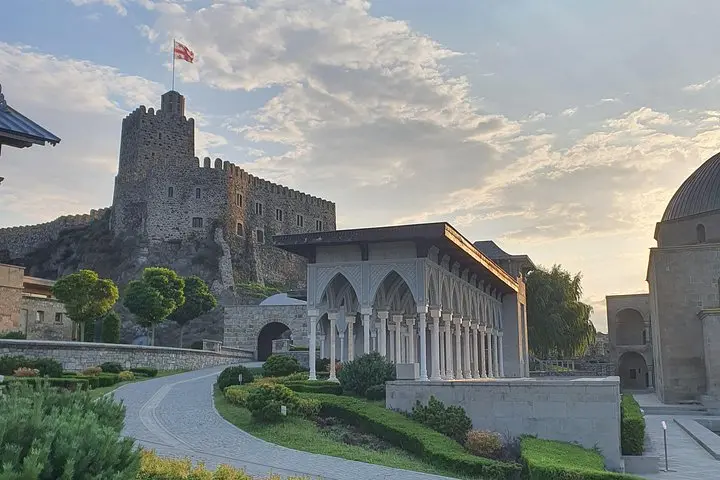
Vardzia’s troglodyte city was hewn in the 12th–13th centuries under Queen Tamar and offers compact chapels, tunnels and wine cellars carved into volcanic tuff. Paravani Lake, a high-altitude basin fed by mountain runoff and shadowed by Abuli, reads like a geological record of past glaciation and lava flows. Khertvisi — perched where two rivers meet — and Rabati (Lomisa) in Akhaltsikhe show fortified layers of medieval, Ottoman and later restoration work, illustrating this region’s crossroads of cultures.
Culturally the route is rural and agricultural: small villages, qvevri winemaking, and family-run beer makers that use traditional clay vessels. Travelers should expect long stretches by private vehicle with short walks, uneven stone steps at Vardzia and short climbs to castle ramparts.
Practical tips: start early from Tbilisi to avoid midday heat, bring layered windproof clothing for Paravani’s exposed shores, and wear grippy shoes for the caves and castle ruins. Carry water, cash for small vendors, and a charged phone — cell coverage can be patchy in canyons. The itinerary balances archaeology, sweeping highland scenery and hands-on local food experiences; it’s ideal for curious travelers who want history and landscape in a single, long day.
Expect a 12–13 hour day with multiple short stops: 20–120 minutes at points of interest and vehicle transfers between sites.
Short walks are required; children can join but uneven steps and cave passages may be challenging for limited mobility—check accessibility at each site.
Admission policies vary by site; confirm with your operator — the itinerary notes some admissions are not included.
Yes. The tour typically includes a stop at a family-run qvevri beer/wine maker where tastings and local food are available.
Wonderful Travel operates guided outdoor trips and adventures with an emphasis on safety, stewardship, and memorable experiences.
A low sun slices the cliff face and light spills into a maze of carved rooms — Vardzia’s terraces stare out over the valley as if keeping watch. This full-day circuit from Tbilisi threads high plateaus, a vast alpine lake, rivers that cut through basalt scarps, and layered fortresses that mark Georgia’s shifting borders.
A low sun slices the cliff face and light spills into a maze of carved rooms — Vardzia’s terraces stare out over the valley as if keeping watch. This full-day circuit from Tbilisi threads high plateaus, a vast alpine lake, rivers that cut through basalt scarps, and layered fortresses that mark Georgia’s shifting borders.
Vardzia’s troglodyte city was hewn in the 12th–13th centuries under Queen Tamar and offers compact chapels, tunnels and wine cellars carved into volcanic tuff. Paravani Lake, a high-altitude basin fed by mountain runoff and shadowed by Abuli, reads like a geological record of past glaciation and lava flows. Khertvisi — perched where two rivers meet — and Rabati (Lomisa) in Akhaltsikhe show fortified layers of medieval, Ottoman and later restoration work, illustrating this region’s crossroads of cultures.
Culturally the route is rural and agricultural: small villages, qvevri winemaking, and family-run beer makers that use traditional clay vessels. Travelers should expect long stretches by private vehicle with short walks, uneven stone steps at Vardzia and short climbs to castle ramparts.
Practical tips: start early from Tbilisi to avoid midday heat, bring layered windproof clothing for Paravani’s exposed shores, and wear grippy shoes for the caves and castle ruins. Carry water, cash for small vendors, and a charged phone — cell coverage can be patchy in canyons. The itinerary balances archaeology, sweeping highland scenery and hands-on local food experiences; it’s ideal for curious travelers who want history and landscape in a single, long day.