THE ADVENTURE COLLECTIVE® · Independent discovery and booking for outdoor travel

Spend a full day tracing Georgia’s layered past from cliff-carved Vardzia to the multi-faith Rabati Castle and the mineral springs of Borjomi. This one-day route pairs dramatic rock-cut architecture with imperial-era spa town culture and practical, on-the-ground logistics for a traveler’s day trip from Tbilisi.
Spend a full day tracing Georgia’s layered past from cliff-carved Vardzia to the multi-faith Rabati Castle and the mineral springs of Borjomi. This one-day route pairs dramatic rock-cut architecture with imperial-era spa town culture and practical, on-the-ground logistics for a traveler’s day trip from Tbilisi.
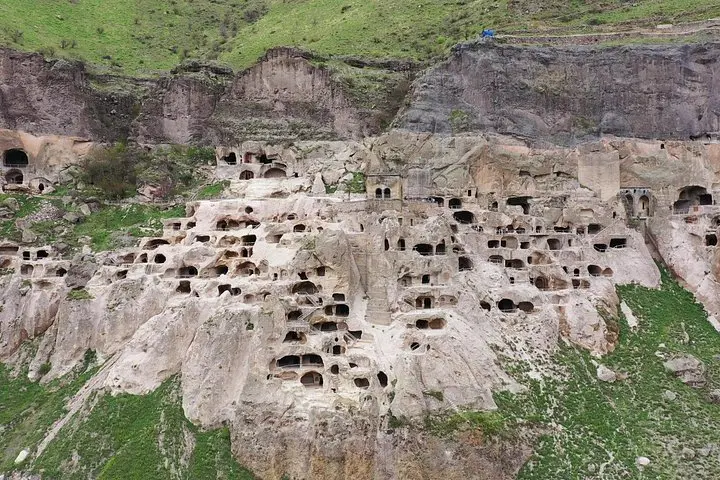
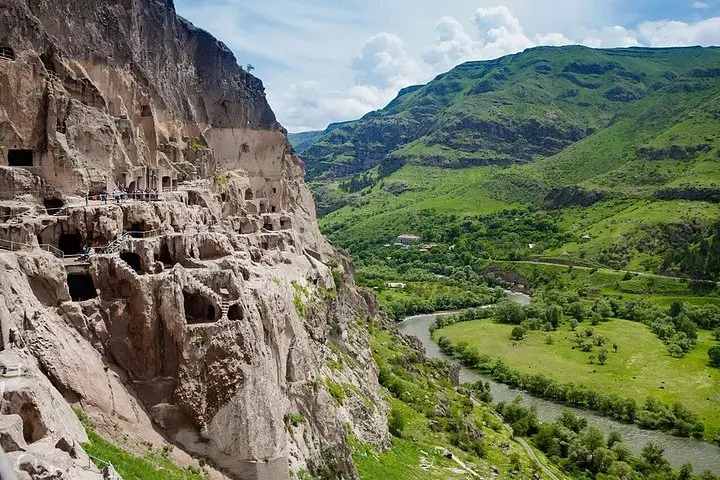
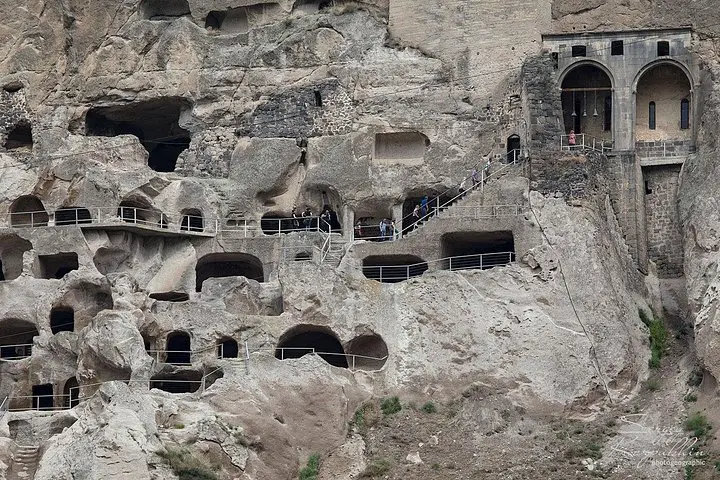
A pale coach eases out of Tbilisi before dawn, the Caucasus folding into the distance as the road threads south. By midmorning the landscape opens to a vertical face punctured with doorways and windows — the rock-cut rooms of Vardzia rise like a stepped city, cool shadows offering relief from the sun.
Verified experiences and guided adventures in the surrounding area.
Operated by Irina Kartvelishvili · Tbilisi, Tbilisi
A pale coach eases out of Tbilisi before dawn, the Caucasus folding into the distance as the road threads south. By midmorning the landscape opens to a vertical face punctured with doorways and windows — the rock-cut rooms of Vardzia rise like a stepped city, cool shadows offering relief from the sun.
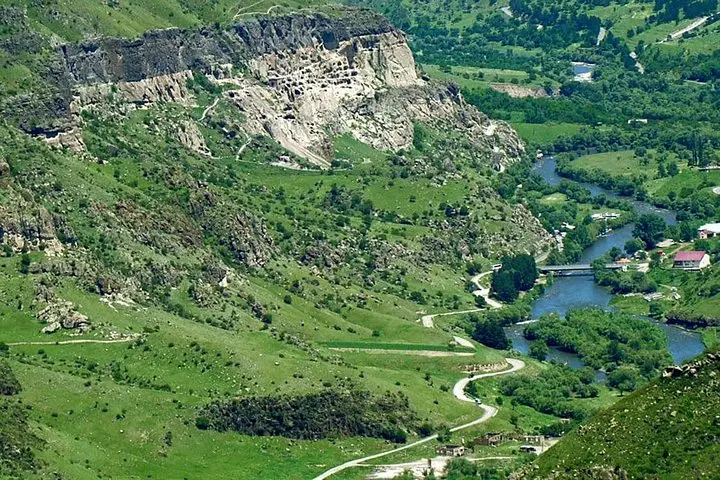
Vardzia is a 12th–13th century cave monastery carved into the cliff above the Kura valley; its chambers, refectories and frescoed walls reflect Georgia’s medieval Orthodox heritage. Rabati Castle in Akhaltsikhe traces a longer arc: fortified in the 9th century and rebuilt through Ottoman and Russian periods, it now presents mosque, church and minaret within one complex. Between them sits Borjomi, a 19th-century resort town whose mineral springs and parklands were prized in imperial times and remain the region’s pulse.
Geology and hydrology shape the visit: terraces and cliffs hold rooms hewn into compact rock, while mineral-rich springs still bubble in shaded Borjomi glades. Local culture is visible in monastery icons, Ottoman-era masonry and the slow ritual of tea and mineral water tasting in town.
Practical edge: this is a long, full-day excursion (about nine hours) with uneven stone steps, short climbs and open-air walking. Bring cash in GEL for small entrance fees (Vardzia and Rabati charge modest admissions), wear grippy shoes, layer for wind and sun, and carry a refillable bottle — bottled water is provided in summer but extra hydration is wise. Expect guided history, steady driving between sites, and several photo stops; move deliberately on slick rock and respect active worship spaces.
No — entrance fees for Vardzia and Rabati and the Borjomi museum are not included in the standard tour; expect to pay in Georgian Lari (GEL).
The tour departs from Tbilisi and runs about nine hours, returning the same day; exact pickup details are provided at booking.
Yes — the tour is listed as suitable for all fitness levels, but visitors should be able to manage stairs and short walks; bring extra support or rest when needed.
The itinerary includes a lunch stop but meals are typically not included — confirm with the operator; there are local cafés and restaurants at Borjomi and Akhaltsikhe.
Irina Kartvelishvili operates guided outdoor trips and adventures with an emphasis on safety, stewardship, and memorable experiences.
A pale coach eases out of Tbilisi before dawn, the Caucasus folding into the distance as the road threads south. By midmorning the landscape opens to a vertical face punctured with doorways and windows — the rock-cut rooms of Vardzia rise like a stepped city, cool shadows offering relief from the sun.
A pale coach eases out of Tbilisi before dawn, the Caucasus folding into the distance as the road threads south. By midmorning the landscape opens to a vertical face punctured with doorways and windows — the rock-cut rooms of Vardzia rise like a stepped city, cool shadows offering relief from the sun.
Vardzia is a 12th–13th century cave monastery carved into the cliff above the Kura valley; its chambers, refectories and frescoed walls reflect Georgia’s medieval Orthodox heritage. Rabati Castle in Akhaltsikhe traces a longer arc: fortified in the 9th century and rebuilt through Ottoman and Russian periods, it now presents mosque, church and minaret within one complex. Between them sits Borjomi, a 19th-century resort town whose mineral springs and parklands were prized in imperial times and remain the region’s pulse.
Geology and hydrology shape the visit: terraces and cliffs hold rooms hewn into compact rock, while mineral-rich springs still bubble in shaded Borjomi glades. Local culture is visible in monastery icons, Ottoman-era masonry and the slow ritual of tea and mineral water tasting in town.
Practical edge: this is a long, full-day excursion (about nine hours) with uneven stone steps, short climbs and open-air walking. Bring cash in GEL for small entrance fees (Vardzia and Rabati charge modest admissions), wear grippy shoes, layer for wind and sun, and carry a refillable bottle — bottled water is provided in summer but extra hydration is wise. Expect guided history, steady driving between sites, and several photo stops; move deliberately on slick rock and respect active worship spaces.